wisemonkeys logo
FeedNotificationProfileManage Forms
FeedNotificationSearchSign in
wisemonkeys logo

Blogs

Deadlock

profile
Vansh Dedhia
Aug 13, 2024
0 Likes
0 Discussions
106 Reads

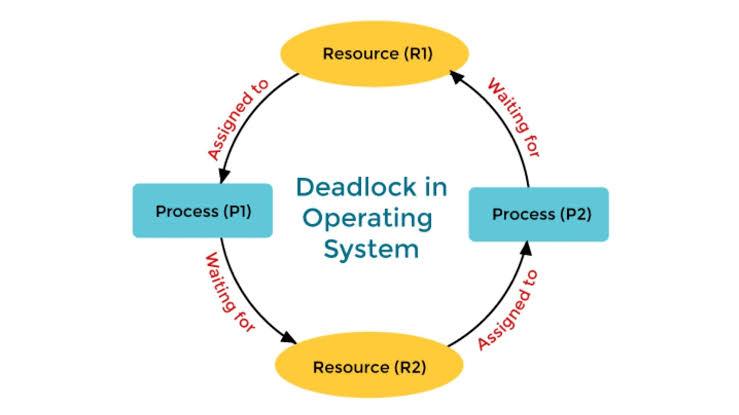
A deadlock in an operating system occurs when a set of processes become stuck in a state where each process is waiting for a resource that another process in the set is holding. As a result, none of the processes can proceed, and they all remain in a state of perpetual waiting.


Deadlock Recovery:

When a deadlock occurs, the system must recover from it to ensure that the processes can eventually complete. There are several methods for deadlock recovery:


1. Process Termination:

   - Abort All Deadlocked Processes: The simplest solution is to terminate all the processes involved in the deadlock. This guarantees recovery but can result in significant work being lost.

   - Abort One Process at a Time: A more refined approach is to abort processes one by one until the deadlock is resolved. The choice of which process to terminate can be based on factors such as the process's priority, the amount of work it has done, or the resources it holds.


2. Resource Preemption:

   - Preempt Resources: Temporarily take resources away from some processes and give them to others. This can break the circular wait condition.

   - Rollback: Roll back one or more processes to an earlier safe state and restart them, allowing the system to avoid deadlock. This method requires the system to maintain sufficient information about the states of processes.


3. Process Migration:

   - Move Processes to Different Systems: In distributed systems, processes can be moved to other systems where the required resources are available. This approach can help avoid deadlock but requires advanced system capabilities.


4. Combination Methods:

   - Sometimes, a combination of process termination and resource preemption might be used to resolve deadlocks more effectively.


The choice of deadlock recovery method depends on the specific system and the criticality of the processes involved.



Comments ()


Sign in

Read Next

Cyber Security in Quantum and Space Communication

Blog banner

Article on IT development trends

Blog banner

What is E-commerce

Blog banner

Web browser forensics:Tools,Evidence collection and analysis

Blog banner

Outlook.com

Blog banner

Evolution of Operating Systems

Blog banner

Principal of concurrency

Blog banner

Multiprocessor and Multicore Organization

Blog banner

Memory Management

Blog banner

IOT Hacking Techniques

Blog banner

Virtual memory

Blog banner

Flipkart

Blog banner

Linux Threads:

Blog banner

Memory input output management

Blog banner

Instagram

Blog banner

Virtual Memory

Blog banner

Worms, viruses and Bots

Blog banner

THE ACTORS LIFE

Blog banner

5 Common Faults In Construction Tenders

Blog banner

Memory input output management

Blog banner

The Features of Blockchain

Blog banner

Defining youtubr

Blog banner

A Statistical Analysis of Player Performance and their Value in cricket

Blog banner

10 Things To Do On Valentine's Day If You're Single

Blog banner

What is a Dumpster Diving Attack?

Blog banner

File Sharing

Blog banner

10 Amazing facts about Tokyo Ghoul

Blog banner

What your Favorite colour says about You?

Blog banner

Virtual Machine's

Blog banner

RAID

Blog banner

Deadlock

Blog banner

Service Operation

Blog banner

The Everyday Parenting Dilemma: Safety Vs Independence

Blog banner

Deadlock in operating system

Blog banner

Service Operations Principles

Blog banner

Service Strategy In ITSM

Blog banner

Direct Memory Access

Blog banner

Business-to-Business

Blog banner

Types of Malware in Cyber Security

Blog banner

National Payments Corporation of India-Rupay - Gayatri Nayak

Blog banner

Understanding Endometriosis and Its Psychological Impact on Quality of Life

Blog banner

Deadlock

Blog banner