wisemonkeys logo
FeedNotificationProfileManage Forms
FeedNotificationSearchSign in
wisemonkeys logo

Blogs

Dekkers Algorithm

profile
Priti Pandav
Sep 09, 2024
0 Likes
0 Discussions
147 Reads

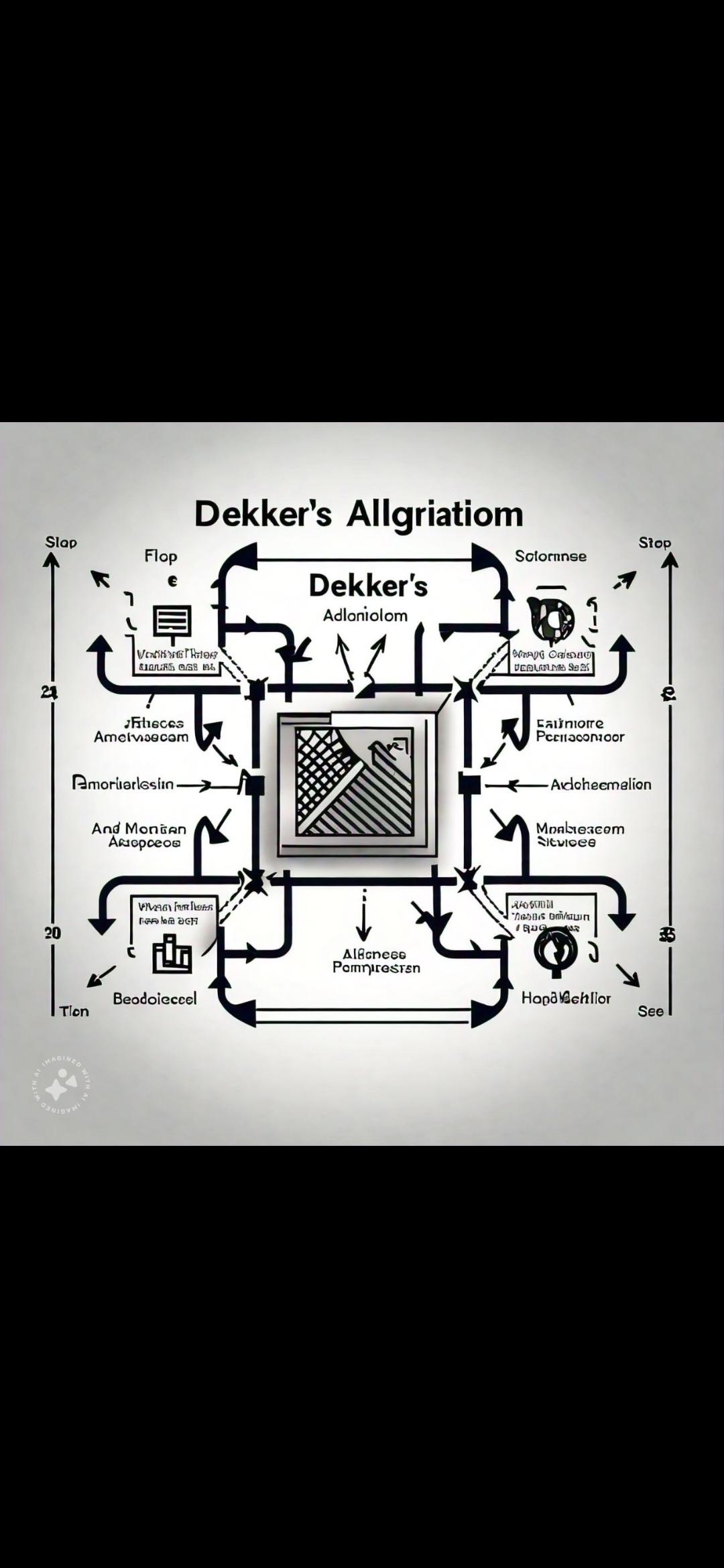
Dekker's Algorithm is a solution to the mutual exclusion problem in computer science. It allows multiple processes to share a common resource without conflicts.


*Problem Statement:*


Two or more processes want to access a shared resource, but only one process can access it at a time.


*Dekker's Algorithm:*


1. Two processes, P0 and P1, want to access the shared resource.

2. Each process has a flag variable (flag0 and flag1) initialized to false.

3. Process P0 sets flag0 to true and checks flag1. If flag1 is true, P0 waits.

4. Process P1 sets flag1 to true and checks flag0. If flag0 is true, P1 waits.

5. If a process finds the other process's flag false, it enters the critical section (accesses the shared resource).

6. After accessing the resource, the process sets its flag to false.


*Key Points:*


1. Dekker's Algorithm ensures mutual exclusion (only one process accesses the resource at a time).

2. It uses flag variables to communicate between processes.

3. A process waits if it finds the other process's flag true.


*Example:*

```

// Process P0

flag0 = true;

while (flag1) { /* wait */ }

// Critical section

flag0 = false;


// Process P1

flag1 = true;

while (flag0) { /* wait */ }

// Critical section

flag1 = false;

```

Dekker's Algorithm is a simple and efficient solution to the mutual exclusion problem, but it has some limitations, such as:


- It only works for two processes.

- It uses busy-waiting, which can waste CPU cycles.


More advanced algorithms, like Peterson's Algorithm and Lamport's Bakery Algorithm, have been developed to address these limitations.



Comments ()


Sign in

Read Next

Practical Implementation of Client Server model using TCP/IP.

Blog banner

Data Visualization in Decision-Making

Blog banner

IT Service as as Value Creation

Blog banner

Mail merge

Blog banner

Lucidchart

Blog banner

Photorec - media recovery tool

Blog banner

The Role of Teachers in Building a Child’s Confidence

Blog banner

How Cyber Forensics help prevent Crimes

Blog banner

Business Engineering

Blog banner

Apple

Blog banner

memory management

Blog banner

Data Structures

Blog banner

Emotional Intelligence in Children: Why It Is as Important as Academics

Blog banner

How to Build an Effective Digital Campaign

Blog banner

Threats To Computer System

Blog banner

Computer Security

Blog banner

Working with Sniffers for monitoring network communication

Blog banner

Blog name

Blog banner

Explain the concept of ( MIS) Management information systems

Blog banner

ART AND CULTURE OF VRINDAVAN

Blog banner

Evolution of Operating system

Blog banner

I/O Buffering

Blog banner

VIRTUAL MACHINES

Blog banner

Security in Cloud Computing Environment using cryptography - Rushabh Modi

Blog banner

Privacy-Enhancing Computation Techniques

Blog banner

Digital Balance: Keeping Children Mindful in the Screen Age

Blog banner

PERSONAL STORIES

Blog banner

Modern Operating Systems.

Blog banner

Software

Blog banner

Race Condition in Operating Theatre

Blog banner

Multiple processor scheduling

Blog banner

Security issues

Blog banner

Basic Security For SOAP Services

Blog banner

The Importance of Data Quality Management in Data Science

Blog banner

Evolution of OS

Blog banner

"Audit" In Data Science

Blog banner

Types of Malware in Cyber Security

Blog banner

Game Theory in Blockchain

Blog banner

Power of words

Blog banner

Service Operations Principles

Blog banner

All you need to know about Website Traffic

Blog banner

Deadlock

Blog banner