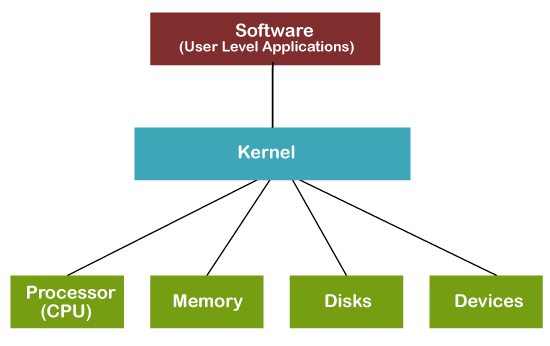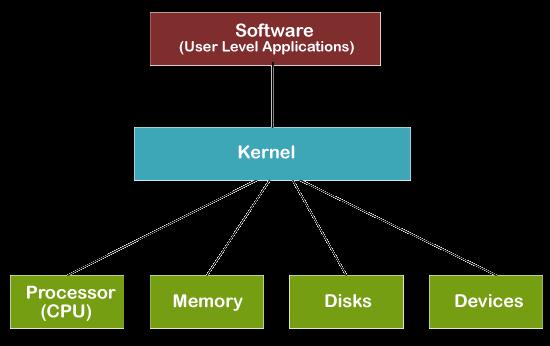
Kernel is central component of an operating system that manages operations of computer and hardware. It basically manages operations of memory and CPU time. It is core component of an operating system. Kernel acts as a bridge between applications and data processing performed at hardware level using inter-process communication and system calls.
Kernel loads first into memory when an operating system is loaded and remains into memory until operating system is shut down again. It is responsible for various tasks such as disk management, task management, and memory management. Kernel has a process table that keeps track of all active processes
Process table contains a per process region table whose entry points to entries in region tableIt decides which process should be allocated to processor to execute and which process should be kept in main memory to execute. It basically acts as an interface between user applications and hardware. The major aim of kernel is to manage communication between software i.e. user-level applications and hardware i.e -CPU and disk memory.
The kernel is the core part of an operating system. Its main job is to manage memory and CPU resources. When an operating system starts up, the kernel is loaded into memory and remains there until the operating system is shut down. It handles tasks like managing disk operations, controlling processes, and organizing memory usage. The kernel also facilitates communication between software programs and the computer's hardware, serving as a crucial link between applications and the underlying hardware processes. In essence, it is the central component that ensures an operating system functions properly.
Types of kernel :
1.Core Component: The kernel is the central part of the OS. It manages the system's resources, such as memory and CPU time, and provides services for other parts of the operating system and applications.
2.Hardware Interaction: It directly interacts with the hardware of the computer, including the CPU, memory, and peripherals (like disks and network interfaces), to manage their operations and resources efficiently.
3.Process Management: The kernel oversees the execution of processes (programs in execution), handling tasks such as process scheduling, memory allocation, and input/output operations.
4.Memory Management: It allocates memory to processes and ensures that they do not interfere with each other’s memory space. This includes managing virtual memory and handling memory paging.
5.Device Management: The kernel manages communication between software and hardware devices, allowing applications to interact with devices like printers, disks, and network interfaces through standardized interfaces.