wisemonkeys logo
FeedNotificationProfileManage Forms
FeedNotificationSearchSign in
wisemonkeys logo

Blogs

OPERATING SYSTEM

profile
Nandini Makwana
Aug 10, 2024
0 Likes
0 Discussions
79 Reads

OPERATING SYSTEM


TOPIC :- Concurrency Deadlock and Starvation 


1) Concurrency :-

concurrency is the property of a system where multiple tasks or processes are in progress at the same time and this does not necessary mean that the tasks are being executed simultaneously in parallel but rather that they are being managed in such a way that they overlap in execution 


---Deadlock :-

*Deadlock can be defined as the permanent blocking of a set of processes that either compete for system resources or communicate with each other

* A set of processes is deadlocked when each process in the set is blocked awaiting an event that can only be triggered by another blocked process in the set 

* Deadlock is permanent because none of the event is ever triggered . At list one resource must held in a non - shareable mode only one processes or thread can hold it a time process of threads holding resources can request additional resources without releasing their current ones 


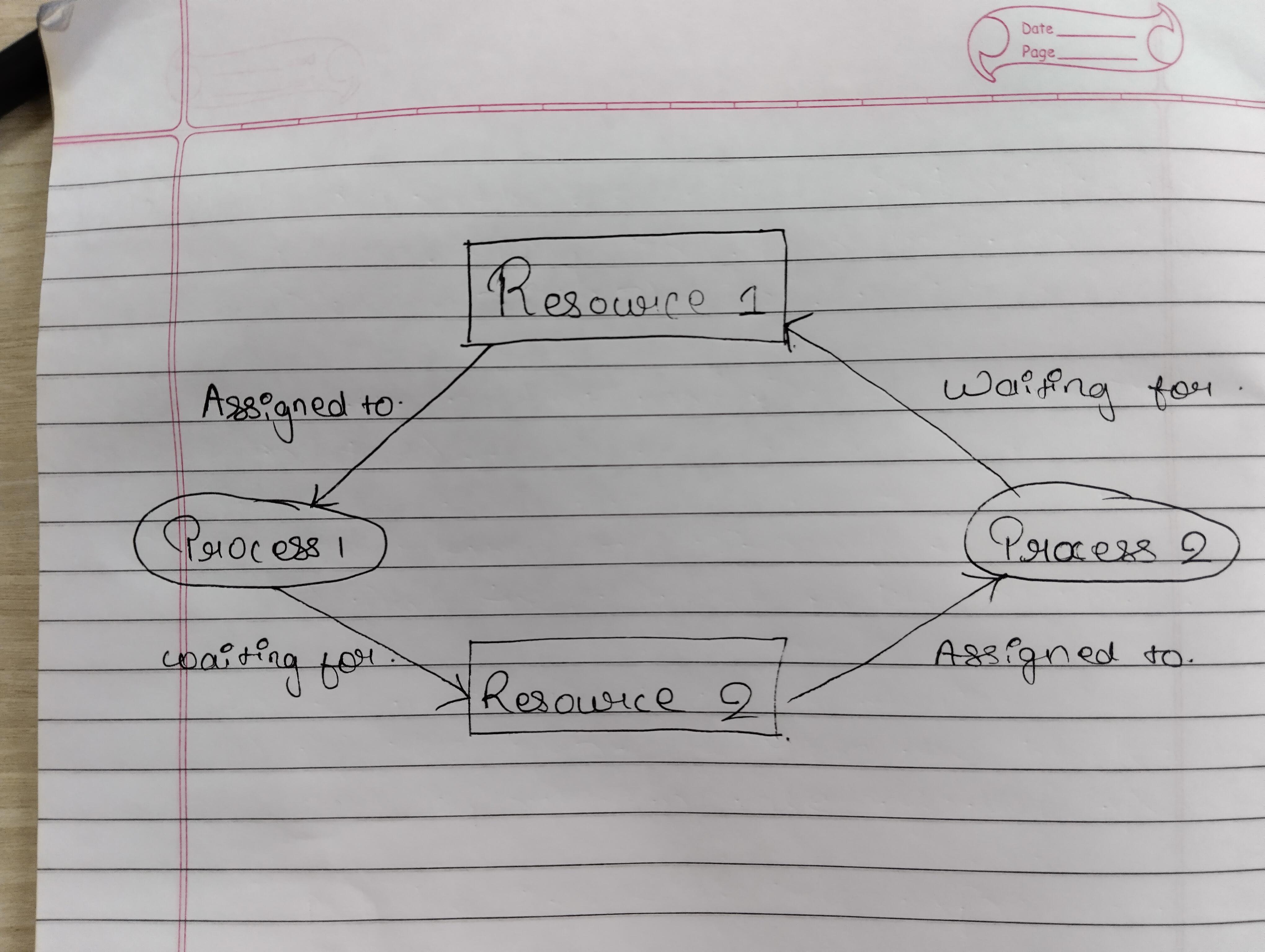
Example :- Let take Two processes P1 and P2 and two resources R1 and R2

- P1 holds R1 and request R2 

- P2 holds R2 and request R1

Process can proceed because each is waiting for a resource held by the other leading to a deadlock 


---Starvation :- 

* Starvation in an operating system occurs when a processes is indefinitely delayed from accessing resources or CPU time . It often results from scheduling policies that consistently favor certain processes over others

* processes with lower priority may starve if higher - priority processes keep arriving and are always given first preference 


Example :- let take a simple example a scheduling system that uses a priority based algorithm processes with higher priority are served before those with lower priority 


processes A : High priority 


Processes B : Medium priority 


processes C : Low priority 


if new high priority processes keep arriving they will always be scheduled before low priority processes . Processes C may never get CPU time leading to starvation even if the processes C is ready to execute it is constantly by passed by priority processes causing it to wait indefinitely


Comments ()


Sign in

Read Next

File management

Blog banner

Eating Well With Meal Maharaj on Busy Workdays Without Cooking

Blog banner

WomenEmpowerment

Blog banner

A Journey By Train

Blog banner

Why Are So Many Adults Getting Diagnosed with ADHD?

Blog banner

Data Mining

Blog banner

How to kiss

Blog banner

5 Stages of Digital Marketing

Blog banner

Memory Management of Operating System(OS)

Blog banner

GraphX:- A graph processing tool

Blog banner

VIRTUAL MACHINE

Blog banner

MULTITHREADING:ENHANCEING PERFORMANCE AND EFFICIENCY IN COMPUTING

Blog banner

I/O Management and Disk Scheduling

Blog banner

A Statistical Analysis of Player Performance and their Value in cricket

Blog banner

Google classroom

Blog banner

VIRTUAL MEMORY

Blog banner

What are Virtual Machines

Blog banner

Pink sauce pasta

Blog banner

Autonomy Vehicles: Future Ki Gadiya

Blog banner

Indian Food

Blog banner

Multiple-Processor Scheduling in Operating System

Blog banner

Worms, viruses and Bots

Blog banner

A buffer overflow

Blog banner

Benefits of yoga and meditation

Blog banner

Security in Operating Systems

Blog banner

An Approach To Spyware Detection And Removal

Blog banner

Deadlocks

Blog banner

Art and Culture of Rajasthan

Blog banner

Rules and Regulations of Networking: "Standards and Protocols" - Part 2

Blog banner

Patola Outfits for the Modern Wardrobe: Reviving Indian Handloom in Style

Blog banner

The Features of Blockchain

Blog banner

Service Strategy In ITSM

Blog banner

A-B-C of Networking: Part-3 (Topology [Bus & Star])

Blog banner

Photorec - media recovery tool

Blog banner

Senseless Teeths

Blog banner

american greatines

Blog banner

Hacking Mobile Platforms

Blog banner

Multiprocessor and Multicore Organization

Blog banner

PYTHON

Blog banner

21ST CENTURY PATRIARCHY

Blog banner

GIS REMOTE SENSING

Blog banner

Types of Hackers

Blog banner