wisemonkeys logo
FeedNotificationProfileManage Forms
FeedNotificationSearchSign in
wisemonkeys logo

Blogs

Paginng In OS

profile
ANUJ YADAV
Sep 08, 2024
0 Likes
0 Discussions
81 Reads

                         Paging in Operating Systems

Paging is a memory management scheme used by operating systems to eliminate the problem of fitting varying-sized processes into fixed-sized memory spaces. It allows a process's physical memory to be non-contiguous, effectively avoiding fragmentation and ensuring efficient use of memory.


How Paging Works :

Logical and Physical Memory Separation :

Paging separates the logical address space (the addresses used by programs) from the physical address space (the actual addresses in RAM). This means a program’s memory can be scattered across different locations in physical memory, while still appearing contiguous to the program itself.


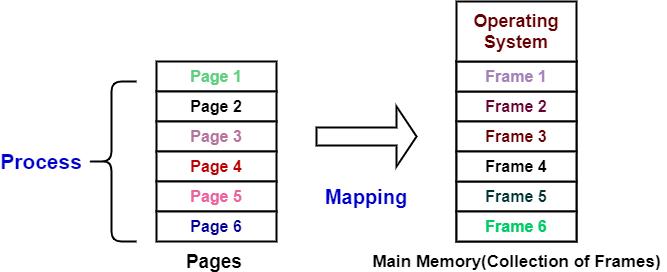
Pages and Frames


Pages: The process’s logical memory is divided into fixed-sized blocks called pages.

Frames: The physical memory is also divided into blocks of the same size as the pages, called frames.

The OS loads pages from the logical address space into available frames in the physical address space.

Page Table

The operating system maintains a page table for each process. This table maps the logical pages to their corresponding frames in physical memory. When a program references a memory address, the CPU uses the page table to translate the logical address into a physical address.


Address Translation

Every memory access by a program involves two components: the page number and the page offset.


The page number identifies the specific page in the page table.

The page offset is the exact location within the page.

The operating system uses this information to find the corresponding physical address in the frame.




Comments ()


Sign in

Read Next

Dos (Denial of service) Attack

Blog banner

Data Lake

Blog banner

Process Creation

Blog banner

Virtual Machine

Blog banner

Blog on Smartsheet.

Blog banner

Career v/s Job : Choose your passion

Blog banner

Google classroom

Blog banner

Information Technology In E- Commerce

Blog banner

Short note on expert system

Blog banner

Deadlock

Blog banner

INTERNET

Blog banner

Data Acquisition in Cyber Forensics

Blog banner

E-BUSINESS RISK MANAGEMENT

Blog banner

Data Visualization- Importance and tools (Tableau,Power BI, Matplotlib)

Blog banner

15 Interesting Facts about India

Blog banner

Precision-Recall in Data Science

Blog banner

File System

Blog banner

Paralysis/Paralysis Stroke

Blog banner

Data Warehousing

Blog banner

Cross site scripting Attack

Blog banner

IP ADDRESS

Blog banner

Exploring Human Factors in Cyber Forensics Investigations.

Blog banner

URL vs Domain

Blog banner

Satellite Based Positioning

Blog banner

Linux Virtual Machine Process Scheduling

Blog banner

Mumbai

Blog banner

What is thread and alse multithreading

Blog banner

Smart Homes | Zigbee Alliance

Blog banner

Landslide Hazard

Blog banner

Types of Viruses

Blog banner

ROLE OF THE COMPUTER FORENSICS TOOLS AND TECHNIQUES

Blog banner

Evolution of the Microprocessor ~ Aditya Pai

Blog banner

OLA

Blog banner

How to kiss

Blog banner

Some web vulnerabilities

Blog banner

Automating OSINT tasks for efficient Cyber Forensics Investigations

Blog banner

Disk scheduling

Blog banner

10 Types of Friends in every friend group

Blog banner

Disk scheduling

Blog banner

Memory management

Blog banner

A Happier Workplace Starts with Healthy Lunches by Meal Maharaj

Blog banner

Network Footprinting in Cybersecurity

Blog banner