wisemonkeys logo
FeedNotificationProfileManage Forms
FeedNotificationSearchSign in
wisemonkeys logo

Blogs

Threads

profile
Harsh Darji
Aug 15, 2024
0 Likes
0 Discussions
39 Reads

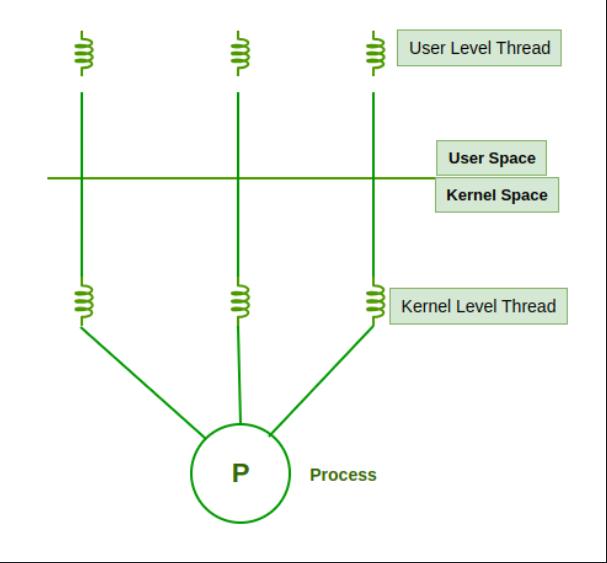
A thread is a single sequence stream within a process. Threads are also called lightweight processes as they possess some of the properties of processes.

Each thread belongs to exactly one process. In an operating system that supports multithreading, the process can consist of many threads. But threads can be effective only if the CPU is more than 1 otherwise two threads have to context switch for that single CPU.

What is Thread in Operating Systems?

In a process, a thread refers to a single sequential activity being executed. these activities are also known as thread of execution or thread control. Now, any operating system process can execute a thread. we can say, that a process can have multiple threads.

Why Do We Need Thread?

  • Threads run in parallel improving the application performance. Each such thread has its own CPU state and stack, but they share the address space of the process and the environment. 
  • Threads can share common data so they do not need to use inter-process communication 
  • . Like the processes, threads also have states like ready, executing, blocked, etc. 
  • Priority can be assigned to the threads just like the process, and the highest priority thread is scheduled first.
  • Each thread has its own Thread control 
  • . Like the process, a context switch occurs for the thread, and register contents are saved. As threads share the same address space and resources, synchronization is also required for the various activities of the thread.

Components of Threads

These are the basic components of the Operating System.

  • Stack Space
  • Register Set


Comments ()


Sign in

Read Next

The Future of Web Development in 2026: Trends Every Business Must Know

Blog banner

The Secure Software Development Life Cycle (SDLC)

Blog banner

EMAIL INVESTIGATION

Blog banner

ADD A SPICE TO YOUR LIFE.

Blog banner

Direct Memory Access

Blog banner

Child labour

Blog banner

Introduction my self

Blog banner

Use case of K-means clustering

Blog banner

What is thread and multithreading ?

Blog banner

URL vs Domain

Blog banner

NETWORK SECURITY RISKS

Blog banner

A small world of Sockets

Blog banner

Dekkers Algorithm : Ensuring Safe Process Synchronization

Blog banner

OPERATING SYSTEM

Blog banner

Capacity management in ITSM

Blog banner

Types Of scheduling

Blog banner

Hosting basics

Blog banner

Virtual Memory

Blog banner

Mail merge

Blog banner

How Harshad Valia International School is nurturing India’s Young Minds?

Blog banner

City2Surf & Spring Fitness Recovery Guide: How Sports Drinks Silently Damage Enamel

Blog banner

What Your Child Learns During Free Play (That You Might Not Notice)

Blog banner

Deadlock

Blog banner

The Procedural Framework for Corporate High-Tech Investigations

Blog banner

Number Guessing game --lisp

Blog banner

Building a Simple Doctor Appointment System in Common Lisp

Blog banner

Principles of Service Operation

Blog banner

Disk Management

Blog banner

Virtual Memory

Blog banner

The 60-Minute Window: What to Do (And What NOT to Do) When You Knock Out a Tooth

Blog banner

Apple

Blog banner

Love is in air.....

Blog banner

Security in Cloud Computing

Blog banner

PROCESS STATES OF OPERATING SYSTEM

Blog banner

STARVATION

Blog banner

The Role of Fibre in Everyday Nutrition and Digestive Health

Blog banner

The Difference Between Plaque and Tartar Explained Simply

Blog banner

KPMG (Klynveld Peat Marwick Goerdeler)

Blog banner

Hot Mango Pickle (Methiyu)

Blog banner

Social engineering in cyber security

Blog banner

Modern Operating Systems.

Blog banner

Cyber Security Control

Blog banner