1. Why do We Need to Schedule Processes?
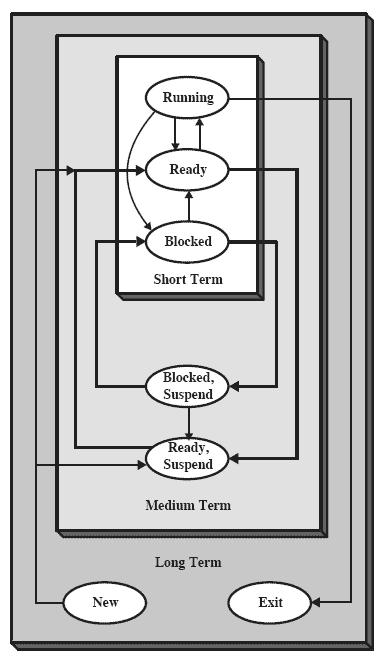
=> Scheduling is important in many different computer environments. One of the most important areas is scheduling which programs will work on the CPU. This task is handled by the Operating System (OS) of the computer and there are many different ways in which we can choose to configure programs.
2. What is Uniprocessor computing in an Operating System?
=>Uniprocessor computing is also known as Centralized computing.A uniprocessor system is defined as a computer system that has a single central processing unit that is used to execute computer tasks. A uniprocessor system consists of a single processor which executes the program instructions as a single instruction per cycle. In a uniprocessor system the memory is used only by a single processor.
3. Characteristics of Uniprocessor scheduling.
=> Uniprocessor Scheduling: scheduling a single CPU among all the processes in the system
• Key Criteria:
– Maximize CPU utilization
– Maximize throughput
– Minimize waiting times
– Minimize response time
– Minimize turnaround time.
4. Difference between uniprocessor and multiprocessor.
=> Explanation:
(i). A uniprocessor system has a single user processor where as in the multiprocessor there are more then one processor .
(ii). The performance of uni-processor is not good where as the performance of multiprocessor is good .
(iii). As compare to the cost point of you the uniprocessor is less cost as compare to the multiprocessor.
(iv). As compare to speed of the multiprocessor is better then the uniprocessor.
5.Uses of Uniprocessors.
=>Some examples of uniprocessor systems include:
(i).Desktop and laptop computers with a single central processing unit (CPU).
(ii). Older mainframe computers that had a single CPU.
(iii).Embedded systems like microcontrollers used in appliances, vehicles, and industrial equipment that have a single processor.
(iv).Game consoles like the Nintendo Switch or PlayStation 4 that have a single CPU.
(v).Smartphones and tablets that use a single system-on-a-chip (SoC) design with an integrated CPU.
In a uniprocessor system, there is a single CPU that executes instructions sequentially. This contrasts with multiprocessor systems that have multiple CPUs working in parallel. Uniprocessor systems are simpler in design but can have limitations in terms of overall computing power and performance compared to multiprocessor configurations.