wisemonkeys logo
FeedNotificationProfileManage Forms
FeedNotificationSearchSign in
wisemonkeys logo

Blogs

Clustering Techniques

profile
Priya Nichit
Aug 23, 2024
0 Likes
1 Discussions
99 Reads

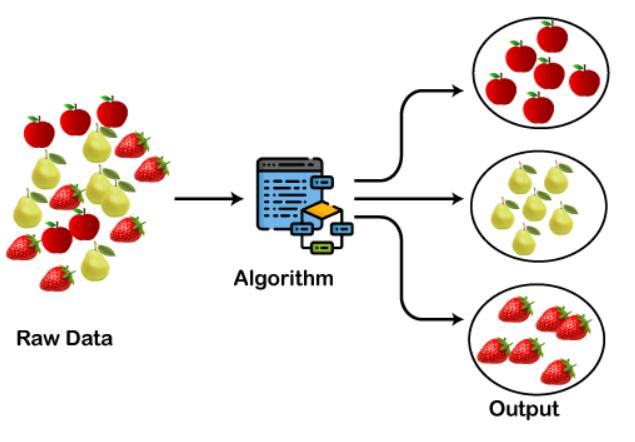
Clustering ek technique hai jo data ko groups mein divide krte hai, jise clusters kehte hain. Ye groups similar items ko ek saath rakhte hain. Matlab, jo data points ek jese hai, unko ek cluster mei daal diya jata hai. Yeh unsupervised learning ka part hota hai, matlab yeh technique bina labeled data ke kaam karti hai.


Structure: Clustering ka structure simple hai. First, data ko analyze karte hain then uske basis pe clusters banate hai. Yeh clusters data ke similarity ya density ke base pe bante hai. Hierarchical clustering mein clusters ko tree-like structure mein arrange karte hai, jise dendrogram kehte hai. Partitioning clustering mein data ko pre-defined clusters mein break kiya jata hai.


Techniques:


K-Means Clustering:

Yeh ek popular partitioning technique hai jisme data points ko predefined "k" clusters mein divide kiya jata hai. Har cluster ka ek centroid hota hai, aur data points ko unke nearest centroid ke according cluster mein assign kiya jata hai. Yeh iterative process hota hai jo tab tak chalta hai jab tak clusters stable na ho jayein.


Steps:

  • Select k number of clusters.
  • Randomly initialize centroids.
  • Har data point ko uske closest centroid ke according assign karein.
  • Recompute centroids based on new cluster memberships.
  • Process ko repeat karein until no changes occur.

·      


 Hierarchical Clustering: 

Yeh technique data ko layers mein divide karti hai, ek tree-like structure banati hai jise dendrogram kehte hain. Do tarike hote hain:

1.    Agglomerative Clustering (Bottom-up): Pehle har data point ko apna ek cluster banaya jata hai, aur phir close clusters ko merge karte jate hain.

2.    Divisive Clustering (Top-down): Sabse pehle ek single cluster banate hain jo poore data ko represent karta hai, phir isse smaller clusters mein divide karte hain.


Steps:

  •   Start with all data points as individual clusters.
  •   Merge the closest clusters.
  •   Repeat until one large cluster is formed.


Density-Based Clustering: 

Ismein clusters un regions mein bante hain jahan data points ki density zyada hoti hai. Is technique ka fayda yeh hai ki yeh noise ya outliers ko ignore kar sakti hai, jo large aur scattered data ke liye ideal hota hai.


Steps:

  1. For each data point, check how many neighbors fall within a specific distance (eps).
  2. If enough neighbors are found, it's considered a core point, and a cluster is formed.
  3. Points within the distance are added to the cluster; noise points are left unclustered.


Advantages: Its irregular shapes ke clusters ko handle karne mein kaafi effective hoti hai, unlike K-Means jo spherical clusters ko prefer karta hai.


Gaussian Mixture Models (GMM): 

Yeh probabilistic model use karta hai, jisme data ko multiple Gaussian distributions ke mix ke roop mein model kiya jata hai. Har data point ko uss cluster mein assign kiya jata hai jisme uska probability score highest hota hai. Yeh technique tab useful hoti hai jab clusters overlap karte ho ya jab data ko soft clustering (jahan ek data point multiple clusters mein belong kar sakta hai) ke through model karna ho.


Steps:

  • Assume the data follows multiple Gaussian distributions.
  • Calculate the probability of each data point belonging to a particular distribution.
  • Assign the point to the cluster with the highest probability.


 Advantages: Overlapping clusters ko identify karna ho toh GMM zyada effective hota hai, jab K-Means fail hota hai.  


Advantages:

  • Clustering se humein data ke hidden patterns pata chal jata hai.
  • Yeh data ko easily analyze aur visualize karne mein help karta hai.
  • Clustering customer segmentation jaise practical tasks mein kaam aata hai.
  • Yeh large datasets ko simplify karne mein madad karta hai, jisse analysis fast aur accurate hota hai.


Disadvantages:

  • Kahi baar clusters ki exact number decide karna difficult hota hai.
  • K-Means clustering complex data shapes ke liye not much effective.
  • Density Based ko high-dimensional data mein problem hoti hai.
  • Model-based clustering jese GMM mein accurate results ke liye zyada computing power chahiye hoti hai.


Applications:

  • Customer Segmentation: Customers ko unke behavior ke basis pe groups mein divide karte hain, So marketing campaigns ko target kar sakein.
  • Image Segmentation: Images ko parts mein divide karte hain taaki specific objects ya patterns ko identify kar sake.
  • Document Classification: Documents ko topics ke hisaab se classify karte hain.
  • Anomaly Detection: Ajeeb data points ya outliers ko detect karte hain, jo fraud detection mein madad karta hai.


Conclusion: Clustering ek powerful tool hai data analysis ke liye. Yeh alag-alag techniques use karke data ke hidden insights search krne mein madad karta hai. Har technique ka apna ek unique approach hota hai, aur data ki nature ke hisaab se best technique choose karna chahiye. Like K-Means large datasets ke liye acha hai, density base noisy datasets ke liye aur GMM jab data ko distributions mein fit karna ho. Isliye, clustering techniques ko samajhna aur sahi way se apply karna data science mein bohot important hai.



Comments ()


Sign in

Read Next

Cloud Security: Trends and Innovations

Blog banner

AI and Cyber Security

Blog banner

Smartphone Security: Vulnerabilities and Attacks

Blog banner

Risk mitigation and management

Blog banner

Interesting fact about kangaroo.

Blog banner

NETSUITE

Blog banner

PHONE TECHNOLOGY

Blog banner

Philadelphia Experiment : Was it real?

Blog banner

MULTITHREADING:ENHANCEING PERFORMANCE AND EFFICIENCY IN COMPUTING

Blog banner

10 Survival Tips that might save your life

Blog banner

Modern Operating System - Khush bagaria

Blog banner

Operating Systems Overview

Blog banner

Kernel Modes: User Mode vs. Kernel Mode - 80

Blog banner

Types of Viruses

Blog banner

Expressing and Measuring Risk (Risk Management)

Blog banner

MoSCoW METHOD IN DATA SCIENCE

Blog banner

Fun Christmas Activities For Toddlers & Kids

Blog banner

Short note on Microsoft office

Blog banner

MODERN OPERATING SYSTEM

Blog banner

Digital Forensics Challenges and Tools

Blog banner

Harsh Rathod

Blog banner

PHISHING

Blog banner

Disk Scheduling

Blog banner

Virtualization

Blog banner

Denial-of-Service and Distributed Denial-of-Service Attack Techniques

Blog banner

Memory Management - operating system

Blog banner

Respondo Launches Revolutionary Video Discussion App

Blog banner

Starvation

Blog banner

The Bold Digital Marketing Moves That Made Durex India’s Second-Largest Condom Brand

Blog banner

Dekkers Algorithm

Blog banner

Severe landslides continue to cause concern in Joshimath, Uttarakhand

Blog banner

The application udemy

Blog banner

Hosting basics

Blog banner

SESSION HIJACKING

Blog banner

What is Amazon?

Blog banner

Firewall in Computer Network

Blog banner

Security and E-mail

Blog banner

LEMON PICKLE SWEET AND MILD HOT

Blog banner

Challenges of Digital forensics in cloud computing environment

Blog banner

Excel records

Blog banner

Service Operation

Blog banner

Raising Emotionally Intelligent Students: The Classroom Beyond Academics

Blog banner