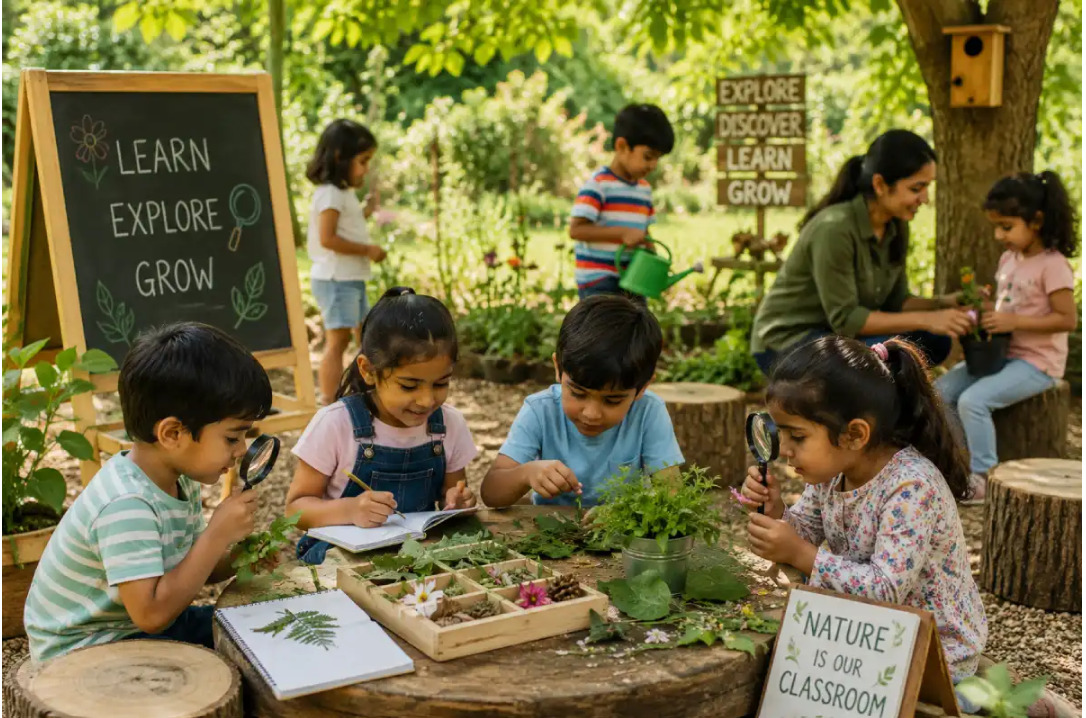
Children have a natural curiosity about their surroundings. A falling leaf, a butterfly that moves from one flower to another, and birds can turn into an interesting learning process within seconds for the child. This is why nature-based learning is becoming increasingly popular for early childhood.
Unlike traditional forms of learning, where learning takes place behind closed walls, nature-based learning uses real-life situations that provide children with opportunities to explore, observe, move, inquire, and discover. For pre-schoolers, such learning experiences would not only be enriching but developmentally beneficial as well.
Nature-based learning is a teaching method wherein children use nature as part of their learning experiences daily. Nature-based learning does not require teachers to take their students out for all-day learning activities. Teachers can incorporate nature into classroom lessons by either taking children to natural settings or bringing elements of nature into the classroom.
Some activities children engage in during nature-based learning include:
Small children always ask various questions about the world that surrounds them. Nature can give them numerous possibilities to examine such questions.
The child may be curious about the reasons why the plant needs water, where ants are going, and why the leaves turn brown. Rather than just providing an answer, a child can actually examine this issue himself.
Nature activities help children to:
Such curiosity may stimulate children to be involved in learning processes actively.
The outside world inherently motivates children to be physically active. Children who run, jump, climb, balance, walk, and play physically active games improve their physical abilities.
Regular outdoor activities may aid in:
Movement plays an essential role in early childhood development. The natural world is a dynamic environment that motivates physical activity.
Natural objects may become excellent means of creative play. Sticks might become the materials for constructions, leaves may be used for art, and stones may become the objects of imagination games.
Children may use natural materials to:
As the natural materials do not have only one function, children may choose what to do with them.
Nature-related activities may also give children chances to socialize with their classmates. Collaborating in the garden, gathering natural materials, or engaging in an outdoor task promotes cooperation and interaction.
Children learn how to:
Outdoor environments may also offer children chances to relax and explore quietly.
Nature is something that can inspire children to appreciate the world around them when they are exposed to it regularly. When children take care of the plants and animals and learn about the environment they live in, they will start understanding that nature should be respected.
Such practices as watering the plants, not littering and treating other living creatures with kindness are just some ways to teach kids about environmental responsibility.
Nature-based learning does not need a vast forest or any specialised outdoor venue for its conduct. Small gardens, playgrounds, balconies, or any green area close by may provide a learning experience in this method.
Nature-based learning is fast becoming a popular practice in early education. This is because it provides children with the chance to learn through practical experiences and not just the classroom alone. Children learn through exposure to plants and insects; development of physical skills; development of creativity and communication skills; and early science skills through exposure to nature in the early preschool years. When teachers create a conducive environment for learning and when parents encourage them at home, everyday experiences can be transformed into learning experiences.
Those parents who are willing to find out how certain activities relate to their kids’ preschool learning experiences may consider visiting A Day at Elzee: Daily Routine for Kids. They may also visit Elzee Preschool and Daycare.