Animation is the process of creating motion and shape change illusion by means of the rapid display of a sequence of static images that minimally differ from each other.
The illusion—as in motion pictures in general—is thought to rely on the phi phenomenon. Animators are artists who specialize in the creation of animation.
Animations can be recorded on either analogue media, such as a flip book, motion picture film, video tape, or on digital media, including formats such as animated GIF, Flash animation or digital video. To display animation, a digital camera, computer, or projector are used along with new technologies that are produced.
Animation creation methods include the traditional animation creation method and those involving stop motion animation of two and three-dimensional objects, such as paper cutouts, puppets and clay figures. Images are displayed in a rapid succession, usually 24, 25, 30, or 60 frames per second
The main purpose of the principles was to produce an illusion of characters adhering to the basic laws of physics, but they also dealt with more abstract issues, such as emotional timing and character appeal.
The book and some of its principles have been adopted by some traditional studios, and have been referred to by some as the "Bible of animation."
Though originally intended to apply to traditional, hand-drawn animation, the principles still have great relevance for today's more prevalent computer animation.
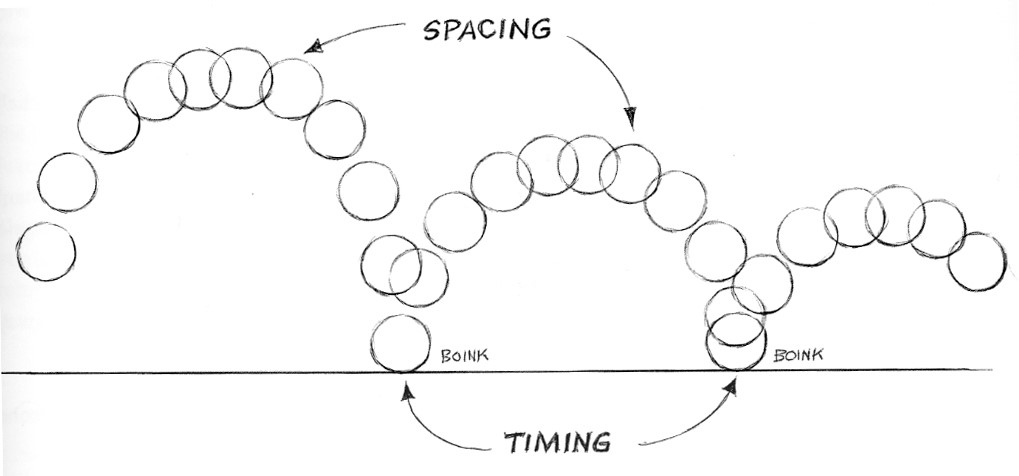
1. Timing/Spacing:
Expertise in timing comes best with experience and personal experimentation, using the trial and error method in refining technique.
The basics are: more drawings between poses slow and smooth the action.Fewer drawings make the action faster and crisper.
A variety of slow and fast timing within a scene adds texture and interest to the movement.
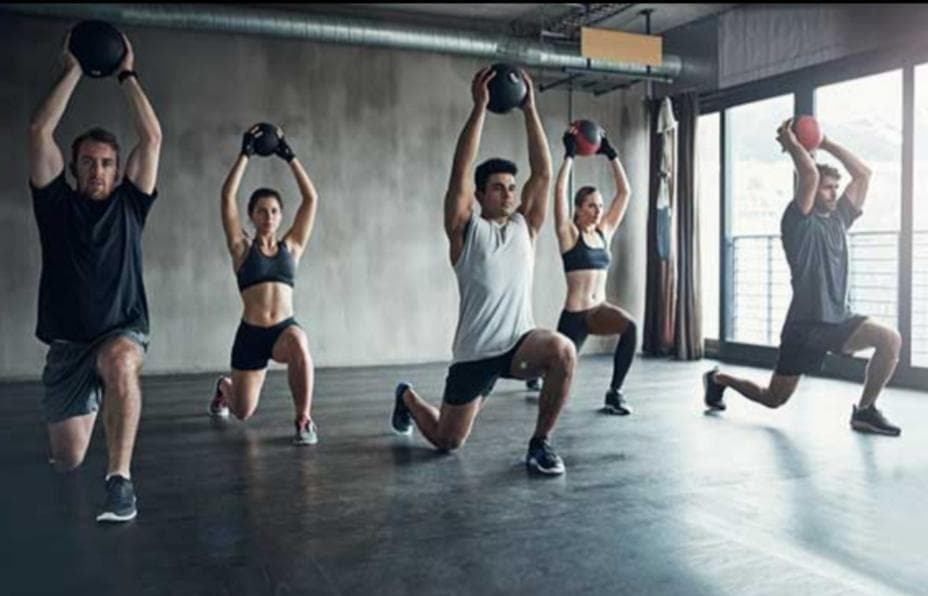
Also, there is timing in the acting of a character to establish mood, emotion, and reaction to another character or to a situation. Studying movement of actors and performers on stage and in films is useful when animating human or animal characters.
This frame-by-frame examination of film footage will aid you in understanding timing for animation.
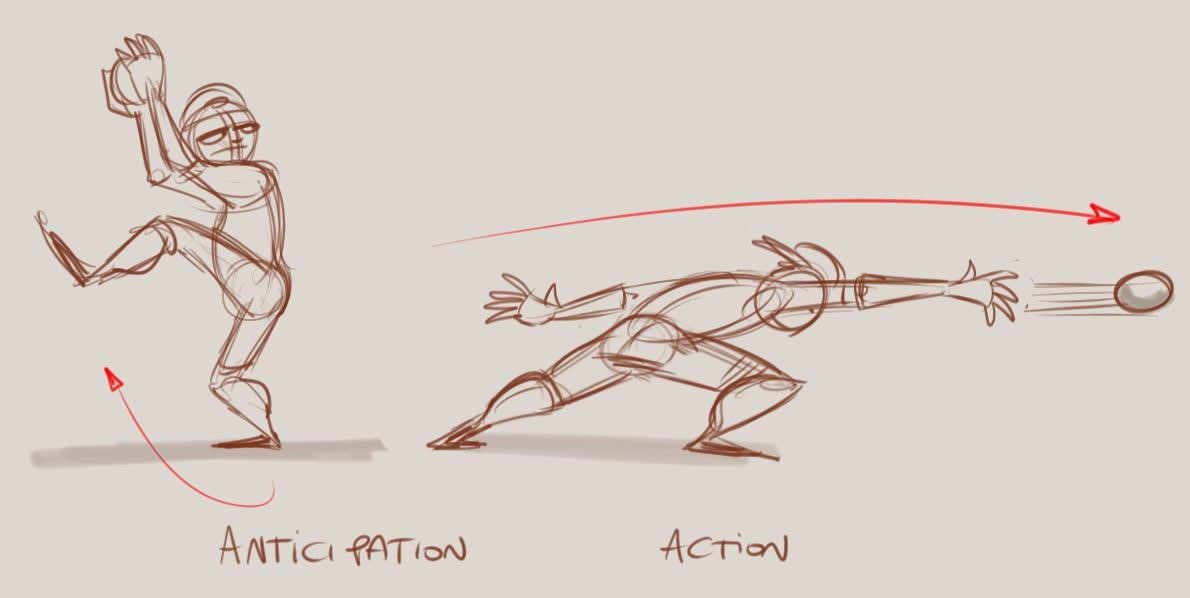
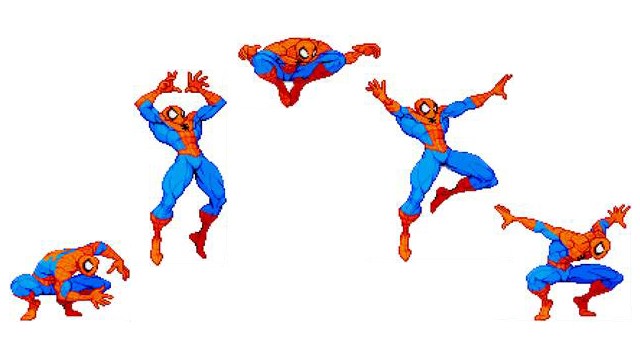
2. Anticipation:
This movement prepares the audience for a major action the character is about to perform, such as, starting to run, jump or change expression.
A dancer does not just leap off the floor. A backwards motion occurs before the forward action is executed. The backward motion is the anticipation.
Almost all real action has major or minor anticipation such as a pitcher's wind-up or a golfers' back swing.
Feature animation is often less broad than short animation unless a scene requires it to develop a characters personality.
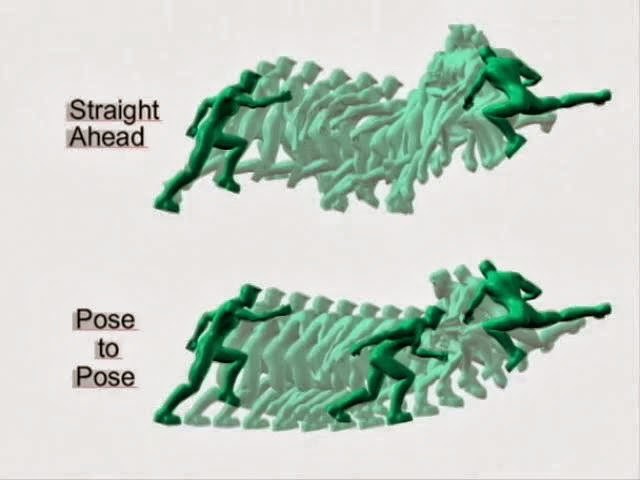
3. Straight Ahead/Pose to Pose:
"Straight ahead action" means drawing out a scene frame by frame from beginning to end, while "pose to pose" involves starting with drawing a few key frames, and then filling in the intervals later.
Straight ahead action creates a more fluid, dynamic illusion of movement, and is better for producing realistic action sequences.
On the other hand, it is hard to maintain proportions, and to create exact, convincing poses along the way.
"Pose to pose" works better for dramatic or emotional scenes, where composition and relation to the surroundings are of greater importance.
A combination of the two techniques is often used.
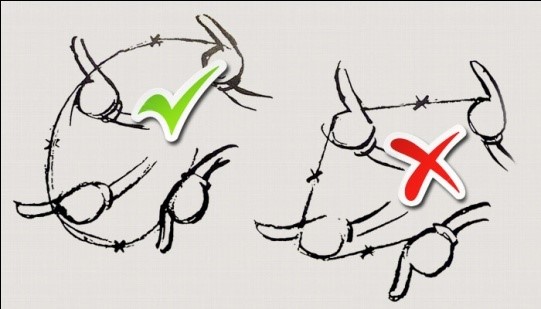
4. Arcs:
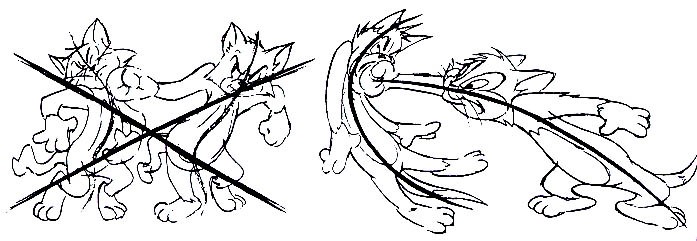
Most natural action tends to follow an arched trajectory, and animation should adhere to this principle by following implied "arcs" for greater realism. This can apply to a limb moving by rotating a joint, or a thrown object moving along a parabolic The exception is mechanical movement, which typically moves in straight lines.
As an object's speed or momentum increases, arcs tend to flatten out in moving ahead and broaden in turns.
An object in motion that moves out of its natural arc for no apparent reason will appear erratic rather than fluid.
Therefore when animating (for example) a pointing finger, the animator should be certain that in all drawings in between the two extreme poses, the fingertip follows a logical arc from one extreme to the next. Traditional animators tend to draw the arc in lightly on the paper for reference, to be erased later.
5. Follow Through and Overlapping Action:
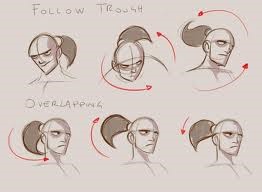
Follow through and overlapping action is a general heading for two closely related techniques which help to render movement more realistically, and help to give the impression that characters follow the laws of physics, including the principle of inertia.
"Follow through" means that loosely tied parts of a body should continue moving after the character has stopped and the parts should keep moving beyond the point where the character stopped to be "pulled back" only subsequently towards the center of mass and/or exhibiting various degrees of oscillation damping.
"Overlapping action" is the tendency for parts of the body to move at different rates (an arm will move on different timing of the head and so on).
6. Staging:
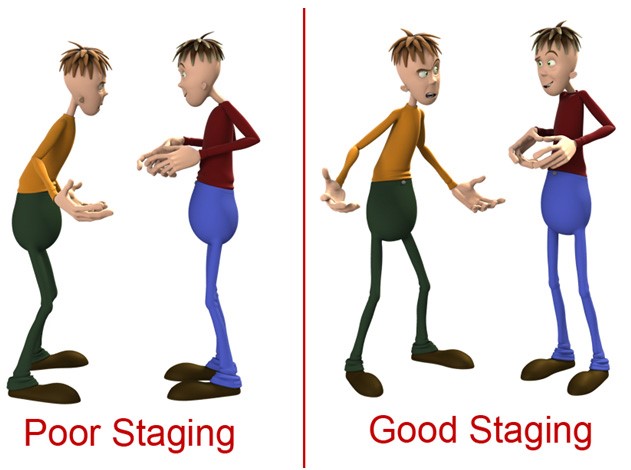
This principle is akin as to staging as it is known in theatre and film. Its purpose is to direct the audience's attention, and make it clear what is of greatest importance in a scene.
Johnston and Thomas defined it as "the presentation of any idea so that it is completely and unmistakably clear", whether that idea is an action, a personality, an expression or a mood.
This can be done by various means, such as the placement of a character in the frame, the use of light and shadow, and the angle and position of the camera.
The essence of this principle is keeping focus on what is relevant, and avoiding unnecessary detail.
7. Slow In and Slow Out:
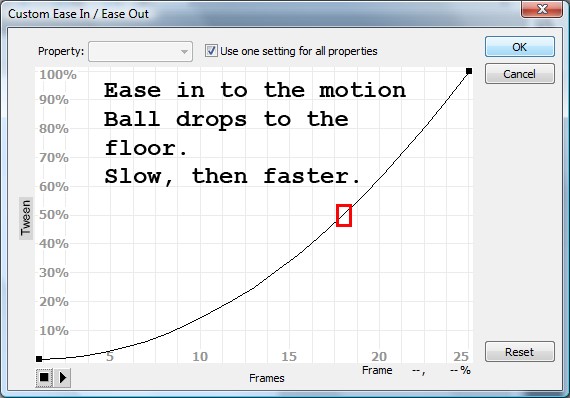
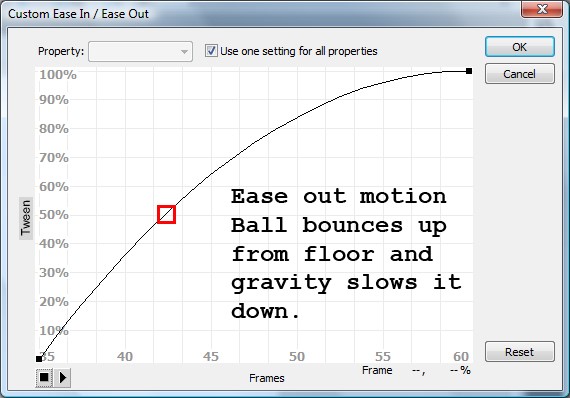
The movement of the human body, and most other objects, needs time to accelerate and slow down.
For this reason, animation looks more realistic if it has more drawings near the beginning and end of an action, emphasizing the extreme poses, and fewer in the middle.
This principle goes for characters moving between two extreme poses, such as sitting down and standing up, but also for inanimate, moving objects, like the bouncing ball in the above illustration.
8. Secondary Action:
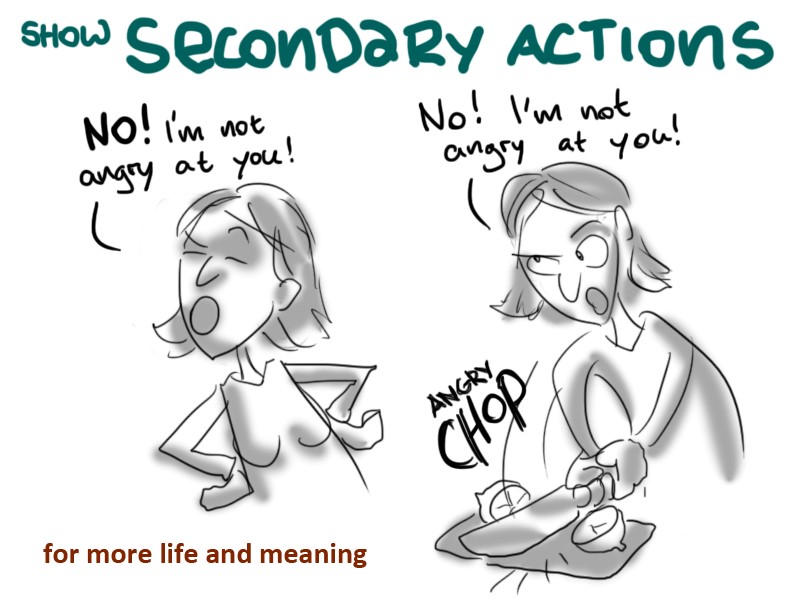
Adding secondary actions to the main action gives a scene more life, and can help to support the main action.
A person walking can simultaneously swing his arms or keep them in his pockets, he can speak or whistle, or he can express emotions through facial expressions.
The important thing about secondary actions is that they emphasize, rather than take attention away from, the main action.
If the latter is the case, those actions are better left out. In the case of facial expressions, during a dramatic movement these will often go unnoticed.
In these cases it is better to include them at the beginning and the end of the movement, rather than during.
9. Exaggeration:
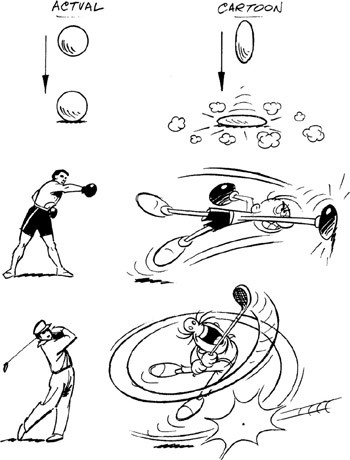
Exaggeration is an effect especially useful for animation, as perfect imitation of reality can look static and dull in cartoons.
The level of exaggeration depends on whether one seeks realism or a particular style, like a caricature or the style of an artist.
The classical definition of exaggeration, employed by Disney, was to remain true to reality, just presenting it in a wilder, more extreme form. Other forms of exaggeration can involve the supernatural or surreal, alterations in the physical features of a character, or elements in the storyline itself.
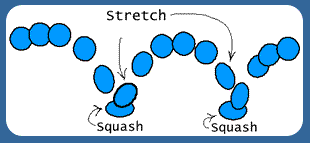
10. Squash and stretch:
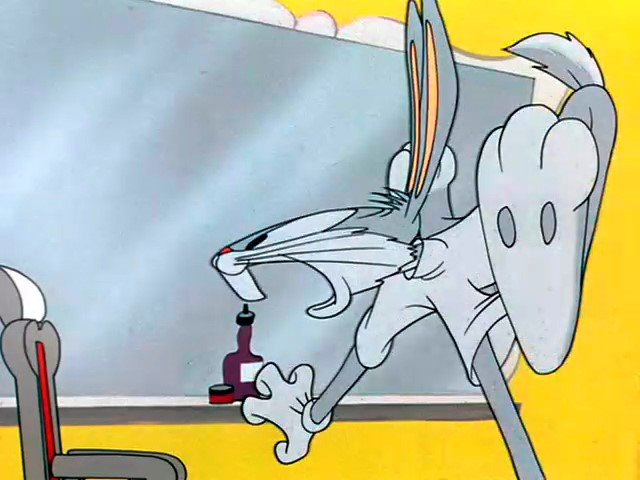
The most important principle is "squash and stretch", the purpose of which is to give a sense of weight and flexibility to drawn objects.
It can be applied to simple objects, like a bouncing ball, or more complex constructions, like the musculature of a human face.
Taken to an extreme point, a figure stretched or squashed to an exaggerated degree can have a comical effect.
In realistic animation, however, the most important aspect of this principle is the fact that an object's volume does not change when squashed or stretched.
If the length of a ball is stretched vertically, its width (in three dimensions, also its depth) needs to contract correspondingly horizontally.
11. Solid Drawing:
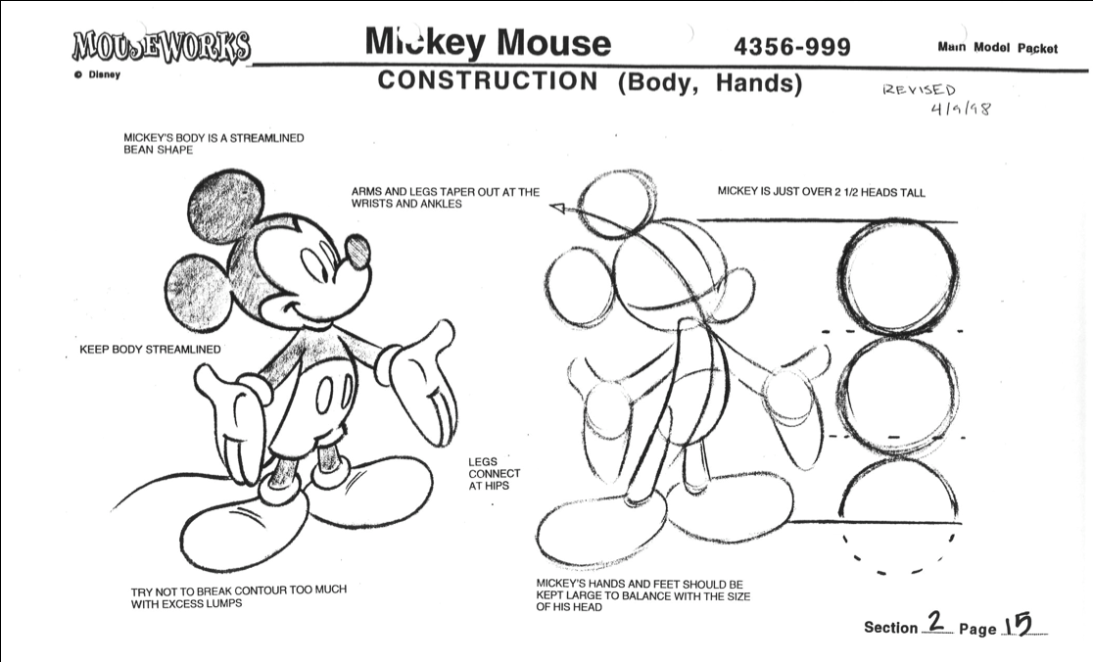
The principle of solid drawing means taking into account forms in three-dimensional space, giving them volume and weight.
The animator needs to be a skilled draughtsman and has to understand the basics of three-dimensional shapes, anatomy, weight, balance, light and shadow, etc.
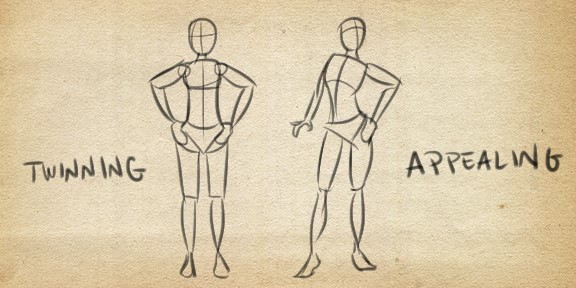
For the classical animator, this involved taking art classes and doing sketches from life. One thing in particular that Johnston and Thomas warned against was creating "twins": characters whose left and right sides mirrored each other, and looked lifeless.
Modern-day computer animators draw less because of the facilities computers give them, yet their work benefits greatly from a basic understanding of animation principles, and their additions to basic computer animation.
12. Appeal:
Appeal in a cartoon character corresponds to what would be called charisma in an actor.
A character who is appealing is not necessarily sympathetic – villains or monsters can also be appealing – the important thing is that the viewer feels the character is real and interesting.
There are several tricks for making a character connect better with the audience; for likable characters a symmetrical or particularly baby-like face tends to be effective.
A complicated or hard to read face will lack appeal, it may more accurately be described as 'captivation' in the composition of the pose, or the character design.