Choosing the right window tint for your car often feels like balancing comfort, aesthetics, legal compliance, and heat rejection. With scorching Indian summers, high-performance sun films like V-KOOL and advanced ceramic films have become essential upgrades for maintaining cabin comfort and protecting interior upholstery.
However, understanding Visible Light Transmission (VLT) and how it correlates with darkness level and performance is the most critical step before making an investment.
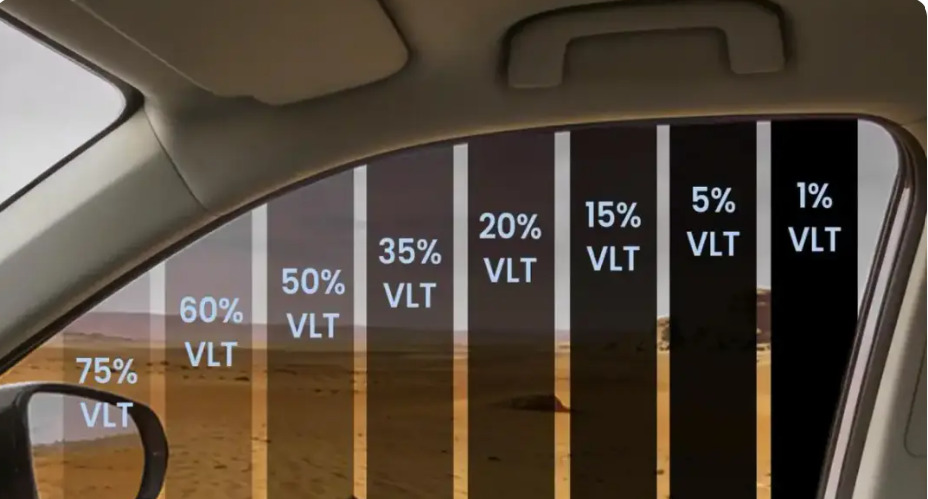
The VLT percentage measures how much visible light passes through the film. Lower percentages mean darker shades, higher privacy, and heavier light blocking, while higher percentages ensure maximum optical clarity and compliance with optical standards.
| Sr No. | VLT Percentage | Darkness Level (%) | Primary Visual Appearance | Privacy Level | Advantages | Best Application & Ideal Use Case |
| 1 | 75% VLT | 25% Darkness | Practically Clear / Ultra-Subtle | Minimal | Maximum optical clarity; zero night vision impairment; high heat/UV rejection when using spectrally selective films (e.g., V-KOOL). | Front Windshield & Rear Glass (Meets high-clarity requirements; ideal for night driving safety). |
| 2 | 60% VLT | 40% Darkness | Slight Tint / Factory Look | Very Subtle | Excellent balance between high clarity and noticeable glare reduction; preserves interior view. | Front Side Windows & Front Windshield (Great for drivers wanting heat defence without dark windows). |
| 3 | 50% VLT | 50% Darkness | Medium-Light Tint | Light | Noticeably cuts down sun glare, reduces eye fatigue, and maintains clear cabin visibility from outside. | Front Side Windows & Rear Side Windows (Standard legal limit baseline for side safety glazing). |
| 4 | 35% VLT | 65% Darkness | Medium-Dark Tint | Moderate | Great balance of privacy, aggressive glare reduction, and solar heat control; stylish aesthetic. | Rear Side Windows & Sunroofs (Popular mid-tier shade for luxury look without pitch-black glass). |
| 5 | 20% VLT | 80% Darkness | Dark Tint | High | Strong privacy; interior occupants are barely visible from outside; significant glare drop. | Rear Passenger Windows & Rear Windshield (Ideal for chauffeur-driven cars and VIP privacy). |
| 6 | 15% VLT | 85% Darkness | Very Dark Tint | Very High | Keeps cabin significantly cooler in direct sunlight; near-total privacy under standard daylight. | Rear Passenger Windows & Cargo Glass (Suitable for hot climates and high-exposure rear seats). |
| 7 | 5% VLT | 95% Darkness | Limo Dark Tint | Ultra-High | Maximum interior concealment; extreme glare reduction; full sun block. | Sunroofs, Panoramic Roofs & Rear Executive Cabin (Restricted visibility; dark at night). |
| 8 | 1% VLT | 99% Darkness | Pitch Black / Solid | Complete Privacy | Complete blackout; maximum heat & light blockage. | Custom Show Cars & Commercial Security Glass (Extremely limited visibility; unsafe for regular driving). |
1. Understanding Total VLT (Factory Glass + Film)
Factory car glass is rarely 100% clear—most modern luxury and mass-market cars come with a factory tint of around 70% to 85% VLT. When you apply an aftermarket film (e.g., a 70% VLT film), the overall combined light transmission will drop to around 50%–60% VLT. Always account for your base glass VLT before choosing a film strength.
2. VLT vs. Heat Rejection (The V-KOOL Advantage)
Darker tints do not automatically mean higher heat rejection. Standard cheap dyed films only darken the glass using carbon or pigment.
In contrast, premium spectrally selective films (like V-KOOL) use multi-layer precious metal technology (gold, silver, indium oxide) to reject over 94% of Infrared (IR) heat and 99% of UV rays while maintaining 70%+ VLT clarity. This gives you maximum cooling without needing dark, unsafe tints.
3. Legal Compliance Under CMVR Rule 100
According to the Central Motor Vehicles Rules (CMVR) 100 in India:
Note: Visual darkness laws are strictly enforced across major Indian metro cities. Always request high-VLT, high-IR-rejection clear films for front windshields to ensure night driving safety and compliance.
Protecting your vehicle’s finish while maintaining an exceptionally cool, elegant cabin isn't just an upgrade—it’s an investment in your daily driving experience. Whether you are looking to safeguard your car's body paint from high-impact road debris or shield your glass against intense solar heat, V-KOOL’s world-class technology provides the ultimate solution.
Ready to transform your vehicle's protection and comfort? Explore our full suite of premium automotive protection solutions on our V-KOOL website, or dive deeper into our high-performance spectrally selective heat-rejection technology on our V-KOOL Heat Protection Sun Films. Contact our certified specialists today to schedule your custom fitment and experience driving comfort redefined.