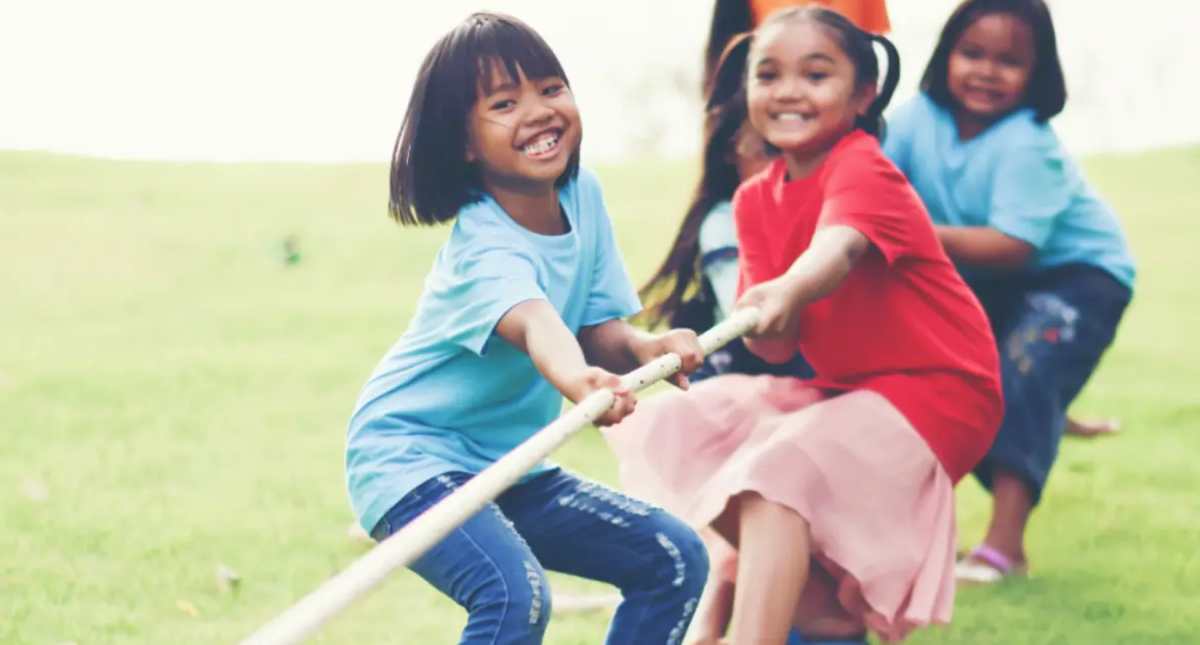
In today’s world, teamwork is more than just one skill but a life lesson that helps kids grow into confident, responsible, and empathetic beings. Be it finishing a class project, constructing blocks together, or planning a small play, children learn the essence of collaboration from a very young age through experiences in day-to-day life.
Teamwork allows children to learn to communicate well, listen to others, and respect differences in opinions. When children work in a team, they come to realise that all of them have something special that contributes to the group. This feeling of belonging strengthens not only their social skills but also their emotional intelligence and problem-solving capability.
By learning to share responsibilities, to take turns, and to celebrate the collective achievements, students experience the joy of working toward a common goal. These lessons extend beyond the classroom into lifelong, valuable traits for success.
Schools go a long way in instilling collaborative behaviour. Group assignments by teachers could be designed so as to ensure participation and reward teamwork rather than competition at an individual level. A class environment fosters cooperation, rather than comparison, whereby students will support each other and grow together.
Small victories – like finishing a project as a group or helping a classmate – reinforce positive social behaviours and build self-esteem. Over time, students learn not to regard teamwork as a task but as natural in the process of learning and growing.
When children learn to collaborate, they’re not only learning how to work with others, but also how to lead with empathy, communicate with clarity, and build trust. These are qualities that shape strong, compassionate citizens ready to contribute to a better world.
The creative foundation and success are built on teamwork. Weaving it into daily activities will not only ensure that our children excel academically but also socially and emotionally.