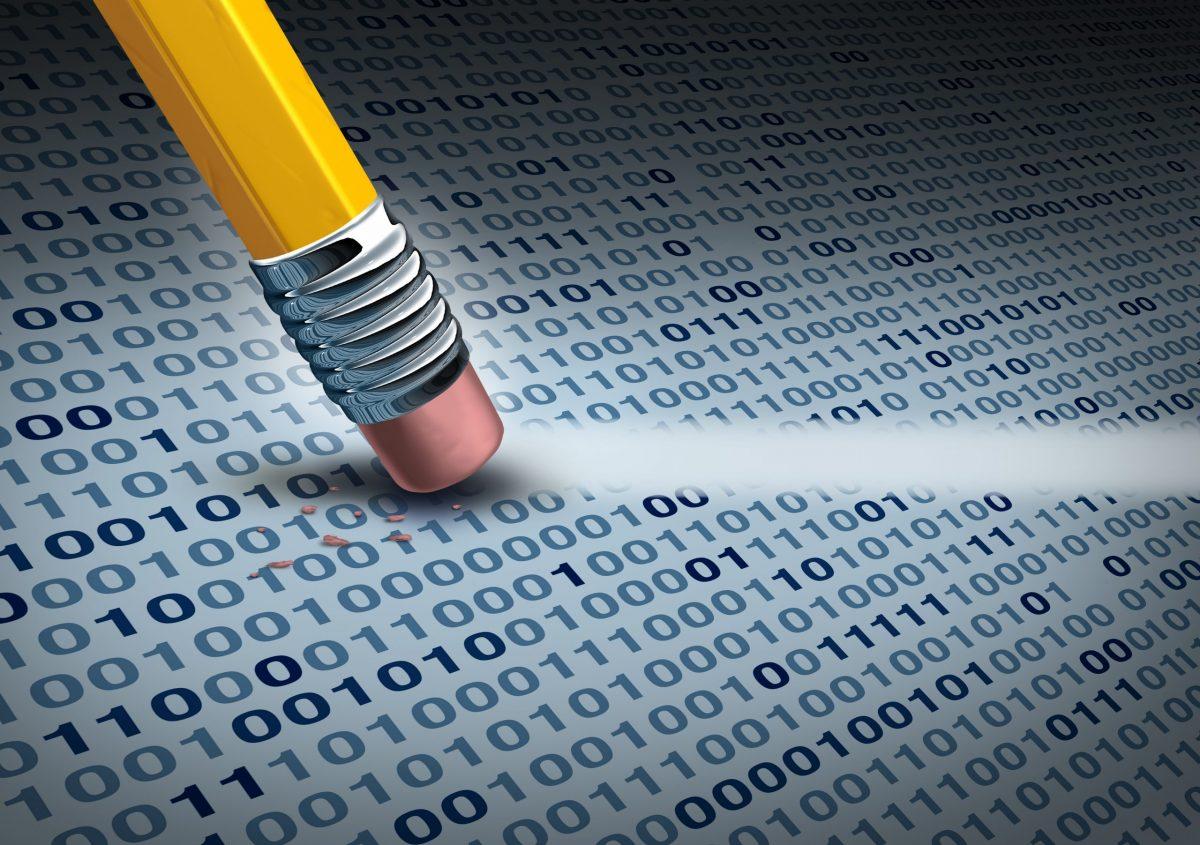
As new smartphones hit the market, people are looking to offload their outdated devices more frequently than ever before. When selling an old phone, the standard procedure is to restore the device to factory settings, wiping it clean of any personal data. This creates a new-phone feel for the new owner and offers protection for the original owner. However, a security firm has determined returning devices to factory settings doesn't actually wipe them clean.
Your PC is old, and now you want to sell it and get a new one for yourself. But your computer is cluttered with bank account information scanned copies of your driver's license, birth certificate, and other personal information. You know the data is still on your hard disc, even though you 'shift erased' the files; it's only hidden from the operating system.
What Happens When You Delete a File
Windows (and other operating systems) keep track of where files are on a hard drive through “pointers.” Each file and folder on your hard disk has a pointer that tells Windows where the file’s data begins and ends.
When you delete a file, Windows removes the pointer and marks the sectors containing the file’s data as available. From the file system’s point of view, the file is no longer present on your hard drive and the sectors containing its data are considered free space.
However, until Windows actually writes new data over the sectors containing the contents of the file, the file is still recoverable. A file recovery program can scan a hard drive for these deleted files and restore them. If the file has been partially overwritten, the file recovery program can only recover part of the data.
When Windows deletes a file, it moves it to a specific hard drive sector and hides it from the operating system. Even after emptying the Recycle Bin, there is still a chance of data recovery if no new data is written on those specific sectors where the deleted files exist.
Why Deleted Files Aren’t Erased Immediately
If you’re wondering why your computer doesn’t just erase files when you delete them, it’s actually pretty simple. Deleting a file’s pointer and marking its space as available is an extremely fast operation. In contrast, actually erasing a file by overwriting its data takes significantly longer. For example, if you’re deleting a 10 GB file, that would be near-instantaneous. To actually erase the file’s contents, it may take several minutes – just as long as if you were writing 10 gigabytes of data to your hard drive.
To increase performance and save time, Windows and other operating systems don’t erase a file’s contents when it’s deleted. If you want to erase a file’s contents when it’s deleted, you can use a “file-shredding” tool
Preventing Deleted Files from Being Recovered
If you have confidential, private data on your computer, such as financial documents and other sensitive pieces of information, you may be worried that someone could recover your deleted files. If you’re selling or otherwise disposing of a computer or hard drive, you should exercise caution.
You can use a utility that automatically wipes your hard drive’s free space – by writing other data over the free space on your hard drive, all deleted files will be erased.
Erase Data With a File Shredder
Don’t Overlook your SD cards
Overwrite the data atleast 3 times
Don’t forget to Log out from all your accounts
Back up the device before any procedure.
Download a remote wiping app.
Clear the internal memory.
Remove your old device from your list of trusted devices.
Unpair your smart devices
Being lazy and ignoring these steps won’t be ant beneficial for you, instead may risk your data!
So, next time, whenever you decide to replace or sell your device, remember to wipe your data off!