For many young children, the first taste of the outside world, outside the comfort of home, is the daycare or preschool system. For some children and their parents, this is a large change, and it is a change to a learning environment. However, the daycare and preschool systems are also a large part of the process in helping children gradually learn to adapt to a learning environment.
Formal academics are not the priority in a daycare or preschool system, and children are encouraged to learn and develop routines, social skills, and self-confidence. Children learn to follow simple directions, work well with other children, and become independent learners.
A daycare or preschool setting is designed to provide comfort to young children. Teachers foster a welcoming classroom environment by encouraging young children to play, explore, and interact freely. This is important, especially during the first days of daycare, as young children must feel comfortable emotionally before they can participate actively.
Basic measures, such as greeting young children warmly, establishing routines, and establishing schedules, can go a long way in helping young children feel comfortable. When young children feel comfortable, they become receptive to participating actively.
For instance, the daily routines of children in preschools usually involve activities such as the time to arrive, circle time, playtime, snack time, story time, and outdoor games. These daily routines help children develop important learning habits, including following instructions, understanding the order of events throughout the day, waiting their turn, and completing tasks independently.
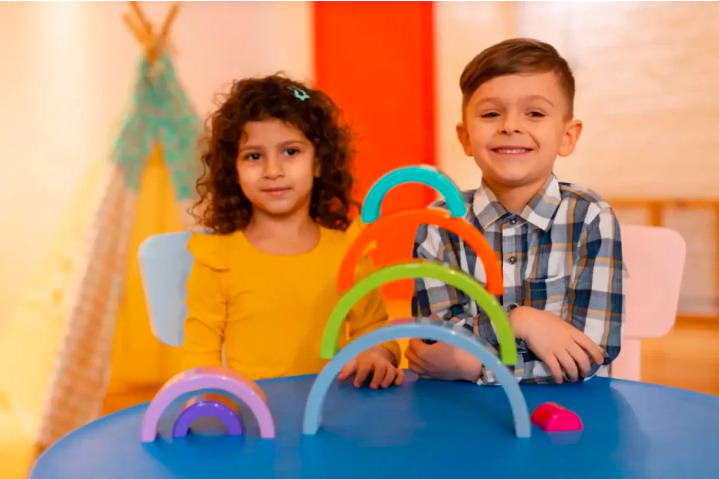
Play is considered to be one of the best and most natural means through which young kids can learn and explore their surroundings. Play-based learning is considered to be one of the most popular learning methods, especially in daycare centres and preschools, as it is considered to be one of the best means through which kids can learn important concepts. Puzzles, building blocks, art, music, and storytelling, etc., are considered to be some of the best means through which kids can learn to think creatively, solve problems, and express themselves confidently. These enjoyable learning activities for kids will eventually pave the way for their learning in the future.
Another important aspect of daycare learning is to ensure that the children become more independent. For instance, the teachers at daycare centres encourage the children to take up some responsibilities on their own, such as organising their toys, washing their hands, or packing their bags. When children take up responsibilities on their own, they gain more confidence. As a result, they become more inclined to take up learning activities.
At times, transitions may prove to be challenging for young children, particularly during the first few weeks of daycare. In this context, teachers have an important role to play in helping young children understand their emotions. By providing reassurance, encouragement, and positive guidance, teachers can help young children learn to express their emotions, which helps them become more adaptable.
Through the tender loving care that they receive, children gradually learn to gain confidence, independence, and a love for learning. Quality early learning for children is dedicated to the holistic development of young learners, including their social, emotional, cognitive, and physical growth, which helps them progress smoothly towards formal learning. To understand the role of daily experiences in the classroom that aid the learning process, parents can refer to The Hidden Learning Moments in a Preschool Day, whereas for more information on programs, learning, and early learning, explore Elzee Daycare and Preschool. Therefore, with the right guidance, daycare and preschool serve as the first step towards building the right learning foundation for the child.