In today's interconnected and dynamic digital landscape, traditional perimeter-based security measures are no longer sufficient to safeguard sensitive data and systems. As organizations increasingly rely on cloud services, remote work, and a wide range of devices, a new approach to cybersecurity is required. Enter the Zero Trust security model, a paradigm shift that challenges the long-held assumption that entities within an organization's network can be inherently trusted. This article studies the principles, benefits, and implementation of the Zero Trust security model.
Understanding Zero Trust:
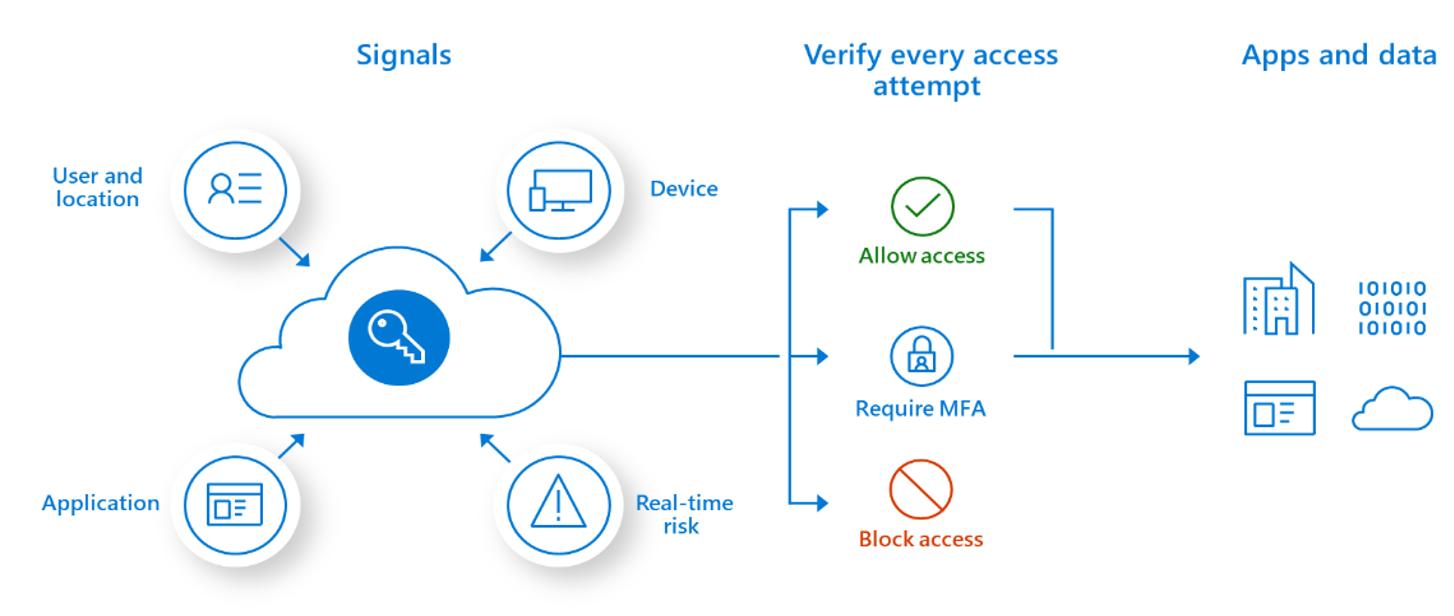
The Zero Trust security model is centered around the belief that organizations should never automatically trust any user or device, regardless of their location or their previous level of access. Instead of assuming that internal networks are safe and external networks are not, Zero Trust assumes that threats can arise both internally and externally. This model operates under the principle of "never trust, always verify."
Key Principles of Zero Trust:
Verification: Zero Trust demands continuous verification of the identity and security posture of users, devices, and applications before granting access. This involves multi-factor authentication, device health checks, and user behavior analysis to ensure only authorized entities gain access.
Least Privilege: Access privileges are granted at the minimal level required for a user or device to perform their tasks. This principle reduces the potential damage in case of a security breach and limits lateral movement within the network.
Micro-Segmentation: The network is divided into smaller, isolated segments, limiting the reach of potential attackers. This approach prevents unauthorized movement within the network and hinders the spread of threats.
Continuous Monitoring: Real-time monitoring and analysis of network activities help in detecting anomalies and potential security breaches. This allows for quick responses and threat mitigation.
Strict Access Control: Zero Trust enforces granular access controls based on various factors such as user roles, device health, location, and the sensitivity of the data being accessed.
Benefits of Zero Trust Security:
Enhanced Security: By assuming that threats can emerge from both external and internal sources, Zero Trust provides a higher level of security, reducing the attack surface and minimizing the potential damage of security breaches.
Adaptability: Zero Trust accommodates the changing nature of modern IT environments, including remote work, cloud services, and the proliferation of mobile devices.
Compliance: Many compliance regulations require stringent access controls and data protection measures. Zero Trust's principles align well with these requirements, aiding in compliance efforts.
Reduced Attack Impact: With the least privilege and micro-segmentation, even if a breach occurs, attackers are constrained in their lateral movement, limiting the extent of the breach.
Implementing Zero Trust:
Asset Inventory: Organizations must identify and categorize their assets, applications, and data, assessing their value and sensitivity.
Access Management: Implement strong authentication methods, like multi-factor authentication, and enforce the principle of least privilege.
Network Segmentation: Divide the network into isolated segments and control traffic flow between them.
Behavioral Analysis: Monitor user and device behavior for anomalies and implement tools for threat detection and response.
Continuous Improvement: Zero Trust is an ongoing process. Regularly review and refine access policies and security measures based on emerging threats and changing requirements.
Conclusion:
The Zero Trust security concept provides an innovative and practical approach to cybersecurity in an era of sophisticated cyber-attacks and complex IT systems. Organizations may improve their defenses and secure their most precious digital assets by challenging old notions of trust and introducing strict access limits, constant monitoring, and adaptive security measures. Adopting the Zero Trust model is more than a security strategy; it is a movement towards a more resilient and proactive cybersecurity posture.