wisemonkeys logo
FeedNotificationProfileManage Forms
FeedNotificationSearchSign in
wisemonkeys logo

Blogs

Linux VServer Architecture

profile
Charmi Dhamelia
Jul 12, 2023
0 Likes
0 Discussions
104 Reads

Linux-VServer is a virtualization solution for Linux operating systems that provides a lightweight and efficient virtual machine architecture. It allows the creation of multiple virtual servers, or virtual private servers (VPS), on a single physical server, enabling isolation and resource management for different applications and users.

At its core, Linux-VServer utilizes the concept of operating system-level virtualization, also known as containerization. Instead of running full-fledged virtual machines, Linux-VServer leverages the Linux kernel's features to partition the operating system and resources, providing separate environments for each virtual server.

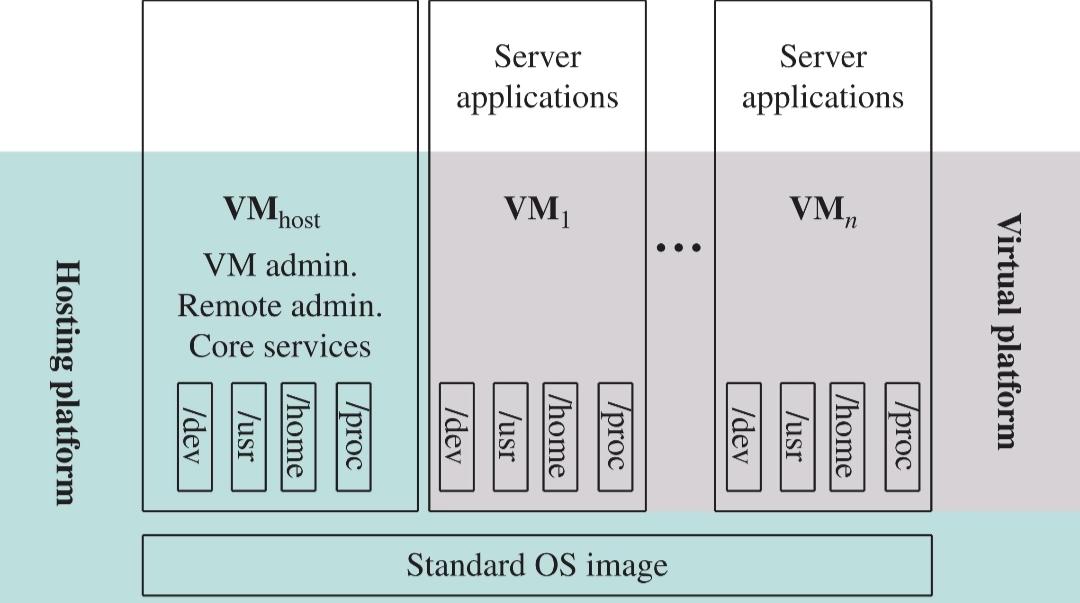
 The general architecture of LinuxVServer.

VServer provides a shared, virtualized OS image, consisting of a root file system, and a shared set of system libraries and kernel services. Each VM can be booted, shut down, and rebooted independentlythree groupings of software running on the computer system. The hosting platform includes the shared OS image and a privileged host VM, whose function is to monitor and manage the other VMs. The virtual platform creates virtual machines and is the view of the system seen by the applications running on the individual VMs.

 The key components of Linux-VServer architecture include:

1: Kernel-level virtualization

2: Contexts

3: Resource management

4: Security and isolation

5: Efficient performance



Comments ()


Sign in

Read Next

Virtual machine and virtualizing

Blog banner

What is Password Cracking ? and it's Techniques.

Blog banner

The most common internet security threats

Blog banner

Process and Threading

Blog banner

Modern operating systems (OS)

Blog banner

10 Reasons why Monica and Chandler are the best couple ever.!!!

Blog banner

Article on Zoho Corporation

Blog banner

Rules and Regulations of Networking: "Standards and Protocols" - Part 2

Blog banner

Flipkart

Blog banner

Scheduling

Blog banner

Hot Mango Pickle (Methiyu)

Blog banner

Incident management in ITSM

Blog banner

Hash password! Is it really secured?

Blog banner

What does the Australian summer have in store for your oral health?

Blog banner

Deadlock and starvation in operating system

Blog banner

Super Garlicky Tomato Soup with Smashed White Beans

Blog banner

Memory management

Blog banner

Nature’s Brush on Silk: The Secret Behind Patola Colours

Blog banner

Install Ubuntu in Vmware

Blog banner

Introduction to Solidity Programming for Blockchain Development

Blog banner

Review on Recovering Deleted Files

Blog banner

Components of GIS

Blog banner

OPERATING SYSTEM OBJECTIVES AND FAULT TOLERENCE.

Blog banner

How can denial-of-service(Dos) attacks be prevented?

Blog banner

Real-time Scheduling - 53003230061

Blog banner

MEMORY MANAGEMENT FILE

Blog banner

A MODERN OPERATING SYSTEM

Blog banner

Deadlock and starvation

Blog banner

Steganography

Blog banner

MIDDLE CLASS MELODIES!!

Blog banner

The Essential Guide to Dynamic Arrays vs. Linked Lists: Which to Use and When ?

Blog banner

MULTITHREADING:ENHANCEING PERFORMANCE AND EFFICIENCY IN COMPUTING

Blog banner

Evolution of operating systems

Blog banner

Operating Systems

Blog banner

How To Invest in Indian Stock Market For Beginners. ~ Tutorial 2 (NSDL And CSDL) Continued...

Blog banner

Cherish the Craft — Essential Tips to Maintain Your Patola Collection

Blog banner

Way to make your meal healthier.

Blog banner

An Overview of Virtual Machines

Blog banner

JIRA SOFTWARE

Blog banner

38_Network Sniffing Techniques_SBC

Blog banner

Clustering Techniques

Blog banner

Unlocking Success: Mastering Google Ads Strategies

Blog banner