Author :
Shashank Rajendraprasad Shukla
Link :
Linkedin
Aim: - To study architecture and working of LTE Technology.
Abstract: - This paper provides an overview of the network architecture of a Long Term Evolution (LTE) system according to the Rel. 8 version of specifications. It is designed to enable the reader to become conversant rapidly with the main principles of the LTE network architecture.
Keywords: - 4G, LTE, Wireless Technology, Cellular Network.
Introduction:- LTE stands for
Long Term Evolution and it was started as a project in 2004 by telecommunication body known as the Third Generation Partnership Project (3GPP). SAE (System Architecture Evolution) is the corresponding evolution of the GPRS/3G packet core network evolution. The term LTE is typically used to represent both LTE and SAE.
LTE evolved from an earlier 3GPP system known as the Universal Mobile Telecommunication System (UMTS), which in turn evolved from the Global System for Mobile Communications (GSM). Even related specifications were formally known as the evolved UMTS terrestrial radio access (E-UTRA) and evolved UMTS terrestrial radio access network (E-UTRAN). First version of LTE was documented in Release 8 of the 3GPP specifications.
A rapid increase of mobile data usage and emergence of new applications such as MMOG (Multimedia Online Gaming), mobile TV, Web 2.0, streaming contents have motivated the 3rd Generation Partnership Project (3GPP) to work on the Long-Term Evolution (LTE) on the way towards fourth-generation mobile.
The main goal of LTE is to provide a high data rate, low latency and packet optimized radio access technology supporting flexible bandwidth deployments. Same time its network architecture has been designed with the goal to support packet-switched traffic with seamless mobility and great quality of service.
Study Parts:-
The high-level network architecture of LTE is comprised of following three main components:-
- The User Equipment (UE).
- The Evolved UMTS Terrestrial Radio Access Network (E-UTRAN).
- The Evolved Packet Core (EPC).
The evolved packet core communicates with packet data networks in the outside world such as the internet, private corporate networks or the IP multimedia subsystem. The interfaces between the different parts of the system are denoted Uu, S1 and SGi as shown below:-
[caption id="attachment_28146" align="aligncenter" width="560"]
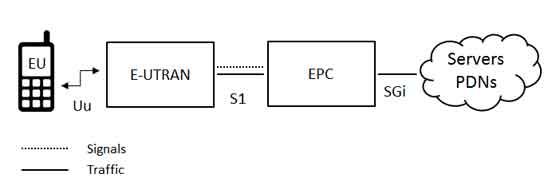 Fig. 1:- interfaces between the different parts of the system
[/caption]
The User Equipment (UE):-
The internal architecture of the user equipment for LTE is identical to the one used by UMTS and GSM which is actually a Mobile Equipment (ME). The mobile equipment comprised of the following important modules:
- Mobile Termination (MT): This handles all the communication functions.
- Terminal Equipment (TE): This terminates the data streams.
- Universal Integrated Circuit Card (UICC): This is also known as the SIM card for LTE equipments. It runs an application known as the Universal Subscriber Identity Module (USIM).
A USIM stores user-specific data very similar to 3G SIM card. This keeps information about the user's phone number, home network identity and security keys etc.
The E-UTRAN (Evolved Universal Terrestrial Radio):-
The architecture of evolved UMTS Terrestrial Radio Access Network (E-UTRAN) has been illustrated below.
[caption id="attachment_28147" align="aligncenter" width="560"]
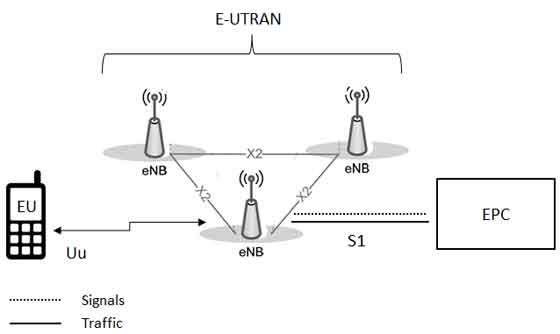 Fig. 2:- The User Equipment (UE) Architecture
[/caption]
The E-UTRAN handles the radio communications between the mobile and the evolved packet core and just has one component, the evolved base stations, called eNodeB or eNB. Each eNB is a base station that controls the mobiles in one or more cells. The base station that is communicating with a mobile is known as its serving eNB.
LTE Mobile communicates with just one base station and one cell at a time and there are following two main functions supported by eNB:
- The eBN sends and receives radio transmissions to all the mobiles using the analogue and digital signal processing functions of the LTE air interface.
- The eNB controls the low-level operation of all its mobiles, by sending them signalling messages such as handover commands.
Each eBN connects with the EPC by means of the S1 interface and it can also be connected to nearby base stations by the X2 interface, which is mainly used for signalling and packet forwarding during handover.
A home eNB (HeNB) is a base station that has been purchased by a user to provide femtocell coverage within the home. A home eNB belongs to a closed subscriber group (CSG) and can only be accessed by mobiles with a USIM that also belongs to the closed subscriber group.
The Evolved Packet Core (EPC) (The core network):-
The architecture of Evolved Packet Core (EPC) has been illustrated below. There are few more components which have not been shown in the diagram to keep it simple. These components are like the Earthquake and Tsunami Warning System (ETWS), the Equipment Identity Register (EIR) and Policy Control and Charging Rules Function (PCRF).
[caption id="attachment_28148" align="aligncenter" width="560"]
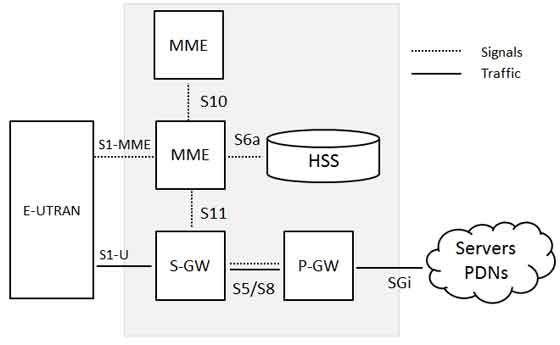 Fig.3:- Evolved Packet Core (EPC) Architecture
[/caption]
Below is a brief description of each of the components shown in the above architecture:-
- The Home Subscriber Server (HSS) component has been carried forward from UMTS and GSM and is a central database that contains information about all the network operator's subscribers.
- The Packet Data Network (PDN) Gateway (P-GW) communicates with the outside world i.e. Packet data networks PDN, using SGi interface. Each packet data network is identified by an access point name (APN). The PDN gateway has the same role as the GPRS support node (GGSN) and the serving GPRS support node (SGSN) with UMTS and GSM.
- The serving gateway (S-GW) acts as a router, and forwards data between the base station and the PDN gateway.
- The mobility management entity (MME) controls the high-level operation of the mobile by means of signaling messages and Home Subscriber Server (HSS).
- The Policy Control and Charging Rules Function (PCRF) is a component which is not shown in the above diagram but it is responsible for policy control decision-making, as well as for controlling the flow-based charging functionalities in the Policy Control Enforcement Function (PCEF), which resides in the P-GW.
The interface between the serving and PDN gateways is known as S5/S8. This has two slightly different implementations, namely S5 if the two devices are in the same network, and S8 if they are in different networks.
Functional split between the E-UTRAN and the EPC
Following diagram shows the functional split between the E-UTRAN and the EPC for an LTE network:
[caption id="attachment_28149" align="aligncenter" width="560"]
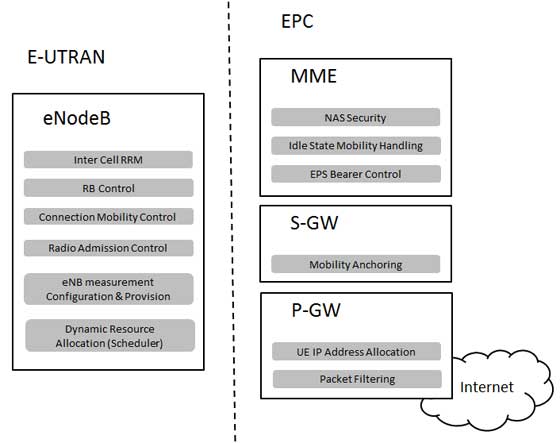 Fig 4:-Functional split between the E-UTRAN and the EPC
[/caption]
Facts about LTE:-
- LTE is the successor technology not only of UMTS but also of CDMA 2000.
- LTE is important because it will bring up to 50 times performance improvement and much better spectral efficiency to cellular networks.
- LTE introduced to get higher data rates, 300Mbps peak downlink and 75 Mbps peak uplink. In a 20MHz carrier, data rates beyond 300Mbps can be achieved under very good signal conditions.
- LTE is an ideal technology to support high date rates for the services such as voice over IP (VOIP), streaming multimedia, videoconferencing or even a high-speed cellular modem.
- LTE uses both Time Division Duplex (TDD) and Frequency Division Duplex (FDD) mode. In FDD uplink and downlink transmission used different frequency, while in TDD both uplink and downlink use the same carrier and are separated in Time.
- LTE supports flexible carrier bandwidths, from 1.4 MHz up to 20 MHz as well as both FDD and TDD. LTE designed with a scalable carrier bandwidth from 1.4 MHz up to 20 MHz which bandwidth is used depends on the frequency band and the amount of spectrum available with a network operator.
- All LTE devices have to support (MIMO) Multiple Input Multiple Output transmissions, which allow the base station to transmit several data streams over the same carrier simultaneously.
- All interfaces between network nodes in LTE are now IP based, including the backhaul connection to the radio base stations. This is great simplification compared to earlier technologies that were initially based on E1/T1, ATM and frame relay links, with most of them being narrowband and expensive.
- Quality of Service (QoS) mechanism have been standardized on all interfaces to ensure that the requirement of voice calls for a constant delay and bandwidth, can still be met when capacity limits are reached.
- Works with GSM/EDGE/UMTS systems utilizing existing 2G and 3G spectrum and new spectrum. Supports hand-over and roaming to existing mobile networks.
Advantages of LTE:-
- High throughput:High data rates can be achieved in both downlink as well as uplink. This causes high throughput.
- Low latency:Time required to connect to the network is in range of a few hundred milliseconds and power saving states can now be entered and exited very quickly.
- FDD and TDD in the same platform:Frequency Division Duplex (FDD) and Time Division Duplex (TDD), both schemes can be used on same platform.
- Superior end-user experience:Optimized signaling for connection establishment and other air interface and mobility management procedures have further improved the user experience. Reduced latency (to 10 ms) for better user experience.
- Seamless Connection:LTE will also support seamless connection to existing networks such as GSM, CDMA and WCDMA.
- Plug and play:The user does not have to manually install drivers for the device. Instead system automatically recognizes the device, loads new drivers for the hardware if needed, and begins to work with the newly connected device.
- Simple architecture:Because of Simple architecture low operating expenditure (OPEX).
Conclusion:-4G LTE is the future of new wireless technology for accessing high bandwidth data for various applications and voice call over VoIP. A major issue in 4G systems is to make the high bit rates available in a larger portion of the cell, especially to users in an exposed position in between several base stations. Certain components such as the circuit switching elements are removed and Wireless LAN connectivity is added. Mobility control, Location management, Hand-over’s, etc have to be performed more efficiently in 4G. LTE is the technological path followed to achieve 4G network speeds.
Future Enhancement:-
The high data rates coupled with service centric approaches in ensuring high QoS awareness, fast handoff techniques, wide area mobility etc pave the way for multiple innovative and high end services over the wireless network infrastructure which were not possible before. Some of the services which were identified to be a true test of the success of these technologies can be listed as follows.
- Laptops, PDA's and fixed broadband services: The most intuitive set of services that can be provided are related to all the fixed wired DSL internet services that we have today, except that they shall be provided wireless and shall support mobility. Also with the strong QoS support in these technologies, the operators shall be allowed to plan business strategies on various sectors based on the average throughputs of that sector.
- Premium VOD(Video On Demand)/MOD(Music On Demand) Services: With High data rates and differentiated QoS services operators can provide premium multimedia based services such as video - on-demand and music-on-demand to subscribers who wish to avail of such services. The selling point of such services would be superior quality coupled with ease of mobility.
- Multimedia Upload and Exchange services: The high uplink data rates of UMB and LTE allow for multimedia upload and exchange services such as file sharing, mobile blogging, social networking etc.
- Consumer Electronics: The high data rates combined with mobility of UMB and LTE shall also spur a growth in development of newer and better consumer electronic goods leveraging these advantages. Better gaming consoles, vehicular entertainment systems, portable multimedia players, digital cameras with network capabilities and the likes of such shall be introduced which shall add value to the technology.
References:-
- Singh, R.K. and Singh, R., 2016. 4G LTE Cellular Technology: Network Architecture and Mobile Standards. International Journal of Emerging Research in Management &Technology ISSN, pp.2278-9359.
- Paul, R., Kabir, N. and Farheen, T., 2008. 4G Mobile Architecture. Sc.(EEE) thesis submitted to Bangladesh University of Engineering and Technology.
- Abed, G.A., Ismail, M. and Jumari, K., 2012. The Evolution To 4g Cellular Systems: Architecture And Key Features Of LTEAdvanced Networks. spectrum, 2.
- Odinma, A.C., Oborkhale, L.I. and Kah, M.M., 2007. The Trends in Broadband Wireless Networks Technologies. The Pacific Journal of Science and Technology, 8(1), pp.118-125.