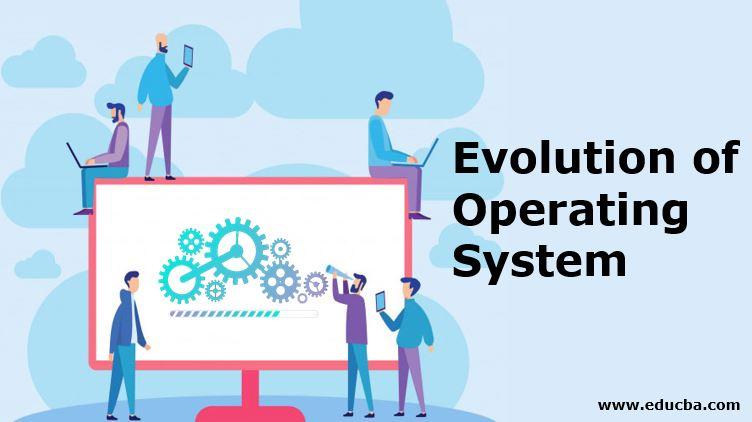
The evolution of operating systems (OS) mirrors the broader history of computing, reflecting advances in hardware, software, and user needs. Initially, computers operated without an OS, using machine languages specific to their hardware. Early systems in the 1940s and 1950s were programmed manually with plugboards and switches, requiring significant human intervention and expertise.
The 1950s and 1960s saw the advent of batch processing systems, where jobs (programs and their data) were processed in groups. IBM's OS/360, introduced in the mid-1960s, was a significant milestone, supporting a variety of hardware configurations and becoming a model for future systems. During this time, time-sharing systems emerged, allowing multiple users to interact with the computer simultaneously, each seemingly having their own dedicated system. This was a leap towards more interactive computing, driven by the introduction of terminals.
In the 1970s, the development of Unix by AT&T's Bell Labs marked another major milestone. Unix introduced concepts like hierarchical file systems, multitasking, and multi-user capabilities. Its portability allowed it to be adapted for various hardware, laying the groundwork for the proliferation of OS variants. Unix's design principles influenced many later systems, including Linux and BSD.
The 1980s and 1990s witnessed the rise of personal computing, with operating systems becoming more user-friendly and graphically oriented. Microsoft's MS-DOS dominated the early 1980s, but the release of Windows in 1985 started a shift towards graphical user interfaces (GUIs). Apple's Macintosh, introduced in 1984, also emphasized GUIs, making computing accessible to non-technical users.
In the late 1990s and early 2000s, open-source operating systems gained traction, with Linux becoming a prominent player. Its open-source nature encouraged community-driven development and adaptation for various purposes, from servers to embedded systems. Concurrently, the growth of the internet spurred the development of network-centric operating systems, enhancing connectivity and security features.
In recent years, the focus has shifted towards mobile operating systems, with iOS and Android dominating the landscape. These systems are optimized for touch interfaces and connectivity, reflecting the ubiquitous nature of smartphones and tablets. Additionally, cloud computing has influenced OS development, with systems designed to support virtualized environments and distributed computing.