Fats used for cooking in India go beyond being merely a part of the preparation; rather, they add a traditional element to the meal along with a distinct flavour. Whether it’s the fragrant ghee used for making dal, the sharp mustard oil for pickling, or the sweet coconut oil that adds its own touch to food from the coastal regions, each fat has its unique quality.
However, in our daily cooking routine, a common query arises: Is ghee, coconut oil, or mustard oil the healthier option? It may not be easy to decide upon the healthier option among the three.
All these cooking oils have been used in Indian cuisine for many years, and each has its own nutrient composition, taste, and health effects.
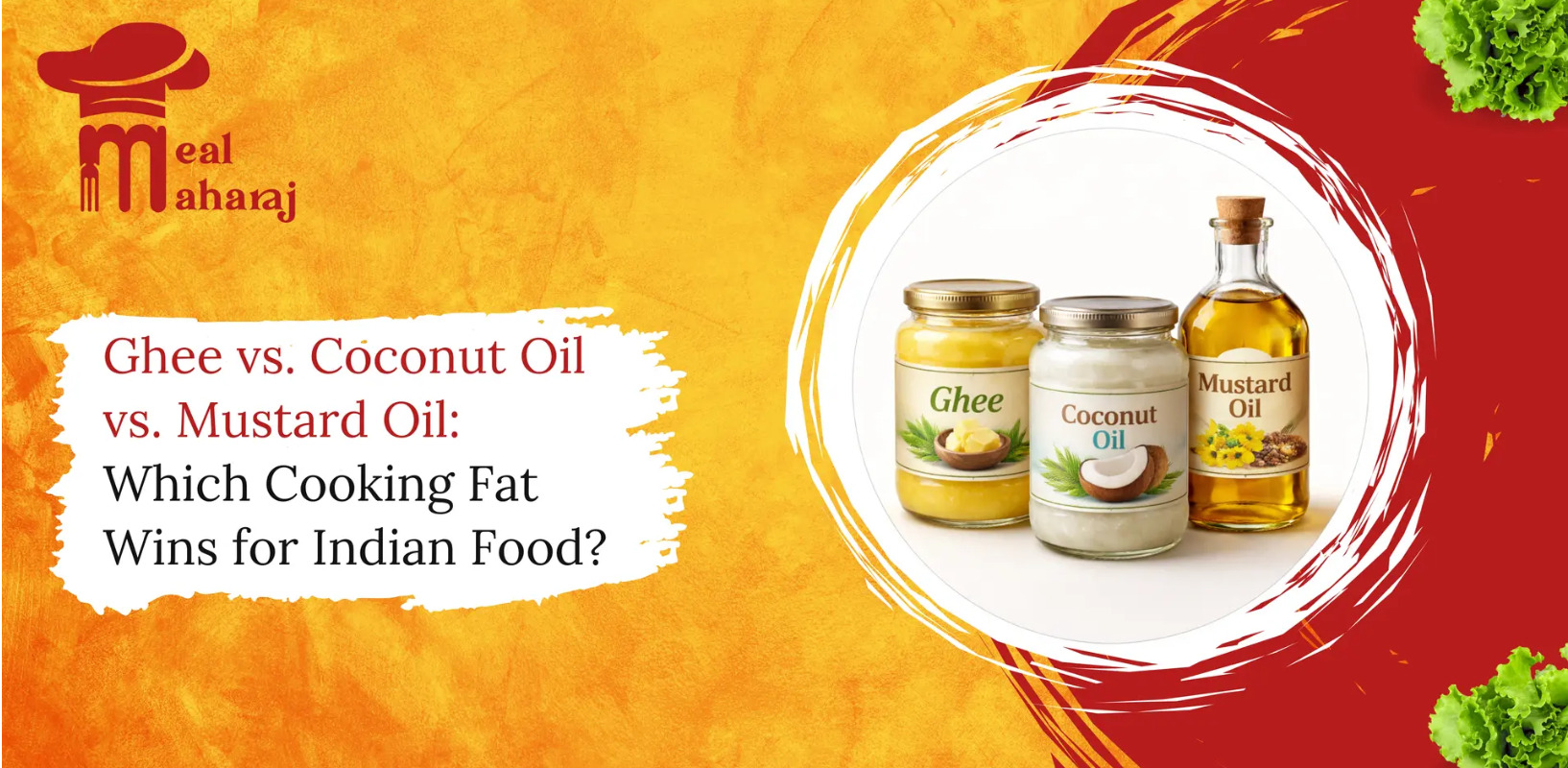
• Clarified butter, ghee, is made from cow’s milk butter
• As the name suggests, coconut oil is obtained from the flesh of coconuts and has a wide application in the cuisine of South India
• Mustard oil has a hot taste and is mostly used in the north and east of India
Ghee has been widely used in India for centuries, and it relates to both traditional preparation processes and Ayurvedic therapy.
Benefits:
• Contains nutritive fats as well as fat-soluble vitamins (A, D, E, K)
• If consumed in small quantities, it will help with digestion.
• Adds flavour to foods.
• High smoke point; makes ghee an excellent product for cooking.
Considerations:
• High in calories, should be used in moderation.
Uses: Suitable for dal, roti, khichdi and traditional cooking methods
The lightness and cooling nature of the oil have made it useful near the coastline. Some Advantages
• Quick Energy from Medium Chain Fatty Acids
• Helps in Metabolism
• Antibacterial and Antifungal
• Excellent Oil for Shallow Frying
Drawbacks:
• Extremely rich in saturated fat, hence, it should be consumed with care.
Applications:
The particular taste of this oil and its usage in cooking are characteristic of Indian cuisine.
Advantages:
• Monounsaturated fat content that might have beneficial effects on heart function
• Has lower quantities of Omega-3 fatty acids compared to cooking oils
• Antibiotic effect
Disadvantages:
• May be perceived as "bitter" by some consumers
• Needs to be heated before consumption due to its bitter taste.
Recommended for use in: Curries, pickles.
Nutritional Comparison:
| Criteria | Fat Ghee | Fat Coconut Oil | Fat Mustard Oil |
| Classification of Fat | Saturated | Saturated (MCT) | Monounsaturated |
| Smoke Point | High | Medium | High |
| Ease of Digestion | Easy (Moderate) | Stimulant | Boosts digestion |
| Heart Health | Moderate Use | Moderate Use | Beneficial for the heart |
| Flavour | Rich and mild | Mild and sweet | Tough flavour |
Navigating the nuances of traditional Indian cooking doesn't have to be a solo journey. Whether you are looking for the comforting aroma of high-quality ghee or the authentic zing of cold-pressed oils, Meal Maharaj is your trusted companion in bringing the true essence of Indian kitchens to your table. We believe that the foundation of a great meal lies in the purity of its ingredients. By bridging the gap between traditional wisdom and modern convenience, Meal Maharaj ensures that every drop of oil and every dollop of ghee contributes not just to the taste of your food, but to the well-being of your family. Choose the best, cook with love, and let every meal be a royal celebration.