Basic Internet Terms and Acronyms
Internet – A globally connected massive computer network system.
World Wide Web (WWW or the web) – A system of Internet servers that is made from millions of interlinked websites and web pages.
Firewall – A network security device designed to prevent unauthorized access to or from a network.
Router – A device that transfers data between computer networks to provide access to the Internet.
ISP (Internet Service Provider) – A company that provides Internet service to customers.
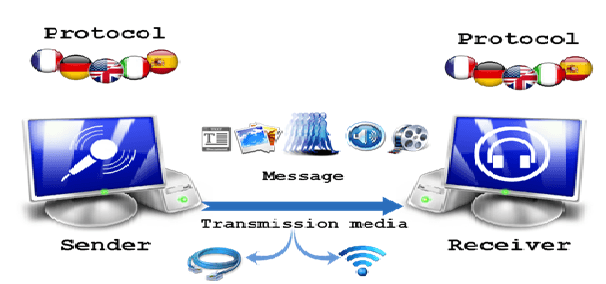
HTTP (Hypertext Transfer Protocol) – A set of rules (a protocol) for transferring and accessing data using the web.
URL (Uniform Resource Locator) – A web address of a specific web page or file on the Internet. An example is https://www.google.com.
IP (Internet Protocol) – A set of rules (a protocol) for sending data from one computer to another on the Internet. Each computer has a unique IP address that distinguishes it from all other computers on the Internet.
FTP (File Transfer Protocol) – A set of rules (a protocol) for transferring files between computers over the Internet.
Cookie – A small text file stored in a user’s computer by a website that the user has visited so that it can remember something about the user at a later time. For example, cookies are used for online shopping. Without cookies, login information would have to be entered before every product was added to the shopping cart.
Cache – This is the high-speed memory which is equal to Random Access Memory Ram and cache has a difference of cache memory server storage and a computer system storage.
Link (hyperlink) – A word, phrase, image, etc., within a file or web page that a user can click on to jump to another document, section of the same document, or web page.
Bandwidth – Tour connection when we transfer data and for that the measurement it is done through a bandwidth this is calculated in bits per second.
Ethernet – The high speed connectivity is possible through a networking system by a cable TCP IP AppleTalk Novell wetware these are all network protocol with support the Ethernet network system.
Basic Computer Terms and Acronyms
PC (Personal Computer) – a small computer designed for use by a single user at a time.
OS (Operating System) – a powerful program that controls and coordinates a computer’s hardware devices and runs software and applications. Examples includes Windows, Android, OS X, and Linux.
Reboot – to shut down and restart a computer, allowing its operating system and programs to be reloaded.
CPU (Central Processing Unit) – the brain or engine of a computer, where most of the processing and operations take place.
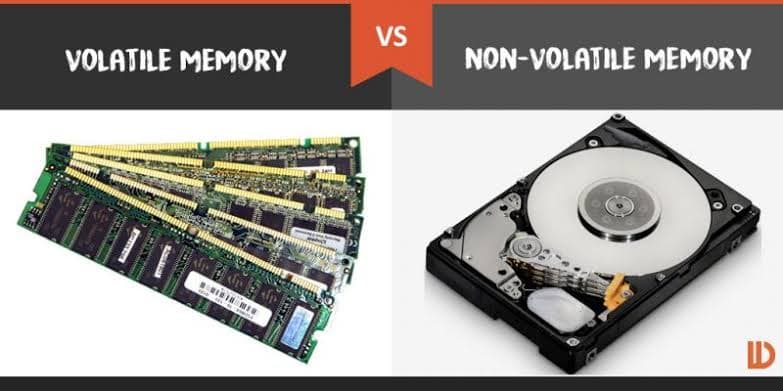
RAM (Random-Access Memory) – a type of data storage (memory element) used in computers that temporarily stores programs and data. RAM is a kind of volatile memory, meaning its contents are lost when the computer is turned off.
ROM (read-only memory) – A type of data storage used in computers that permanently stores data and programs. ROM is a kind of non-volatile memory, meaning its contents are retained even when the computer is turned off.
Hardware - Hardware is the term referring to all the physical parts in a computer system. It includes the monitor, the keyboard, the mouse, the main case which stores the RAM, CPU and the motherboard.
Software - ‘Software’ is the term which refers to the instructions needed to make a computer work. It is intangible in nature. The software is also known as a “program”. Also, it is a set of computer files which are used to perform various actions on the computer. You can have a program for ‘word processing’.
Bits and Bytes
Bit (Binary Digit) – the smallest, most basic unit of measurement for computer data storage, represented as either a 0 or a 1. One byte is equal to 8 bits.
Byte (Binary Term) – a unit of measurement for data storage. One byte is equal to 8 bits.
Basic Database Terms and Acronyms
Data –The information stored in a computer is data.
Database –The information which the information which is in a large amount is called database the collection of newspaper is again a database.
Query – A query is a type of command that retrieves data from the server.
Table (relation, file, class) – A table is a collection of rows. A table usually has a name, although some tables are temporary and exist only to carry out a command. All the rows in a table have the same shape (in other words, every row in a table contains the same set of columns).