Cyber forensics investigators are constantly battling against mountains of data, sifting through social media profiles, websites, and public databases to uncover hidden evidence and expose cybercrime. But manually tackling this information overload can be akin to swimming through molasses – slow, frustrating, and ultimately hindering your effectiveness.
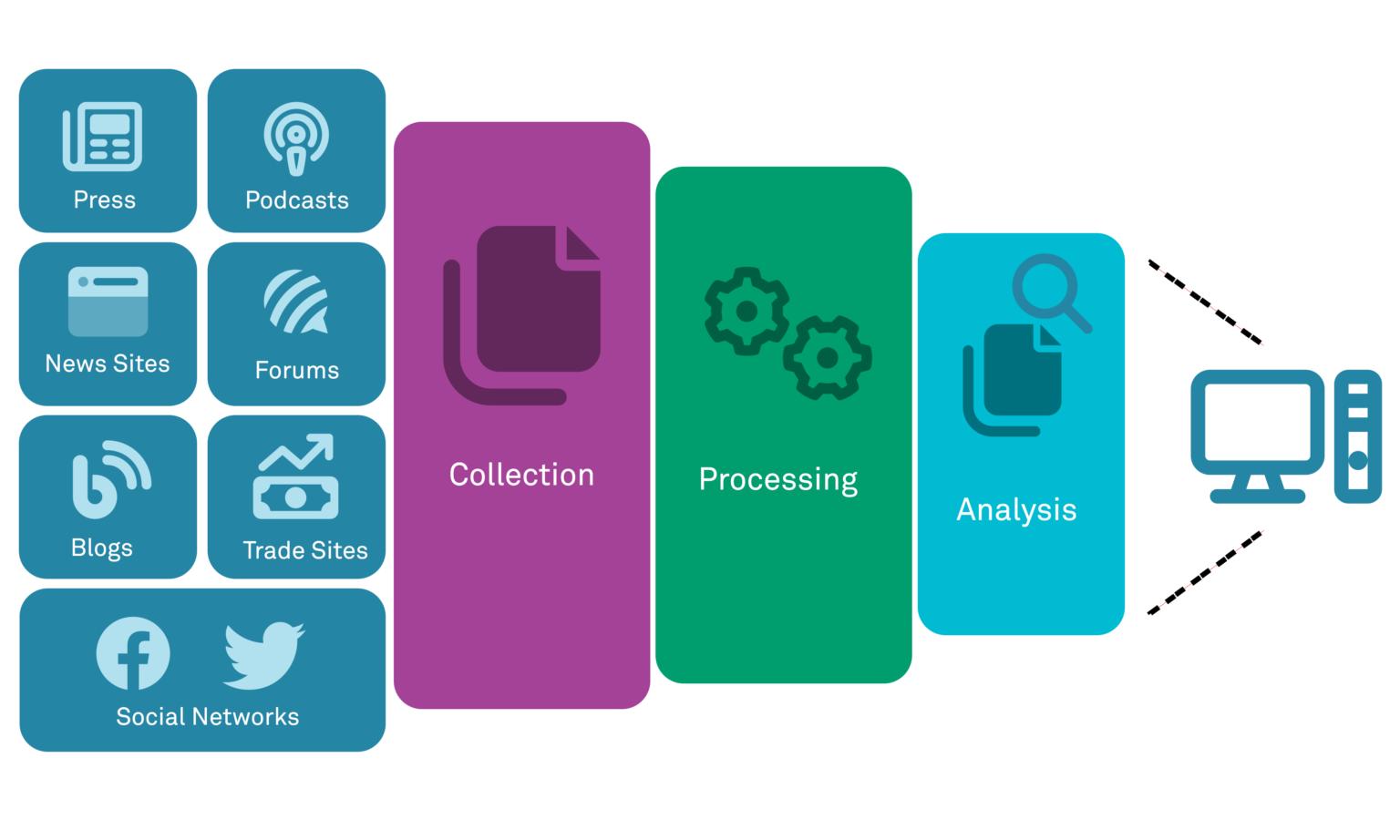
This is where automating OSINT tasks emerges as a game-changer. By leveraging the power of automation, you can transform your investigations from chaotic scrambles into streamlined, efficient operations. Open-source intelligence (OSINT) is a powerful technique that can help cyber forensics investigators to collect, process and analyze publicly available data from various sources. OSINT can be used to identify cyber threats, track malicious actors, gather evidence and support legal actions.
Increased Efficiency: Automate repetitive tasks like data collection, analysis, and reporting, freeing up your time for more complex investigations.
Improved Accuracy: Reduce human error by eliminating manual data entry and analysis, leading to more reliable results.
Faster Response Times: Quickly uncover crucial information and identify threats early on, minimizing potential damage.
Enhanced Scalability: Easily handle large datasets and complex investigations without getting overwhelmed.
Workflows can also improve the quality and reliability of OSINT results by ensuring that all the necessary steps are followed and documented.
There are different types of workflows that can be used for OSINT automation, such as:
Artificial intelligence (AI) is another technology that can enhance OSINT automation. AI tools can leverage machine learning (ML) and deep learning (DL) techniques to perform complex tasks that are difficult or impossible for humans to do manually. Some of the AI tools that can aid OSINT investigations are ChatGPT, Authentic8: A platform that provides secure and anonymous web browsing using virtual machines. Blackdot Solutions : A solution that combines OSINT with business intelligence to provide actionable insights for cyber crime investigations. Trickest : A framework that enables OSINT automation with workflows.
There are many Python libraries that can help automate OSINT tasks, such as web scraping, data analysis, pattern recognition, content summarization and sentiment analysis. Here are some of the most useful ones:
To illustrate how OSINT automation can be applied in practice, let's look at some examples of how Python libraries, AI tools and workflows can be used together to automate OSINT tasks for cyber forensics investigations.
We can use NetworkX to create and analyze the network graph, and ChatGPT to interact with the entities and extract information from them. In these example, we have to collect data from various sources, such as social media platforms, blogs, forums and deep web databases, using web scraping or API calls.
Create a network graph of the online entities using NetworkX, where the nodes represent the entities and the edges represent the relationships between them.
Analyze the network graph using NetworkX algorithms, such as shortest paths, centrality measures and community detection, to identify the most influential or suspicious entities in the network.
Interact with the identified entities using ChatGPT, by sending them messages and generating responses based on their replies. Try to elicit information or influence their behavior using conversational techniques, such as rapport building, deception detection or persuasion. Extract and store the information obtained from the interactions using NLP techniques, such as named entity recognition, sentiment analysis or text summarization.
In this example, we want to support legal actions against cyber criminals by finding relevant documents and generating reports. We can use Gensim to create and manipulate vector representations of texts, and Blackdot Solutions to combine OSINT with business intelligence. The steps are:
Collect documents from various sources, such as court records, company filings, news articles or academic papers, using web scraping or API calls.
Create vector representations of the documents using Gensim methods, such as TF-IDF, LDA, LSI or Word2Vec. The vector representations can capture the semantic meaning and similarity of the texts.
Find relevant documents for a given query or topic using Gensim methods, such as cosine similarity, topic modeling or word embedding. The query or topic can be a keyword, a phrase or a document itself.
Generate reports based on the relevant documents using Blackdot Solutions solution. The solution can automate data collection, processing and analysis from multiple sources using ML models. The reports can include tables, charts, graphs or other visualizations.
OSINT is a powerful technique that can help cyber forensics investigators to collect, process and analyze publicly available data from various sources. However, OSINT can also be time-consuming, complex and challenging. That's why automating OSINT tasks can be a effective and optimum option for cyber forensics investigations.
In this blog post, we discussed how to automate OSINT tasks using Python libraries, AI tools and workflows. We also showed some examples of how automation can enhance the efficiency and effectiveness of OSINT investigations. We hope that this blog post has inspired you to explore the possibilities of OSINT automation.
References :
[1] Mastering OSINT: The Ultimate Guide to Open Source Intelligence (4th Edition - 2023) by Michael Bazzell
[2] Automating Open Source Intelligence: Algorithms for OSINT (2021) by Michael Bazzell & Emily Wilson
[3] Digital Forensics and Incident Response Handbook (3rd Edition) by Larry Russ & Joe Baugher
[4] Cybersecurity Analytics Cookbook by Deborah Bodeau & Thomas Lee (2018)
[5] Incident Response & Computer Forensics (5th Edition) by Bill Nelson, Amelia Phillips, Christopher Steuart