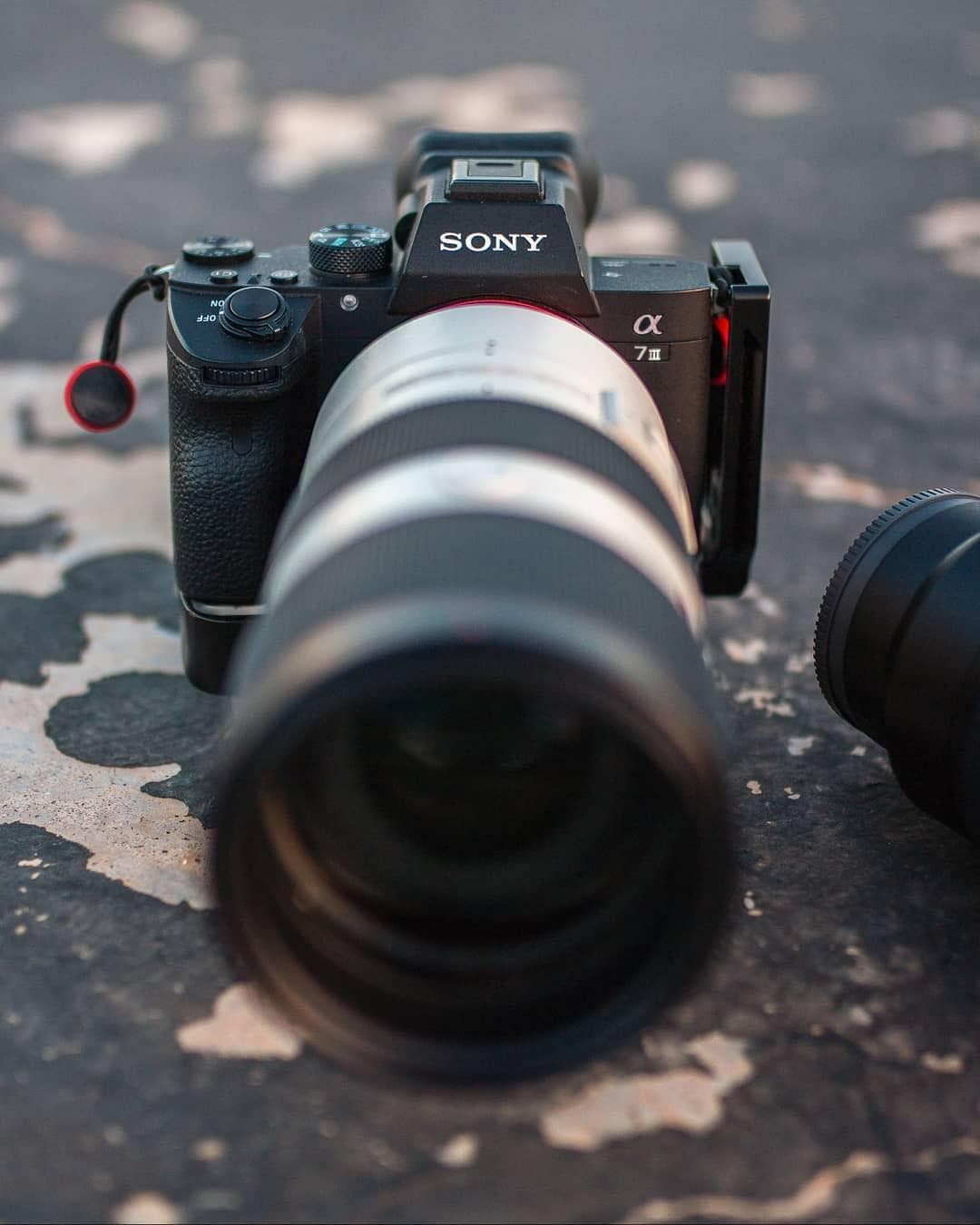
Photography is the art, application, and practice of creating durable images by recording light, either electronically by means of an image sensor, or chemically by means of a light-sensitive material such as photographic film.It is employed in many fields of science, manufacturing and business, as well as its more direct uses for art, film and video production, recreational purposes, hobby, and mass communication.
Typically, a lens is used to focus the light reflected or emitted from objects into a real image on the light-sensitive surface inside a camera during a timed exposure. With an electronic image sensor, this produces an electrical charge at each pixel, which is electronically processed and stored in a digital image file for subsequent display or processing. The result with photographic emulsion is an invisible latent image, which is later chemically "developed" into a visible image, either negative or positive, depending on the purpose of the photographic material and the method of processing. A negative image on film is traditionally used to photographically create a positive image on a paper base, known as a print, either by using an enlarger or by contact printing.
Who invented photography?
Photography skills refer to the set of skills that you need to capture and produce high-quality photographs. Photography skills include the creative skills you need to capture unique photographs but also the technical skills necessary to operate camera equipment and edit photos after you've taken them.
Photography is both skill and talent
A proficient photographer might have accrued their ability by having a natural eye for composition or light. On the other side of this, some photographers might have developed a skill set that allows them utilize his or hers camera to it's fullest potential.
What inspires a photographer?
As photographers, we can be inspired by many things before clicking the shutter on a scene or subject to capture a moment in time. It could be the light falling on a scene or the look in someone's eyes. It might be the time of day or the time of year. Maybe it's a combination of a lens choice and a situation.
Originally, all photography was monochrome, or black-and-white. Even after color film was readily available, black-and-white photography continued to dominate for decades, due to its lower cost, chemical stability, and its "classic" photographic look. The tones and contrast between light and dark areas define black-and-white photography. Monochromatic pictures are not necessarily composed of pure blacks, whites, and intermediate shades of gray but can involve shades of one particular hue depending on the process. The cyanotype process, for example, produces an image composed of blue tones. The albumen print process, publicly revealed in 1847, produces brownish tones.
Many photographers continue to produce some monochrome images, sometimes because of the established archival permanence of well-processed silver-halide-based materials. Some full-color digital images are processed using a variety of techniques to create black-and-white results, and some manufacturers produce digital cameras that exclusively shoot monochrome. Monochrome printing or electronic display can be used to salvage certain photographs taken in color which are unsatisfactory in their original form; sometimes when presented as black-and-white or single-color-toned images they are found to be more effective. Although color photography has long predominated, monochrome images are still produced, mostly for artistic reasons. Almost all digital cameras have an option to shoot in monochrome, and almost all image editing software can combine or selectively discard RGB color channels to produce a monochrome image from one shot in color.
In 1981, Sony unveiled the first consumer camera to use a charge-coupled device for imaging, eliminating the need for film: the Sony Mavica. While the Mavica saved images to disk, the images were displayed on television, and the camera was not fully digital.
The first digital camera to both record and save images in a digital format was the Fujix DS-1P created by Fujfilm in 1988.
In 1991, Kodak unveiled the DCS 100, the first commercially available digital single lens reflex camera. Although its high cost precluded uses other than photojournalism and professional photography, commercial digital photography was born.
Digital imaging uses an electronic image sensor to record the image as a set of electronic data rather than as chemical changes on film. An important difference between digital and chemical photography is that chemical photography resists photo manipulation because it involves film and photographic paper, while digital imaging is a highly manipulative medium. This difference allows for a degree of image post-processing that is comparatively difficult in film-based photography and permits different communicative potentials and applications.
Digital photography dominates the 21st century. More than 99% of photographs taken around the world are through digital cameras, increasingly through smartphones.
Photography is both restricted and protected by the law in many jurisdictions. Protection of photographs is typically achieved through the granting of copyright or moral rights to the photographer. In the United States, photography is protected as a First Amendment right and anyone is free to photograph anything seen in public spaces as long as it is in plain view. In the UK a recent law (Counter-Terrorism Act 2008) increases the power of the police to prevent people, even press photographers, from taking pictures in public places. In South Africa, any person may photograph any other person, without their permission, in public spaces and the only specific restriction placed on what may not be photographed by government is related to anything classed as national security. Each country has different laws.