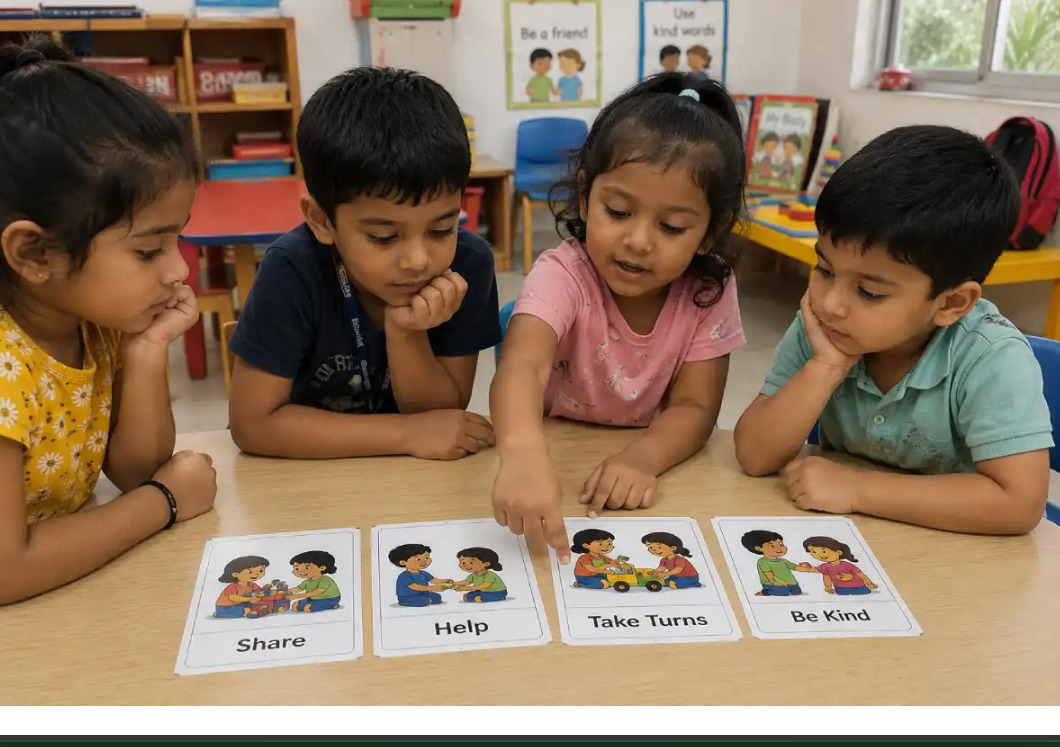
The process of decision-making is an essential part of living life and something that children can start learning at a much younger age than most people think. Even prior to being able to read or write, children begin to make everyday decisions when they choose what toys to play with, what colours to use while drawing, or what activities to participate in.
In a good preschool setting, children get opportunities to make choices safely in ways appropriate to their ages. They learn how to think on their own, know the consequences of their actions, and feel confident making decisions. It is important that these experiences give children the basis for good decision-making skills in the future.
Decision-making is not just the process of making a decision between two alternatives; it teaches kids how to think, analyse the situation, and realise that every decision has an effect. Acquiring this particular ability early on motivates children to be confident in themselves, enhances their skills of problem solving and critical thinking, fosters independence, and teaches them to be responsible for their decisions. Thus, when children make decisions in real-life situations, they gain more confidence and become more ready to face challenges, which creates a good background for academic performance and general life skills.
In preschool classrooms, there are lots of chances for children to make simple and appropriate decisions in a secure and nurturing environment. The teacher supports the child to decide in an environment free from pressure, thereby enabling him or her to gain experience and be confident of what he or she can do. From choosing between two learning activities, deciding on what colours to use in an art project, picking out a book, learning at a learning centre, to coming up with a creation on his or her own, all these daily decisions help the child feel that his or her opinions and preferences are respected.
Play-Based Learning Encourages Decision-Making
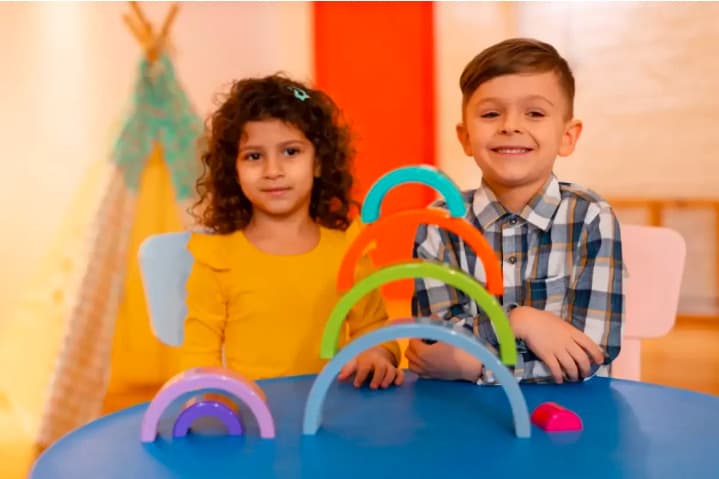
Playing is one of the best ways for children to learn decision-making in an organic environment. In play environments, such as free play, role-playing, building, and games, children make decisions about various aspects of their activities and how to relate to others. They make decisions on how to construct something, which roles they are going to play, how to solve their problems, arrange their games, and share their stuff with other children. This helps them think critically and creatively, work as a team, and solve problems entertainingly.
Developing Problem-Solving Skills
Decision-making and problem-solving are inseparable concepts, and preschool offers kids numerous possibilities to develop these two skills through real-life situations. Children face minor problems throughout the day when they have to solve a puzzle, make decisions regarding sharing classroom objects with other children, invite peers to play a game, or build something from blocks. Teachers do not tell them the answers but just motivate children to come up with various solutions, pose questions, and generate their own ideas. In such a way, kids become more competent and independent decision makers.
Decision-making skills that children acquire at the preschool stage are useful to them in their education and in their daily life as well. Children become more independent in learning, become good communicators, responsible persons, and efficient problem solvers by practising decisions according to their age from childhood itself. Children also get the ability to adjust themselves in new environments and circumstances confidently. All these important skills not only assist them in academic performance but also make them resilient and independent enough to make wise decisions.
At Elzee Preschool and Daycare, we believe that big confidence is built through the smallest daily choices. Here is how our carefully structured routine empowers children to practice independent decision-making every single day:
Preschool education is far beyond academics. It is a place where children start acquiring life skills that include decision-making. By making decisions, playing, solving problems, and being guided by teachers, children learn to be independent, responsible, and confident. Thus, through these activities, children become active, resourceful, and determined learners who will be able to overcome any challenges in the future.
These children will be able to acquire knowledge about how promoting independence helps in making better decisions using the skills of independence in children. These combined activities ensure that the children get all the skills necessary for making good decisions and problem-solving at the Elzee Preschool & Daycare.