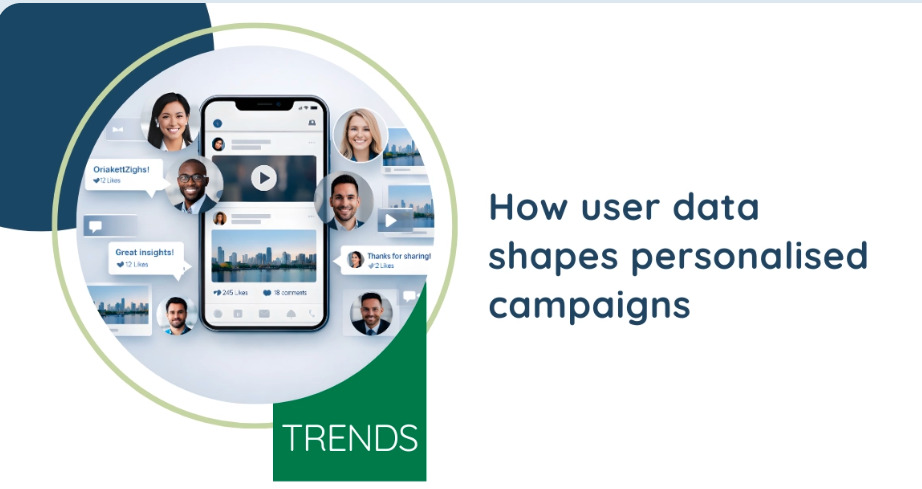
In today’s fast-developing digital age, it’s actually no longer sufficient that consumers respond to common marketing communication. What they want is for the brands to be somehow privy to information about what they need, what they are interested in, and how they behave, and this is precisely what can be supplemented through user data. The fact is that user data has actually transformed how personalised messages are developed, making it possible to deliver a message to a specific person at a specific time.
User data encompasses every piece of information collected from consumers during their engagement with websites, apps, social media sites, emails, and online platforms. This information encompasses browsing, search, purchase, and interest information, as well as engagement levels, right down to their preferred times of engagement. On analysing this information, the companies possess critical information that informs them what the consumers want, allowing them to personalise the marketing they do.
"Personalisation is no longer a trend, but a necessity."
Improved Audience Segmentation and Targeting
One of the most beneficial aspects of user data is that it enables businesses to segregate their audiences into segments that are clearly defined. In this way, companies are able to classify their users not only according to their behaviour but also according to certain criteria like purchase decisions, level of engagement, and involvement in the purchasing process.
For instance, new users can be offered welcome campaigns, existing users offered product recommendations, users abandoning their carts can be sent emails that prompt them to complete their purchase, or loyal users offered rewards. Such personalised segmentation is one way that enhance engagement levels, boost positive response rates, and hence improve the performance levels.
Improved customer experience and engagement
Personalised campaigns make people feel that they are being told, "This is just for you." Besides, when users see content matching their needs and interests, they will be more engaged with the brand by spending more time considering the services provided, thus having more trust in them. Simple personalisation, like suggesting the right products, sending emails with personalisation, or even custom landing pages, can really enrich the experience that users have.
Helping Brands Make Data-Driven Decisions
User data does more than personalise campaigns; it actually informs smarter decisions for businesses in general. Marketers can track what kind of content works, which products customers like most, what timing works best, and what messaging drives conversions. In this way, the need for guesswork is reduced, and brands can put more energy into strategies that elicit real results. Data-driven personalised campaigns typically drive higher ROI, better engagement rates, and stronger customer lifetime value.
When it comes to user data, it helps marketers make decisions that aren’t based on assumptions. It helps marketers send targeted notifications if, for example, the user has shown interest in a product by visiting its page, but hasn’t purchased it. Another example would be when a customer purchases certain products. It will help the brand suggest something that complements the product, hence improving customer experience. This approach makes marketing more personalised, relevant, and valuable rather than feeling like simple “advertising.” Solutions at iDigitize help brands monitor user behaviour and extract meaningful insights, while iDigitize Social Media Services empower businesses to design and execute tailored strategies that truly drive results.