wisemonkeys logo
FeedNotificationProfile
FeedNotificationSearchSign in
wisemonkeys logo

Blogs

Evolution of Operating System

profile
Amrita Mishra
Jul 04, 2024
1 Like
0 Discussions
216 Reads

Evolution of Operating System

Introduction:

  • Operating system is a type of software that acts as an interface between the user and the hardware.

  • Operating systems are the backbone of every digital device, bridging hardware and software.

  • These operating systems are evolved over the years and cater to the best user experience.

  • The journey of operating systems started in 1940 with the beginning of the digital age.

  • The earliest computer was operated without an operating system, and the programs were manually written and executed sequentially. 


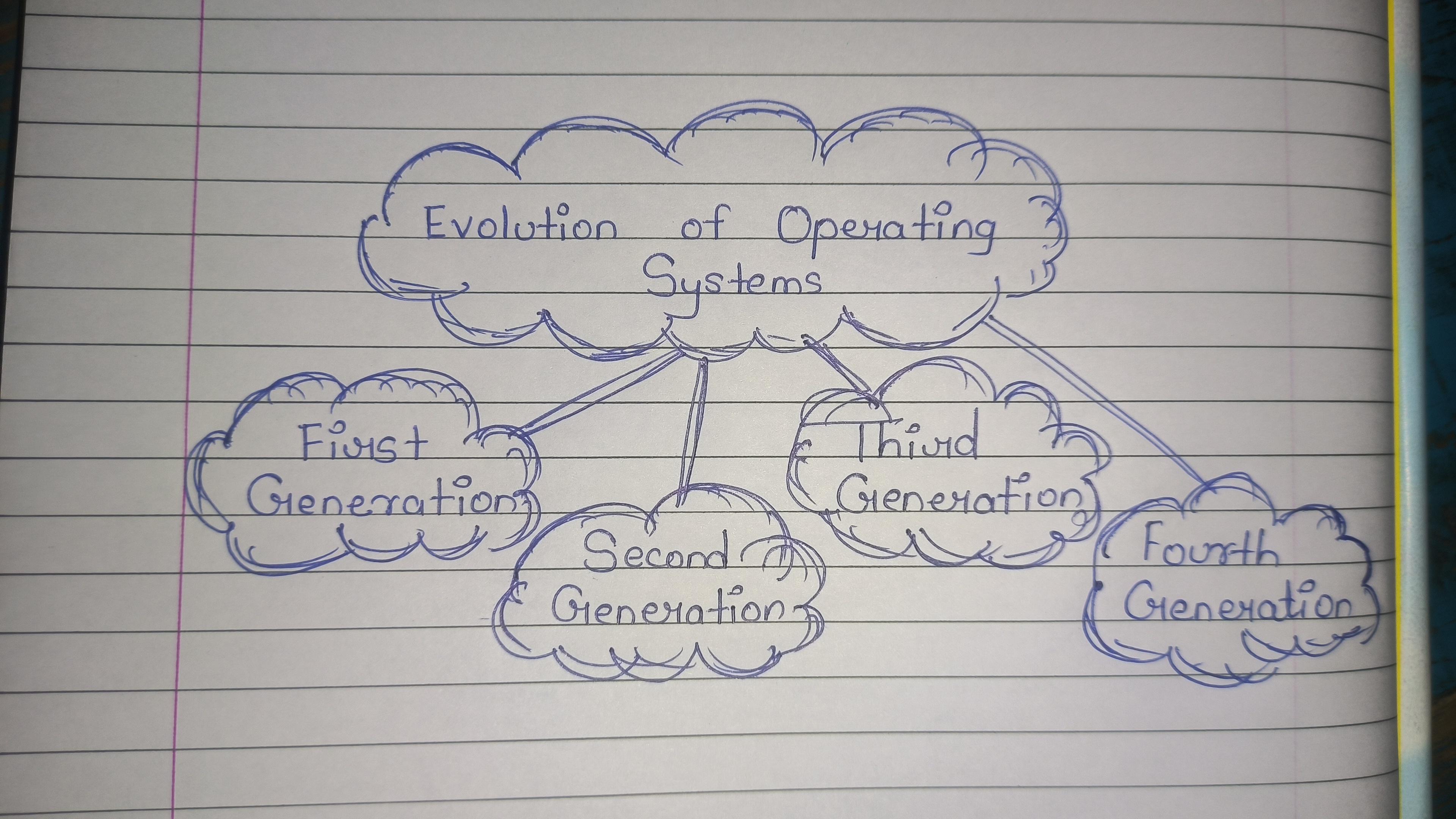
1. The First Generation (Serial Processing)

  •  Time period : 1940 to 1950
  • an operating system was not included in the creation of the first electrical computer.
  • These early computers were huge! And they came with a big price tag too.
  • Despite their size and cost, they could only do simple tasks.
  • Imagine a computer without an operating system! That’s how they were. They just did tasks one by one.
  • This means they finish one task before starting the next. No multitasking here!

2. The Second Generation (Batch System)

  •  Time period : 1955 – 1965
  • the IBM Computer, General Motors has created the operating system.
  • Because it gathers all related jobs into groups or batches and then submits them to the operating system. 
  • similar tasks (or jobs) are grouped into batches and then processed sequentially without any user interaction.
  • The goal was to automate the processing of jobs and minimize the setup time.

3. The Third Generation (Multi-Programmed Batch System)

  • Time period : 1965 – 1980
  • Control is transferred to the operating system upon each job’s completion, whether it be routinely or unexpectedly.
  • The operating system cleans up after each work is finished before reading and starting the subsequent job on a punch card.
  • Large, professionally operated machines known as mainframes were introduced after that.
  • Multiprogramming allows multiple jobs to reside in the main memory at once. 
  • Since multiple jobs are done at once, there was a need for more advanced memory management.
  • These memory needs led to the development of concepts such as memory partitioning, paging, and segmentation.

4. The Fourth Generation (Time-Sharing Operating System)

  • Time period : 1980 – Present Day
  • The fourth generation of personal computers is the result of these PDPs.
  • The evolution of the personal computer is linked to the fourth generation of operating systems.
  • Graphical User Interface that allows users to interact with the system using windows, icons, and menus.
  • Ability to run multiple applications simultaneously.
  • Built-in capabilities to connect to and function on networks, including the Internet.
  • Automatically recognize and configure hardware devices.
  • Advanced security mechanism to protect against malware, unauthorized access.

Comments ()


Sign in

Read Next

The Right way of cooking

Blog banner

Fitness

Blog banner

Super Garlicky Tomato Soup with Smashed White Beans

Blog banner

Tomato Butter Sauce with Bucatini

Blog banner

Fudgy Tahini Date Chocolate Bars

Blog banner

Guidelines for a Low sodium Diet.

Blog banner

ART AND CULTURE OF VRINDAVAN

Blog banner

What is Anxiety? How to manage Anxiety?

Blog banner