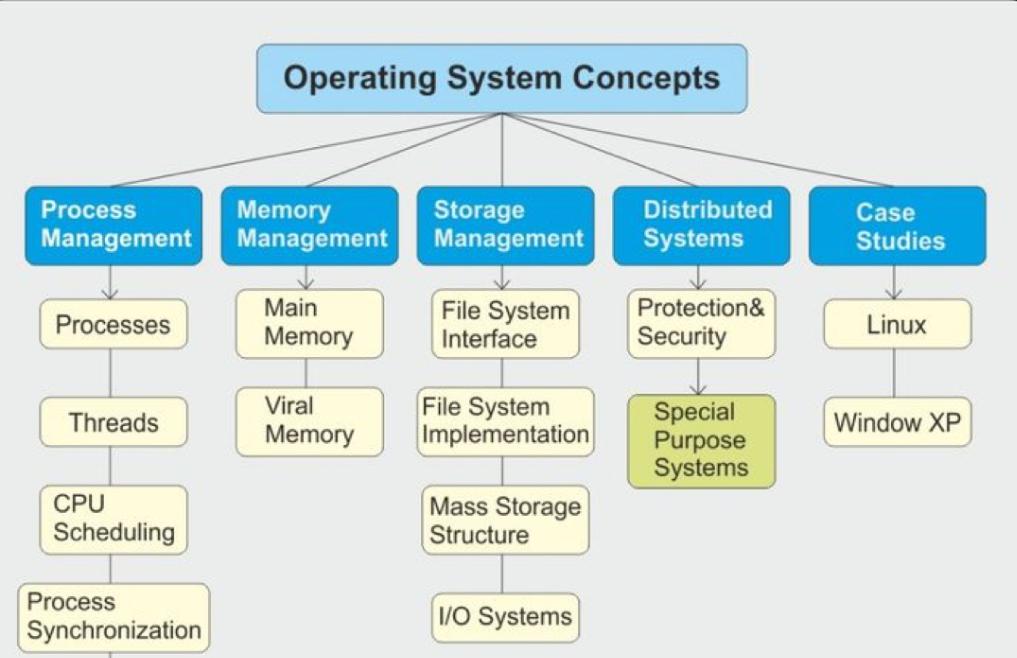
Memory management in an operating system (OS) involves handling the allocation, deallocation, and management of computer memory (RAM) during the execution of processes. The key functions of memory management include:
1. Memory Allocation:
- Static allocation: Memory is allocated at compile time.
- Dynamic allocation: Memory is allocated during runtime, allowing for flexibility.
2. Memory Deallocation:
- When a process is no longer needed, its allocated memory is released back to the system for reuse.
3. Virtual Memory:
- Virtual memory allows an OS to use disk space as an extension of RAM, enabling the execution of larger applications or more applications simultaneously than would fit in physical memory alone.
4. Paging:
- Memory is divided into fixed-size pages, and processes are allocated memory in terms of these pages. Paging helps manage memory fragmentation and simplifies memory allocation.
5. Segmentation:
- Memory is divided into variable-sized segments based on logical divisions like functions, arrays, or objects in a program.
6. Swapping:
- Processes can be swapped in and out of the physical memory to the disk to ensure efficient use of memory resources, especially in systems with limited RAM.
7. Memory Protection:
- The OS ensures that processes do not interfere with each other’s memory spaces, protecting the integrity and security of data.
8. Memory Hierarchy Management:
- Involves managing different types of memory (registers, cache, RAM, and disk) to optimize performance.
9. Garbage Collection:
- In some systems, the OS or runtime environment automatically reclaims memory that is no longer needed by processes, preventing memory leaks and optimizing resource usage.