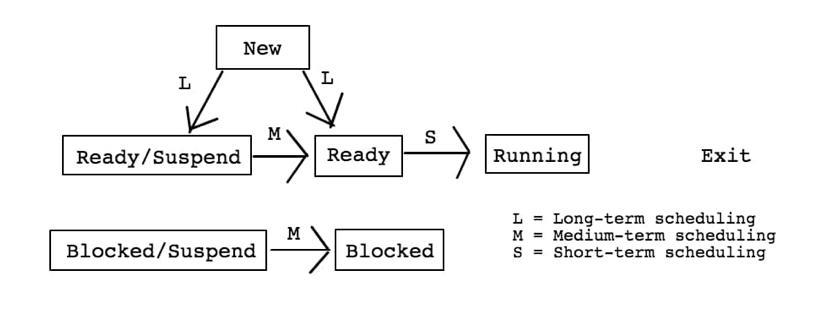
Uniprocessor scheduling is a fundamental concept in computer science and operating systems, focusing on the efficient allocation of a single CPU to various tasks. This scheduling process is vital for ensuring that processes are executed effectively, with minimal delays and optimal resource utilization.
At its core, uniprocessor scheduling involves managing the order in which processes are executed by the CPU. The primary objective is to maximize CPU utilization and ensure that each process receives a fair share of processing time. Several key scheduling algorithms are employed to achieve these goals, each with its unique advantages and trade-offs.
One of the most basic scheduling algorithms is **First-Come, First-Served (FCFS)**. In this method, processes are queued in the order they arrive, and the CPU executes them sequentially. While FCFS is straightforward and easy to implement, it can lead to the "convoy effect," where short processes are delayed by long ones, causing inefficient CPU usage.
To address the shortcomings of FCFS, **Shortest Job Next (SJN)** or **Shortest Job First (SJF)** scheduling is used. This algorithm prioritizes processes with the shortest expected execution time. SJN reduces waiting time and improves overall efficiency compared to FCFS. However, it can be challenging to predict the duration of a process accurately, and it might lead to the problem of starvation, where longer processes are perpetually delayed.
**Round Robin (RR)** scheduling, another popular algorithm, divides CPU time into fixed intervals called time slices or quanta. Each process is given a turn to execute for a short period before being placed at the end of the queue. This approach ensures that all processes receive a share of CPU time, making it a fair and straightforward method. However, the choice of time quantum is crucial: too large a quantum can lead to inefficiencies similar to FCFS, while too small a quantum can result in excessive context switching overhead.
**Priority Scheduling** is another strategy that assigns priorities to processes, with the CPU always executing the process with the highest priority. This method can be preemptive, where a higher-priority process can interrupt a currently running process, or non-preemptive, where lower-priority processes are completed before higher-priority ones are considered. While this approach can be more responsive to urgent tasks, it can also lead to starvation for lower-priority processes.
In modern operating systems, **Multilevel Queue Scheduling** and **Multilevel Feedback Queue Scheduling** combine multiple scheduling techniques to improve efficiency. These approaches use different queues for different types of processes, dynamically adjusting priorities based on their behavior and requirements.