INTRODUCTION TO INTERRUPTS
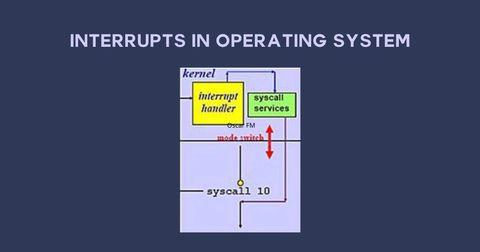
Interrupts are a fundamental concept in operating systems (OS) that enable efficient and responsive computing. An interrupt is a signal sent to the processor by hardware or software indicating an event that needs immediate attention. When an interrupt occurs, the operating system temporarily halts the current processes, saves their state, and executes an interrupt service routine (ISR) to handle the event. Once the ISR is completed, the OS restores the original processes and resumes their execution.
TYPES OF INTERRUPTS
Hardware Interrupts :
These are generated by hardware devices like keyboards, mice, disk drives, or network cards to signal events such as key presses, mouse movements, or data arrival. Hardware interrupts ensure that the processor can respond to hardware events promptly, without the need for constant polling by the CPU.
Software Interrupts :
Software interrupts, also known as traps, are generated by programs or the operating system itself. They can be used to handle exceptional conditions (e.g., division by zero), system calls, or to implement multitasking by switching processes.
INTERRUPT HANDLING PROCESS
IMPORTANCE OF INTERRUPTS
Efficiency :
Interrupts enable efficient CPU utilization by allowing the processor to execute other tasks while waiting for I/O operations to complete. This reduces idle time and enhances overall system performance.
Responsiveness :
Interrupts allow the system to respond to events in real-time. For instance, a keystroke on a keyboard generates an interrupt, ensuring immediate attention from the CPU, resulting in low latency and improved user experience.
Multitasking and Concurrency :
Interrupts are crucial for multitasking environments. They facilitate context switching, where the CPU transitions between different processes or threads, allowing multiple tasks to run concurrently and improving the responsiveness of the system.