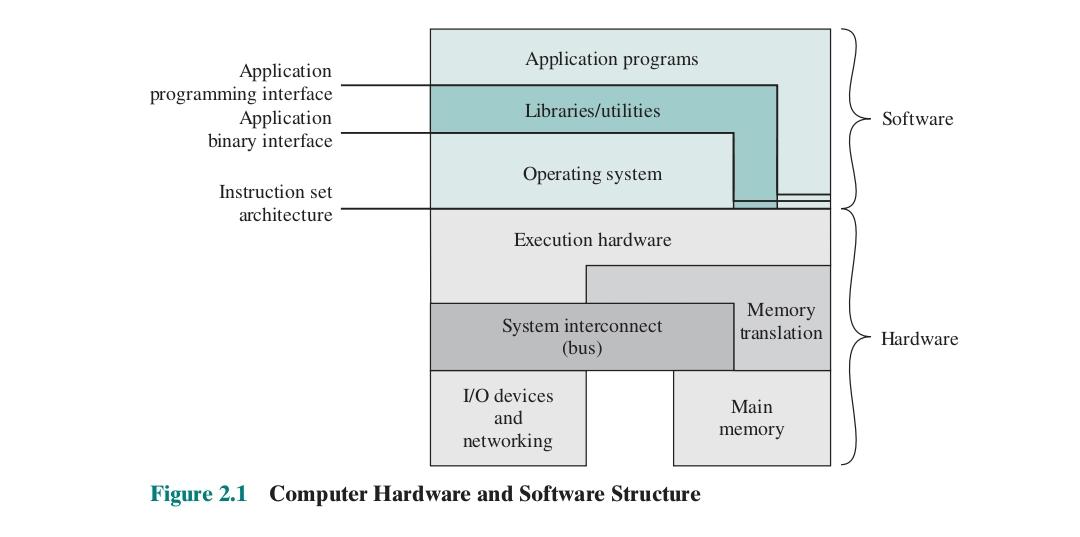
Operating systems are those programs that interface the machine with the applications programs.
Briefly, the OS typically provides services in the following areas:
• Program development: The OS provides a variety of facilities and services,such as editors and debuggers, to assist the programmer in creating programs.
• Program execution: A number of steps need to be performed to execute a program. Instructions and data must be loaded into main memory, I/O devices and files must be initialized,
• Access to I/O devices: Each I/O device requires its own peculiar set of instructions or control signals for operation.
• Controlled access to files: For file access, the OS must reflect a detailed understanding of not only the nature of the I/O device (disk drive, tape drive) but also the structure of the data contained in the files on the storage medium.
Simple Batch Systems
Early computers were very expensive, and therefore it was important to maximize processor utilization. The wasted time due to scheduling and setup time was unacceptable.To improve utilization, the concept of a batch OS was developed. It appears that the first batch OS (and the first OS of any kind) was developed in the mid-1950s by General Motors for use on an IBM 701 [WEIZ81]. The concept was subsequently refined and implemented on the IBM 704 by a number of IBM customers. By the early 1960s, a number of vendors had developed batch operating systems for their computer systems. IBSYS, the IBM OS for the 7090/7094 computers, is particularly notable because of its widespread influence on other systems.The central idea behind the simple batch-processing scheme is the use of a piece of software known as the monitor.