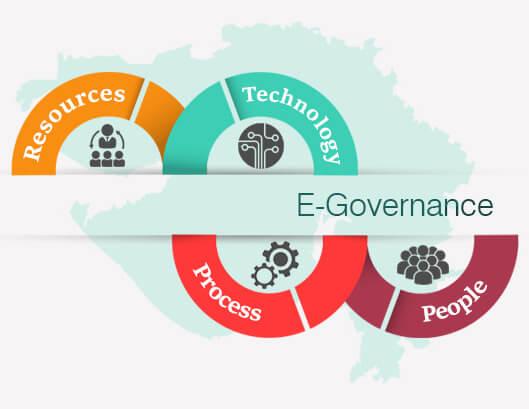
Electronic governance or e-governance is the application of information technology for delivering government services, exchange of information, communication transactions, integration of various stand-alone systems between government to citizen (G2C), government-to-business (G2B), government-to-government (G2G), government-to-employees (G2E) as well as back-office processes and interactions within the entire governance framework. Through e-governance, government services are made available to citizens through IT. The three main target groups that can be distinguished in governance concepts are government, citizens, and businesses/interest groups. In e-governance, there are no distinct boundaries, finance and support.
Objective
Edit: The objective of G2B is to reduce difficulties for business, provide immediate information and enable digital communication by e-business (XML). In addition, the government should re-use the data in the report proper, and take advantage of commercial electronic transaction protocol.
Disadvantages
The government site does not consider about "potential to reach many users including those who live in remote areas, are homebound, have low literacy levels, exist on poverty line incomes."
Difference between G2B and B2G
Government to business (G2B) – Refers to the conducting of transactions between government bodies and business via the internet.
Business to the government (B2G) – Professional affairs conducted between companies and regional, municipal, or federal governing bodies. B2G typically encompasses the determination and evaluation of proposal and completion of the contract.