wisemonkeys logo
FeedNotificationProfileManage Forms
FeedNotificationSearchSign in
wisemonkeys logo

Blogs

Mariana Trench: The deepest depths

profile
Vinisha Hariawala
Jan 26, 2023
0 Likes
0 Discussions
201 Reads


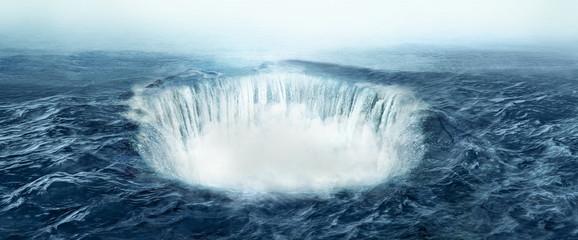
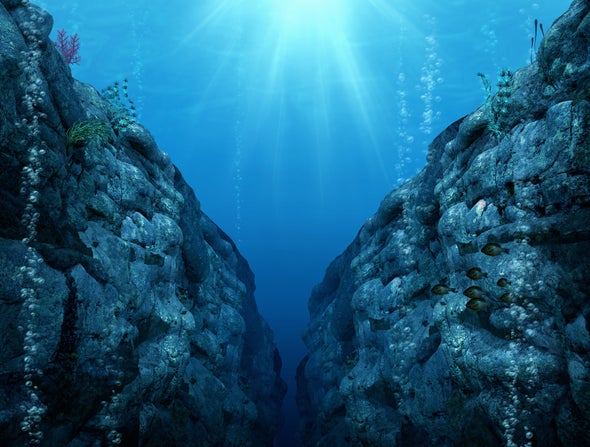
The Mariana Trench reaches more than 7 miles below the surface of the Pacific Ocean.

The Mariana Trench is the deepest oceanic trench on Earth and home to the two lowest points on the planet. 

The crescent-shaped trench is in the Western Pacific, just east of the Mariana Islands near Guam. The region surrounding the trench is noteworthy for many unique environments, including vents bubbling up liquid sulphur and carbon dioxide, active mud volcanoes and marine life adapted to pressures 1,000 times that at sea level.

Its depth is difficult to measure from the surface, but in 2010, the National Oceanic and Atmospheric Administration used sound pulses sent through the ocean and pegged the Challenger Deep d at 36,070 feet (10,994 meters). A 2021 estimate using pressure sensors found the deepest spot in Challenger Deep was 35,876 feet (10,935 m). Other modern estimates vary by less than 1,000 feet (305 m).

As deep as the trench is, it is not the spot closest to the center of Earth. Because the planet bulges at the equator, the radius at the poles is about 16 miles (25 km) less than the radius at the equator. So, parts of the Arctic Ocean seabed are closer to the Earth's center than the Challenger Deep.
A chain of volcanoes that rise above the ocean waves to form the Mariana Islands mirrors the crescent-shaped arc of the Mariana Trench. Interspersed with the islands are many strange undersea volcanoes.

For example, the Eifuku submarine volcano spews liquid carbon dioxide from hydrothermal vents similar to chimneys. The liquid coming out of these chimneys is 217 degrees Fahrenheit (103 degrees Celsius).

Recent scientific expeditions have discovered surprisingly diverse life in these harsh conditions. Animals living in the deepest parts of the Mariana Trench survive in complete darkness and extreme pressure, said Natasha Gallo, a doctoral student at the Scripps Institution of Oceanography.

People have been exploring the Mariana Trench for more than a century:

  • The first crewed vessel to reach the bottom of Challenger Deep was a "deep boat" named Trieste, which made the journey in 1960. Crewed by U.S. Navy Lt. Don Walsh and Swiss scientist Jacques Piccard, the submersible reached a depth of 35,797 feet (10,911 m).
  • Uncrewed journeys into the trench by robotic submersibles have also expanded human knowledge of this deep ocean frontier. In 1995, the Japanese uncrewed submarine Kaiko gathered samples and data from the trench.
  • In 2021, a Spanish expedition, Caladan Oceanic's Ring of Fire Expedition Part II, collected mantle rocks from the bottom of the Marianas Trench that contained microbial mats.

Comments ()


Sign in

Read Next

Big O Notation

Blog banner

Article on Team Work

Blog banner

Mail merge

Blog banner

Southern Turkey Earthquake: Causes and Consequences of a Tragic Natural Disaster

Blog banner

Virtual memory in os

Blog banner

HubSpot

Blog banner

Smartphone Security: Vulnerabilities and Attacks

Blog banner

Deadlock in operating system

Blog banner

VIRTUAL MEMORY

Blog banner

Smart Shoephone: Is that technology overdose!?

Blog banner

CSI and Organizational Change

Blog banner

The Future of Web Development in 2026: Trends Every Business Must Know

Blog banner

Vulnerability Assessment

Blog banner

What is thread and alse multithreading

Blog banner

PYTHON

Blog banner

Virtual Memory

Blog banner

Deadlock and starvation

Blog banner

Deadlock and Starvation

Blog banner

Memory heirachy (Operating system)

Blog banner

OS- Assignnment 1

Blog banner

Synchronization

Blog banner

Dancing Classes In Mumbai

Blog banner

E-Cash (Electronic Cash)

Blog banner

Wrike

Blog banner

Linux 94

Blog banner

The 60-Minute Window: What to Do (And What NOT to Do) When You Knock Out a Tooth

Blog banner

Intrusion Detection System

Blog banner

OPERATING SYSTEM

Blog banner

Business Intelligence v/s Big Data

Blog banner

GIS REMOTE SENSING

Blog banner

The Art of Slow Fashion: Why Patola Defines Sustainable Luxury

Blog banner

File system implementation

Blog banner

File system

Blog banner

BUFFER OVERFLOW_142

Blog banner

bulk email software

Blog banner

Service Strategy In ITSM

Blog banner

Super Garlicky Tomato Soup with Smashed White Beans

Blog banner

5 People who claimed to have Time Traveled

Blog banner

Stay Close To Adventure In Arcadia, Florida At Oak Tree Hotel

Blog banner

Concurrency:Deadlock and Starvation

Blog banner

Processing Crime and Incident Scenes

Blog banner

Note Taker App

Blog banner