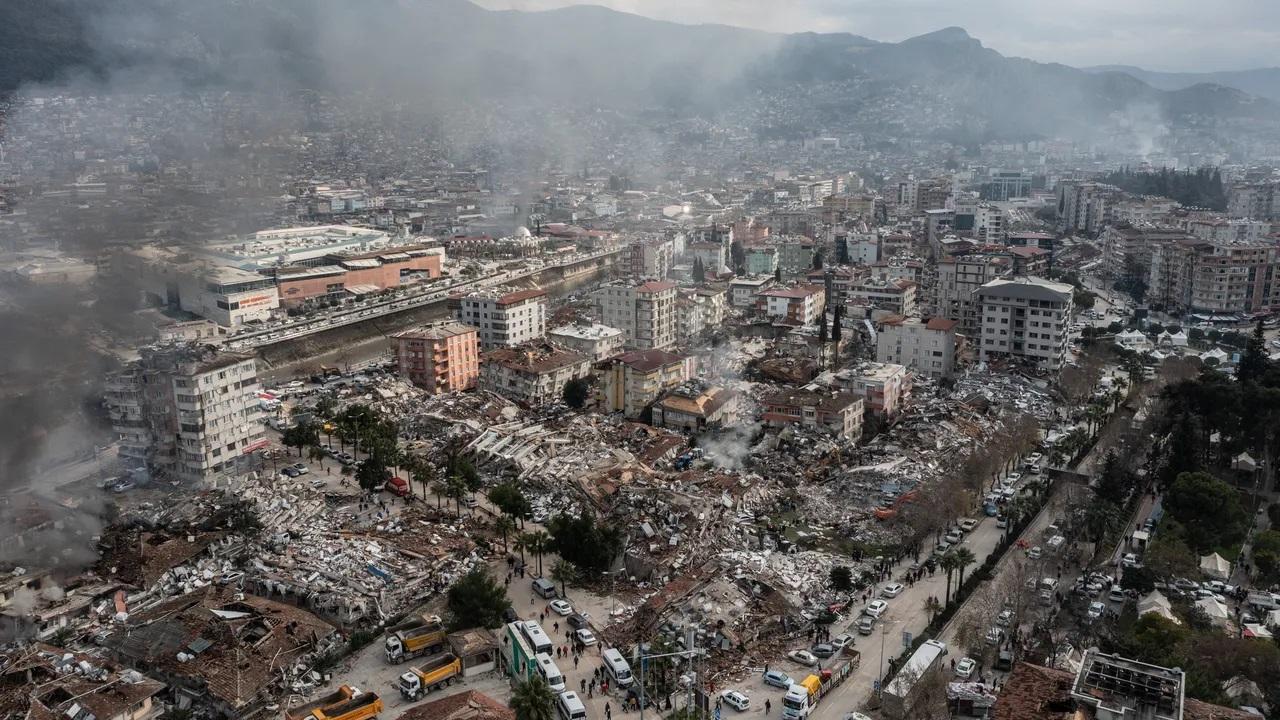
The Southern Turkey earthquake of February 6, 2023, was a devastating natural disaster that had catastrophic consequences for the region. With a magnitude of 7.8 on the Richter scale and an epicenter in the Pazarcık district of Kahramanmaras province, the earthquake affected several neighboring provinces, including Adıyaman, Kilis, Osmaniye, Gaziantep, Malatya, as well as Şanlıurfa, Diyarbakır, Adana, and Hatay. Over 38,000 people lost their lives, and more than 100,000 others were injured. The earthquake also caused significant damage to infrastructure and buildings, with 56,080 collapsing or heavily damaged.
The Southern Turkey earthquake was a result of the collision between the Eurasian and Arabian plates, which created the Anatolian Plateau. This geological process has resulted in numerous fault lines and high seismic activity in the region, making Turkey one of the most earthquake-prone countries in the world. The Anatolian Plate is subjected to the forces of both plates, which leads to intense stress on the fault lines, and eventually, an earthquake.
While natural seismic activity is the primary cause of earthquakes, human activity can also contribute to their occurrence. In Turkey, damming and groundwater extraction are common practices that can trigger earthquakes. Human activity can cause changes in the pressure and stress on the tectonic plates, leading to earthquakes. However, in the case of the Southern Turkey earthquake, there is no evidence to suggest that human activity was a contributing factor.
In response to the disaster, the Turkish government and international organizations have been providing aid and support to the affected areas. The United Nations launched a three-month flash appeal for US$1 billion for Turkey, while the Ministry of Health is warning against using city water as drinking water due to potential microbiological contamination. The Emergency Medicine Association of Turkey (EMAT) has also highlighted the need to provide psychological assistance to health workers who were affected by the disaster, emphasizing the importance of restoring capacities in this sector.
In conclusion, the Southern Turkey earthquake was a tragic event that highlighted the need for preparedness and disaster risk reduction measures. The causes of the earthquake lie in the geological processes that have shaped the region over millions of years. Human activity can also contribute to earthquakes, but there is no evidence to suggest that it was a factor in this particular event. While it is impossible to predict when an earthquake will occur, measures such as building codes, early warning systems, and evacuation plans can help mitigate the impact of natural disasters.