wisemonkeys logo
FeedNotificationProfileManage Forms
FeedNotificationSearchSign in
wisemonkeys logo

Blogs

Types of threads

profile
Ronit Rathod
Aug 13, 2024
0 Likes
0 Discussions
49 Reads


In operating systems, threads are the smallest unit of execution within a process. They can be categorized into several types based on different criteria:


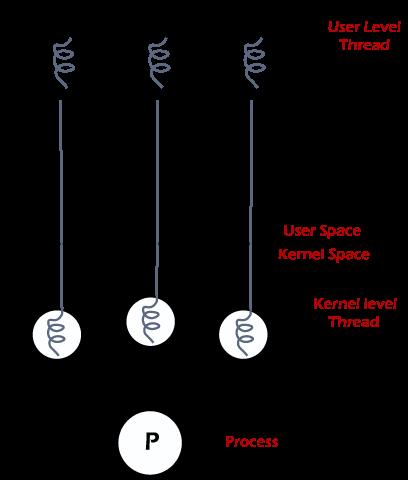
User-Level Threads (ULTs):


Managed by user-level libraries or runtime systems.

The operating system kernel is unaware of these threads.

Switching between ULTs is fast since it doesn't involve the kernel, but these threads are not suitable for taking advantage of multiprocessor systems since the kernel cannot manage them.

Kernel-Level Threads (KLTs):


Managed directly by the operating system kernel.

The kernel is aware of and schedules these threads.

Provides better support for multiprocessor systems as the kernel can distribute threads across processors.

Switching between KLTs involves kernel intervention, which can be slower compared to ULTs.

Hybrid Threads:


Combine aspects of both user-level and kernel-level threading.

Often implemented using a model where user-level threads are mapped to kernel-level threads, allowing better flexibility and performance.

Lightweight Processes (LWPs):


A term used in some systems to refer to threads that are managed by the kernel and have their own scheduling and resource management.

LWPs provide a mechanism to efficiently utilize multi-core processors.

Real-Time Threads:


Designed to meet specific timing constraints and deadlines.

Used in real-time operating systems where timely execution is critical.

These thread types help in managing tasks efficiently, improving performance, and leveraging multi-core processors based on the system requirements.



Comments ()


Sign in

Read Next

M commerce

Blog banner

The Essential Guide to Dynamic Arrays vs. Linked Lists: Which to Use and When ?

Blog banner

PROCESS STATE:

Blog banner

Types of Threads

Blog banner

The New Dr. Frankenstein who will perform first full head transplant

Blog banner

 " Healing of Yoga "

Blog banner

S-Tool : Steganography

Blog banner

Memory management

Blog banner

Deadlock

Blog banner

The Difference Between Plaque and Tartar Explained Simply

Blog banner

PODIO

Blog banner

Human factor, a critical weak point in the information security of an organization’s IOT

Blog banner

Software Piracy & Online Data Protection in Digital World

Blog banner

Buffering

Blog banner

Topic: Sessions in Operating system

Blog banner

Beauty of indian railway

Blog banner

Multiprocessor and Multicore Organization

Blog banner

Process Description

Blog banner

Virtual memory in os

Blog banner

Travelling blog

Blog banner

CyberSecurity Color Wheel

Blog banner

RAID

Blog banner

Hypothesis Testing in Data Science

Blog banner

The Secure Software Development Life Cycle (SDLC)

Blog banner

INTRANET

Blog banner

Deadlock

Blog banner

Understanding Gen Z: A Generation Facing Crisis and Potential

Blog banner

A Review on Data Acquisition in Cyber Forensics

Blog banner

NodeJs

Blog banner

Types of Hackers.

Blog banner

IT GOVERNANCE

Blog banner

What is a Dumpster Diving Attack?

Blog banner

AI and Data Science: Revolutionizing Industries

Blog banner

Meshoo

Blog banner

CSI and Organizational Change

Blog banner

File system

Blog banner

Data Lake

Blog banner

5 Powerful Mindset Shifts To Make 2026 Your Breakthrough Year

Blog banner

CONCURRENCY

Blog banner

Elements and Principles of Photography

Blog banner

What is Spyware? and examples of them.

Blog banner

Jio .....A Revolution ?? ??

Blog banner