wisemonkeys logo
FeedNotificationProfileManage Forms
FeedNotificationSearchSign in
wisemonkeys logo

Blogs

Cache memory

profile
Khushi Balgi
Jul 04, 2024
0 Likes
0 Discussions
66 Reads

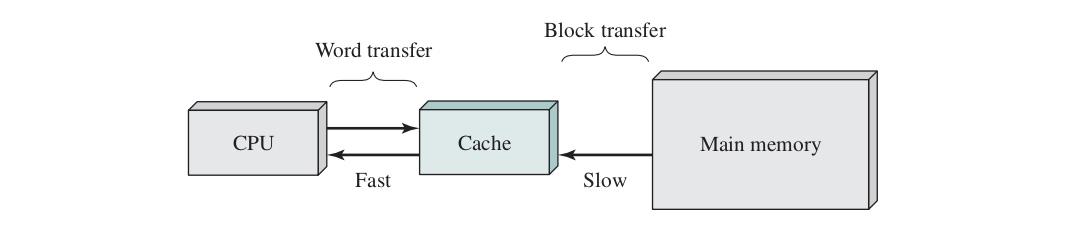
Cache memory is a small, high-speed storage location that stores frequently accessed data and instructions, improving overall processing speed by reducing the time it takes for the CPU to retrieve this information from the main memory.

It is a faster and smaller segment of memory whose access time is as close as registers. In a hierarchy of memory, cache memory has access time lesser than primary memory. Generally, cache memory is used as a buffer.Cache memory is a small, high-speed storage layer situated between the CPU and the main memory (RAM). It is designed to temporarily hold frequently accessed data and instructions, allowing for faster data retrieval and improved overall system performance. 

Key Features of Cache Memory

1.Speed: Faster than the main memory (RAM), which helps the CPU retrieve data more quickly.

2.Proximity: Located very close to the CPU, often on the CPU chip itself, reducing data access time.

3.Function: Temporarily holds data and instructions that the CPU is likely to use again soon, minimizing the need to access the slower main memory.

Benefits of cache memory

1. Increased Speed: By storing frequently accessed data and instructions closer to the CPU, cache memory significantly reduces the time needed for data retrieval, speeding up overall system performance.


2. Efficiency: It helps in reducing the load on the main memory, allowing the system to handle multiple tasks more efficiently.


3. Reduced Latency:Cache memory minimizes the delay in data access, which is crucial for time-sensitive applications and real-time processing.


4. Enhanced Multitasking: By speeding up data access, cache memory improves the system's ability to manage and execute multiple processes simultaneously.


5. Energy Savings:Faster data access can lead to reduced power consumption since the CPU spends less time in high-power states waiting for data.


6. Improved User Experience:Overall system responsiveness and application performance are enhanced, leading to a smoother and more efficient user experience.



Comments ()


Sign in

Read Next

How To Invest In Indian Stock Market @ BSE & NSE ~ Tutorial 3

Blog banner

How Does SSO Works

Blog banner

Memory management and virtual memory

Blog banner

Diwali

Blog banner

Memory management

Blog banner

Segmentation and paging concept

Blog banner

Deadlock and Starvation

Blog banner

Short-Form Video Marketing: Why It's Dominating the Internet

Blog banner

Cache Memory in Operating Systems

Blog banner

Cache memory

Blog banner

Service Design Model

Blog banner

Protect yourself from System Hacking with these Simple Steps

Blog banner

How to manage in BEST bus in mumbai specially PEAK Time!

Blog banner

The launch of UniMap by HERE

Blog banner

File Management

Blog banner

Deadlock

Blog banner

Earth with no trees

Blog banner

Instagram

Blog banner

A Brief Review on Cyber Forensics and its Analysis Tool

Blog banner

Memory Management of Operating System(OS)

Blog banner

Gamer life

Blog banner

Understanding Input Based Keylogger Activation Systems: Risks and Mitigation

Blog banner

Access management

Blog banner

Deadlock in operating system

Blog banner

Blockchain Security Technique

Blog banner

"Games and the future"

Blog banner

Decoding the Weave — How to Identify Original Patola Art on a Fabric

Blog banner

IP ADDRESS

Blog banner

The Laws of Karma

Blog banner

Evolution of Operating Systems

Blog banner

Types of Threads

Blog banner

Cyber Security in Data Breaching

Blog banner

Modern Operating Systems

Blog banner

IoT Architecture Based Security

Blog banner

A Short History of GIS

Blog banner

Virus

Blog banner

How to Conquer Depression ?

Blog banner

Microsoft Windows Overview

Blog banner

Sweet Mango Murabba

Blog banner

Kids Grieve Too

Blog banner

A Statistical Analysis of Player Performance and their Value in cricket

Blog banner

Image Steganalysis in Digital Forensics

Blog banner