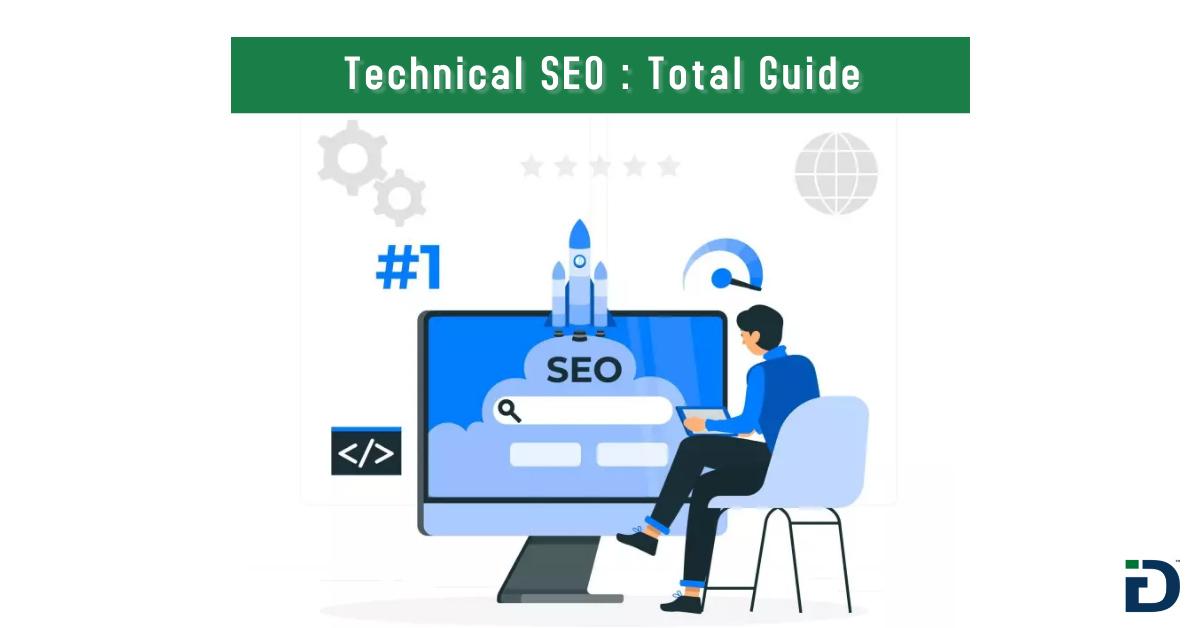
If your most recent SEO audit found that you lack technical proficiency, don’t get upset! Here are some technical SEO auditing remedies that will help you quickly transform your website for good.
Additionally, this blog attempts to take you through in-depth technical SEO and also how to use it not only to boost organic traffic but also how to appear in search results and enhance user experience.
Technical SEO: What is it?
Technical SEO determines whether the content of your website complies with search engine criteria that could affect your website or web page ranking on the search result page. These elements mainly cover website loading speed, how mobile-friendly is the website, and is the content accessible to the relevant visitors. If search engines decide that these elements are compromised, they lower your ranking, which has an impact on your conversion rates.
Priority is given to websites that adhere to Google’s webmaster guidelines. The information on your website must be accurate, easily available, and user-friendly in compliance with the basic regulations for a great user experience.
When it comes to increasing organic traffic, you need to leverage technical SEO to enhance your website performance on SERP.
What exactly is a technical SEO audit?
Every SEO expert is familiar with the routine process of conducting a technical SEO audit on a website to verify various technical aspects and make sure they adhere to the requirements for high Google rankings. This implies that the technical characteristics of your site could directly affect how you appear in search results on Google and Bing. You may use a straightforward Excel checklist to perform your first technical SEO assessment.
This step-by-step checklist for a technical SEO audit will guide you through the procedure. Any issues you find can be recorded in an Excel or Word document. You can deal with problems as they come up if you keep track of the ones you find. It helps to ensure that your website is effectively optimized for search engines as a consequences.
How Should a Technical SEO Audit Be Done?
Let’s look at how to do a technical SEO audit now that you are aware of what it is:
1. Website Crawling
Any technical SEO approach must start with a site crawl. You can explore free online resources that give you suggestions on how you can improve the quality of the content, backlinks, technicalities, and general SEO strategy of your website.
These crawling tools can help you find loopholes like poor photo quality, Brocken links, excessive use of keywords, and erroneous page titles.
2. Inspect Your Sitemap
Each website must have a relevant sitemap in place. It is quite significant as it is responsible to give search engines critical site details about the sector of your organization. This is vital as the search engine can push your page to a searcher/browser giving your brand a higher visibility. Moreover, it also aids visitors to explore newer pages on your website through the navigation design.
The key takeaway here is, in order to successfully implement your SEO strategy, having a sitemap is a hygiene.
3. Take a Look at the Browsable Versions of your Website
Does your website have an alternative version? Like a version 1.2 and a version 1.3?
Did you know, there will be bafflement and conflicting signals sent to search engines if your website has numerous versions?
This flaw is sure to affect your website’s search engine rankings as the search engine is unable to decide which version it should show to its users.
Hence, we at iDigitize Infotech LLP recommend that only the most recent and accessible version of your website is shared.
4. Make sure that your website is mobile-friendly
It’s a user experience project that Google has been working on for a while. Anyone can use Google’s Mobile-Friendly Test, a free tool, to check whether the pages on their website are user-friendly and mobile-responsive. It will let you know how your website will be visible on mobile devices and whether it is mobile-friendly when you enter your website address. Additionally, you can manually inspect your website by accessing your website from various smartphones, keeping screen dimensions in mind.
Verify that all of the pages on your website are accurately visible with no data loss.
5. Review the Internal Links
Logic-based hierarchies have tremendously enhanced SEO ranking for websites. To ensure that users can navigate your website easily, it’s crucial to verify both your internal and external links. There could be page deletions or moves, which could lead to broken links.
You can identify the broken links on your website with the help of some free online tools, and rectify them.
6. Test the Speed of Your Website
Ideally, for a customer to stay engaged to your website it must load in not more than three seconds. We have to keep in mind that visitors are looking for quick and quality answers to their questions. The reader will not think twice before hitting the back button if it takes too long for your page to load.
This will negatively impact your bounce-back rates, which will directly affect your SEO page ranking.
7. Verify the HTTPS content
Examine your technical SEO audit for frequent HTTPS problems.
It is important to note that, all internal links on your website, including canonicals and redirects, must lead to an HTTPS page.
Redirects from HTTP to HTTPS may be present on your website. Sending users to a redirect is not a smart SEO technique, though. Every time a Google bot comes across one, redirect links can cost you money in terms of crawl budget.
8. Compare Site Metrics Using Google Analytics
Verify that the Analytics code is properly installed when conducting a technical SEO audit. Verify that Google Analytics is providing accurate data. The Google Analytics tracking code needs to be inserted above the header on every page.
By comparing your data in Analytics to the outcomes of a Google search for “site: domain,” you may cross-reference your data. There should be an equal number of pages. If not, the tracking code needs to be adjusted.
9. Execute a Backlink Audit
Search engines can learn how important your material is to readers from backlinks. For your website to be successful, you need backlinks.
Googlebot’s also searches for mentions of your website’s brand in addition to backlinks. You ought to be aware of both on- and off-your-website activity as a best practice.
Final words of advice:
Re-index your website once all the flaws are looked into, allowing google crawlers to Re-crawl through your website. This is the ultimate stage of any technical SEO assessment making sure that all of your modifications go into effect right away.