Education nowadays is beyond textbooks, memorising lessons, and examination scores. The world has changed, and children have, too-they are curious, observant, technology-savvy, and full of ideas. For such young minds, modern teaching methodologies like Inquiry-Based Learning and Experiential Learning involve more questioning, exploration, discovery, and understanding of concepts than just listening to answers. This is why most modern schools across the globe move away from traditional chalk-and-talk pedagogies and instead use learning styles that help develop a child’s confidence, creativity, real-life insight, and a genuine, deep love for learning.
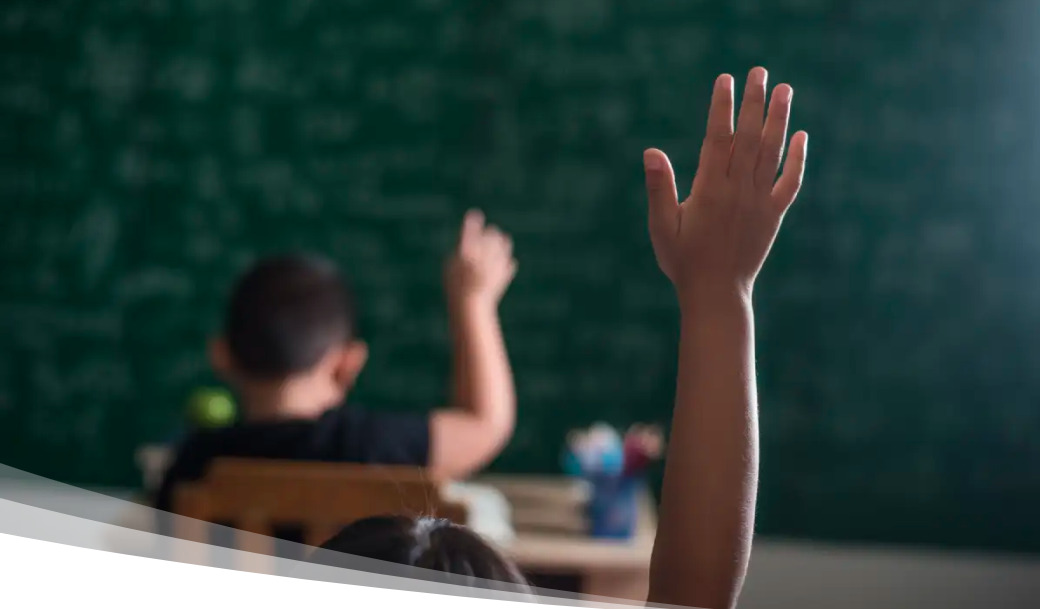
Inquiry-Based Learning: Learning through curiosity! Rather than providing direct answers to the questions of the children, teachers should ask for questions, delve into ideas, scrutinise situations, and ponder deeply. They should, for instance, ask the children: “Why do you think plants near the sunlight grow better?” or “What will happen if we do not water the plants anymore?” The children will then discover the answers through experimentation, observation, and very valuable experience on their own, leading to meaningful, exciting, and memorable learning, acquiring evident confidence, independence, and love for the process of acquiring knowledge through thinking, allowing children not merely to learn answers but to learn how to think!
Experiential Learning is just learning by doing. The child will not only learn by listening to the lesson but will also learn from practical experiences. They will learn by doing instead of listening to mere theoretical lessons. They will learn by witnessing community helpers, like going to a post office, meeting a doctor or a fireman, and even doing role plays. They will learn about fractions by cutting pizzas instead of studying from books. They will learn by dividing chocolates instead of studying from books. They will learn all this and more instead of just listening to books. They will learn because they love doing so and not because they have to. They will learn by doing because they will enjoy doing so. They will learn because it is fun to learn.
The needs of the modern-day world include the need for people who are confident, creative, emotionally robust, and problem solvers, rather than just pupils who can recall answers from memory. Thus, the present-day education system transcends the boundaries of the traditional, exam-based system of schooling and delves into the realms of “Inquiry-Based Learning” and “Experiential Learning” where “understanding,” “curiosity,” and “experiential” learning become the key cornerstones of knowledge and skill acquisition instead of mere memory techniques for exams. All of these activities impart the above-mentioned skills of “problem-solving,” “creativity,” “leadership,” “communications,” “adaptability,” and “collaborations” necessary for the future-ready learners of the future millennium.
In such classrooms, the teacher is a mentor, a guiding force, a facilitator, and a support system for the students rather than a teaching instrument. The teacher encourages the students to think, question, participate, and share their ideas freely in a safe environment. Thus, learning becomes a source of joy for the students rather than a stressful one. The classrooms become engaging, filled with activities, experiments, role-playing, learning outside classrooms, and discussions, so the students remain motivated and eager to learn, not just for achieving academic grades but for the joy they can derive from the process.
Schools that emphasise both Inquiry-Based and Experiential Learning are always the best in the league, as they provide students with a solid academic foundation and equally important life skills, emotional and social growth, increased confidence, powerful communication skills, and a progressive outlook toward the future and the whole world. Such schools are not just producers of achievers but are nourishing intelligent, confident, compassionate, and completely prepared smart beings for life.
In this dynamically shifting world, the change initiated through the process of Inquiry-Based Education and Experiential Learning is building a better tomorrow for the younger generation by pushing the frontiers of rote learning and encouraging the younger generation to think deeply, explore confidently, and understand meaningfully. Institutions like SHC Valia International School are practically living this dream of achieving a convergence of knowledge and skills through effective teaching and a supportive environment where each child is considered and encouraged. To comprehend how this is inducing confident, competent, and future-ready students.