"Protocols are to communications what algorithms or programming languages are to computations."
Internet communication protocols are published by the Internet Engineering Task Force (IETF). The IEEE handles wired and wireless networking The International Organization for Standardization (ISO) other types. The ITU-T handles telecommunications protocols and formats for the public switched telephone network (PSTN). As the PSTN and Internet converge, the standards are also being driven towards convergence.
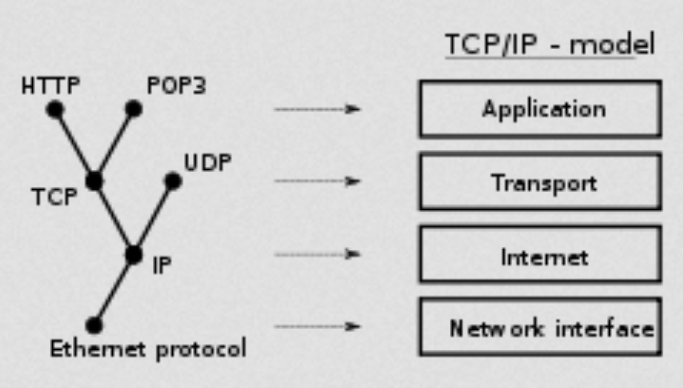
In modern protocol design, protocols are "layered". Layering is a design principle which divides the protocol design into a number of smaller parts, each of which accomplishes a particular sub-task, and interacts with the other parts of the protocol only in a small number of well-defined ways.
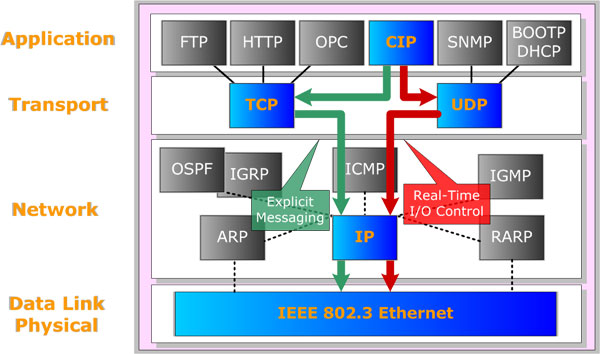
The Internet Protocol family contains a set of related (and among the most widely used network protocols. Beside Internet Protocol (IP) itself, higher-level protocols like TCP, UDP, HTTP, and FTP all integrate with IP to provide additional capabilities. Similarly, lower-level Internet Protocols like ARP and ICMP also co-exist with IP. In general, higher level protocols in the IP family interact more closely with applications like Web browsers while lower-level protocols interact with network adapters and other computer hardware.