wisemonkeys logo
FeedNotificationProfileManage Forms
FeedNotificationSearchSign in
wisemonkeys logo

Blogs

Evolution of the Microprocesor

profile
Ritam Paul
Jul 12, 2023
0 Likes
0 Discussions
134 Reads

Evolution of the microprocessor
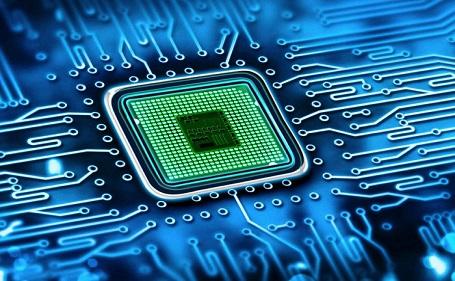
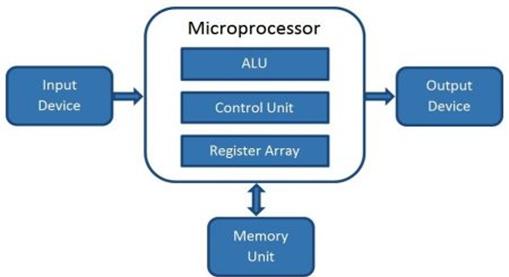
Computer's Central Processing Unit (CPU) built on a single Integrated Circuit (IC) is called a microprocessor The microprocessor contains millions of tiny components like transistors, registers, and diodes that work together. A microprocessor consists of an ALU, control unit and register array .


Evolution of Microprocessors :- 
We can categorize the microprocessor according to the generations or according to the size of the microprocessor: 


1) First Generation (4 - bit Microprocessors):- The first generation microprocessors were introduced in the year 1971-1972 by Intel Corporation. It was named Intel 4004 since it was a 4-bit processor.
It was a processor on a single chip. It could perform simple arithmetic and logical operations such as addition, subtraction, Boolean OR and Boolean AND.

2) Second Generation (8 - bit Microprocessor) :- The second generation microprocessors were introduced in 1973 again by Intel. It was a first 8 - bit microprocessor which could perform arithmetic and logic operations on 8-bit words. It was Intel 8008, and another improved version was Intel 8088.

3) Third Generation (16 - bit Microprocessor) :- The third generation microprocessors, introduced in 1978 were represented by Intel's 8086, Zilog Z800 and 80286, which were 16 - bit processors with a performance like minicomputers.

4) Fourth Generation (32 - bit Microprocessors) :- Several different companies introduced the 32-bit microprocessors, but the most popular one is the Intel 80386.

5) Fifth Generation (64 - bit Microprocessors):- From 1995 to now we are in the fifth generation. After 80856, Intel came out with a new processor namely Pentium processor followed by Pentium Pro CPU, which allows multiple CPUs in a single system to achieve multiprocessing.


Comments ()


Sign in

Read Next

Memory management

Blog banner

Security Issues and Countermeasures

Blog banner

Types of Big Data

Blog banner

OPERATING SYSTEM OBJECTIVES AND FUNCTIONS

Blog banner

Incorporating Automation into Digital Forensics.

Blog banner

Getting into anime My anime suggestions

Blog banner

Place to visit in pune

Blog banner

What is Vishing?

Blog banner

Points to consider if you're planning to visit Florida in 2026

Blog banner

The Laws of Karma

Blog banner

Importance Of Education.

Blog banner

Service Strategy principles

Blog banner

Information of meesho company

Blog banner

Subnet Masking

Blog banner

Pipedrive

Blog banner

From Websites To Super Apps For Digital User Experience

Blog banner

PHISHING

Blog banner

Data Science in Healthcare: Predicting Diseases

Blog banner

Rock, Paper, Scissors Game in Common Lisp

Blog banner

Annual Day Preparation for Toddlers: What Helps and What to Avoid

Blog banner

(Input/Output) in os

Blog banner

Working with Sniffers for monitoring network communication

Blog banner

Distributed Denial of Service (DDoS) attack

Blog banner

Virtualization

Blog banner

Types of Threads

Blog banner

VIRTUAL MACHINES

Blog banner

Safeguarding Your Data: The Importance of Wireless Encryption

Blog banner

Linux Virtual Machine Process Scheduling

Blog banner

Cache memory

Blog banner

EdTech (Education Technology)

Blog banner

Vikrant’s first blog

Blog banner

DEVELOPMENTS LEADING TO MODERN OPERATING SYSTEMS

Blog banner

Online Education

Blog banner

What is Data, Information and Knowledge?

Blog banner

internet email and it's applications

Blog banner

Self defence

Blog banner

Tools to support CSI activities

Blog banner

Multiprocessor and Multicore Organization

Blog banner

Interrupts in OS

Blog banner

A Happier Workplace Starts with Healthy Lunches by Meal Maharaj

Blog banner

How to Avoid being a Victim of Cybercrime

Blog banner

“CONSISTENCY” in Social Media Marketing

Blog banner