A Python as a Tool For Data Scientists For Data Processing: -
What is Python?
Python is a popular programming language. It was created by Guido van Rossum, and released in 1991.
It is used for:
- web development (server-side),
- software development,
- mathematics,
- system scripting.
What can Python do?
- Python can be used on a server to create web applications.
- Python can be used alongside software to create workflows.
- Python can connect to database systems. It can also read and modify files.
- Python can be used to handle big data and perform complex mathematics.
- Python can be used for rapid prototyping, or for production-ready software development.
Why Python?
- Python works on different platforms (Windows, Mac, Linux, Raspberry Pi, etc).
- Python has a simple syntax similar to the English language.
- Python has syntax that allows developers to write programs with fewer lines than some other programming languages.
- Python runs on an interpreter system, meaning that code can be executed as soon as it is written. This means that prototyping can be very quick.
- Python can be treated in a procedural way, an object-oriented way or a functional way.
Python Syntax compared to other programming languages
- Python was designed for readability, and has some similarities to the English language with influence from mathematics.
- Python uses new lines to complete a command, as opposed to other programming languages which often use semicolons or parentheses.
- Python relies on indentation, using whitespace, to define scope; such as the scope of loops, functions and classes. Other programming languages often use curly-brackets for this purpose.
Python is widely used in the field of data processing for several reasons and they are : -
- Readability and Simplicity: Python's clean and straightforward syntax makes it easy to read and write, facilitating better understanding and maintenance of code. This is crucial in data processing tasks where complex algorithms and data manipulations are common.
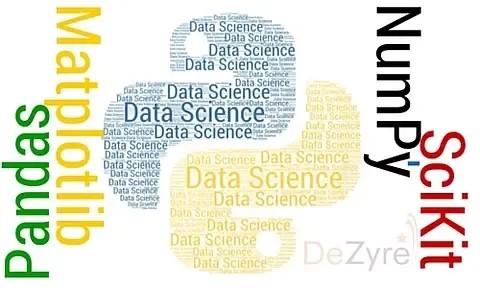
- Extensive Libraries: Python has a rich ecosystem of libraries and frameworks that are specifically designed for data processing tasks. Libraries like NumPy, pandas, and scikit-learn provide efficient and convenient tools for working with arrays, data frames, and machine learning algorithms.
- Data Analysis and Visualization: Python is equipped with powerful tools for data analysis and visualization. The pandas library simplifies the manipulation and analysis of structured data, while libraries like Matplotlib and Seaborn facilitate the creation of informative and visually appealing charts and graphs.
- Community Support: Python has a large and active community of data scientists and analysts. This community contributes to the development of libraries, shares knowledge, and provides support through forums and online communities. This wealth of resources can be immensely beneficial when facing challenges in data processing projects.
- Machine Learning and AI Integration: Python has become a dominant language in the field of machine learning and artificial intelligence. Popular machine learning frameworks such as TensorFlow and PyTorch are written in Python, and many AI libraries and tools offer seamless integration with Python, making it a natural choice for data scientists and machine learning practitioners.
- Cross-Platform Compatibility: Python is a cross-platform language, allowing data processing applications to run seamlessly on different operating systems. This flexibility is valuable in environments where data processing tasks need to be executed on diverse systems.
- Ease of Integration: Python can be easily integrated with other languages and technologies. This is particularly useful when dealing with diverse data sources and systems, enabling data processing pipelines to interact with databases, web services, and other tools.
- Scalability: Python's scalability is evident in its application to both small-scale data processing tasks and large-scale data engineering projects. It is often used in combination with distributed computing frameworks like Apache Spark for handling big data processing tasks efficiently.
- Open-Source Philosophy: Python is an open-source language, meaning that its source code is freely available. This fosters innovation, collaboration, and the continuous improvement of libraries and tools, making it a dynamic choice for data processing.
In summary, Python's readability, extensive libraries, community support, and integration capabilities make it a versatile and powerful language for data processing tasks, from exploratory data analysis to large-scale data engineering projects.
There are several frameworks, These frameworks cover various aspects of data processing, including data manipulation, analysis, visualization, machine learning, and distributed computing. Here are some of the key frameworks used in the field: -
There are quite a few frameworks available for data scientists to create truly best-in-class projects to turn any data science idea into a reality. And machine learning frameworks can automate processes to boost many businesses. Here are the best ones you might want to consider.
- TensorFlow: -
Google’s TensorFlow is an open-source versatile platform that is used for building machine learning and deep learning models for the cloud, mobile, web, and desktop solutions. It’s considered one of the best frameworks for data science and it’s been heavily used by some of the most successful business behemoths from various industries such as Airbus, Intel, Twitter, Coca-Cola, eBay, Snapchat, PayPal, and many others. Many small or medium businesses can also benefit greatly from TensorFlow due to its flexibility and ease of use.
You can input various data quite easily—from images and graphs to SQL and due to the C and C++ backend TensorFlow runs pretty fast.
As an example, Airbnb data scientists use the framework to create deep learning models to effectively categorize listing photos as they are the key to picking up the right place to stay during vacation. It helped the company to create a solution that would classify the room type to increase user experience and make sure that the information provided by the host.
- Keras: -
Keras is one of the best data science frameworks for your projects. It’s used by Netflix, Uber, Freeosk, Wells Fargo, ASOS.com Limited, Yelp, and NASCENT Technology. Its deep learning frameworks are easy to use, which makes it much easier for you to try different data science ideas. For instance, you can build neural networks without any hitches.
- PyTroch: -
Facebook’s PyTorch is one of the best machine learning frameworks you can find for data science projects. PyTorch is easy to use due to its dynamic computational graphs, API simplicity, efficiency, and ease of use. You can easily train models to solve many tasks—for research, production, object detection.
- CRIPS-DM: -
CRISP-DM was generated in 1996, and by 1997, it was extended via a European Union project, under the ESPRIT funding initiative. It was the majority support base for data scientists until mid-2015. The web site that was driving the Special Interest Group disappeared on June 30, 2015, and has since reopened. Since then, however, it started losing ground against other custom modeling methodologies. The basic concept behind the process is still valid, but you will find that most companies do not use it as is, in any projects, and have some form of modification that they employ as an internal standard.
Several libraries in the Python ecosystem are commonly used for data processing tasks: -
- NumPy: NumPy is a fundamental library for numerical computing in Python. It provides support for large, multi-dimensional arrays and matrices, along with mathematical functions to operate on these arrays. NumPy is the foundation for many other data processing libraries in Python.
- Pandas: pandas is a powerful and easy-to-use data manipulation and analysis library. It introduces data structures like DataFrame, which is well-suited for working with structured data. pandas simplifies tasks such as cleaning, filtering, aggregating, and transforming data.
- Matplotlib: Matplotlib is a 2D plotting library for creating static, animated, and interactive visualizations in Python. It is often used in conjunction with pandas for data visualization and exploration.
- Seaborn: Seaborn is a statistical data visualization library based on Matplotlib. It provides a high-level interface for drawing attractive and informative statistical graphics. Seaborn is particularly useful for visualizing complex datasets.
- Scikit-learn: Scikit-learn is a machine learning library that provides simple and efficient tools for data analysis and modeling. It includes a wide range of machine learning algorithms for classification, regression, clustering, and dimensionality reduction.
- FastAPI: FastAPI is a modern, fast web framework for building APIs with Python 3.7+ based on standard Python type hints. It is often used in the context of building APIs for data processing and serving machine learning models.
These frameworks, among others, form a comprehensive ecosystem in Python for data processing, analysis, and machine learning. The choice of framework depends on the specific requirements of the task at hand, such as the size of the dataset, the complexity of the analysis, and the need for distributed computing.
Conclusion: -
In conclusion, Python stands out as an exceptional tool for data science projects, offering a myriad of advantages that contribute to its widespread adoption in the field. Here are key points that highlight Python's strengths in the context of data science:
- Ease of Learning and Use: Python's syntax is clear, readable, and beginner-friendly, making it easy for individuals with diverse backgrounds to pick up and start working on data science projects quickly.
- Extensive Ecosystem: Python boasts a rich ecosystem of libraries and frameworks tailored for data science tasks. From foundational libraries like NumPy and pandas to specialized tools for machine learning (Scikit-learn, TensorFlow, PyTorch) and data visualization (Matplotlib, Seaborn), Python provides a comprehensive toolkit for the entire data science pipeline.
- Community Support: Python has a vibrant and active community of data scientists, researchers, and developers. This community contributes to the development of libraries, shares knowledge, and provides support, creating a collaborative environment that fosters innovation and problem-solving.
- Interdisciplinary Integration: Python is versatile and widely used across various disciplines. Its integration with other technologies, databases, and programming languages makes it a powerful tool for combining data science with web development, automation, and other domains.
- Open Source Philosophy: Python's open-source nature promotes transparency, collaboration, and continuous improvement. It allows data scientists to access source code, contribute to projects, and customize tools to meet specific project requirements.
- Data Processing and Analysis: With libraries like NumPy and pandas, Python excels in data manipulation, cleaning, and analysis. Its intuitive syntax allows for efficient handling of structured and unstructured data, making it well-suited for exploratory data analysis (EDA) and feature engineering.
- Machine Learning and AI: Python has become a dominant language in the realm of machine learning and artificial intelligence. Leading frameworks such as TensorFlow and PyTorch are Python-based, making it a natural choice for developing and deploying machine learning models.
- Scalability: Python's scalability is evident in its application to both small-scale data analysis tasks and large-scale, distributed computing environments. Libraries like Dask and frameworks like Apache Spark enable the scaling of data processing workflows to handle big data challenges.
- Web Development Integration: Python's integration with web frameworks like Django and Flask allows data scientists to deploy their models and visualizations as web applications, facilitating the dissemination of insights to a broader audience.
- Continuous Development: The Python language is continually evolving, with regular updates and enhancements. This commitment to improvement ensures that data scientists have access to the latest features and optimizations for their projects.
In summary, Python's versatility, extensive ecosystem, ease of use, and strong community support make it an outstanding choice for data science projects. Whether you are engaged in data analysis, machine learning, or building data-driven applications, Python provides the tools and resources needed to succeed in the dynamic and evolving field of data science.