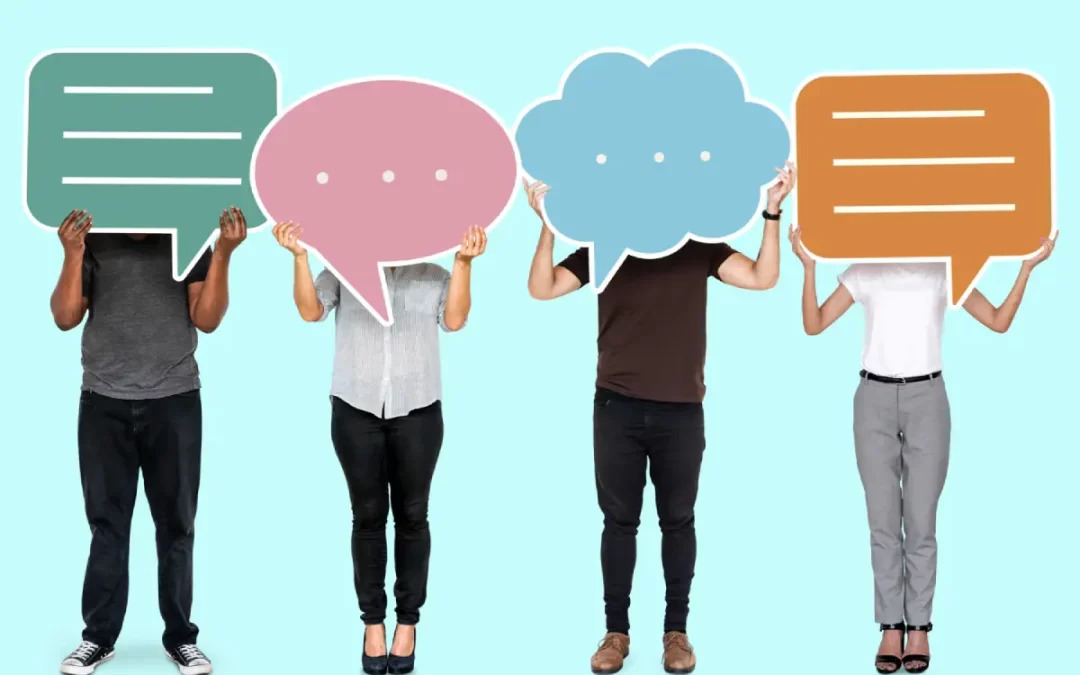
Across the globe, public opinion is becoming increasingly divided. Issues like politics, climate change, LGBTQ+ rights, and even simple lifestyle choices now spark extreme positions, while moderate voices grow quieter. What was once a small, strong-minded group can suddenly shift into a dominant movement. This trend toward polarisation raises important questions: Why do societies swing toward extremes, and what role does human psychology play in their process?
While cultural, economic, and religious factors shape opinion, everyday human interactions may hold the key to understanding the shift. Opinions are not formed in isolation- they spread through a network of friends, families, colleagues, and online communities. Example: A single inflammatory tweet can ignite debate, with opinions snowballing as people share, comment, and take sides.
Psychologically, humans are wired to seek belonging. Seeing others share similar views creates reinforcement, often pushing individuals’ more radical beliefs over time.
Research shows that opinion shifts don’t always follow a gradual path. Instead, they can hit a tipping point, where moderate views suddenly collapse into extremes. This mirrors principles from psychology and physics: just as pressure builds until a system breaks, societal debates intensify until one side dominates.
Example: Public opinion on vaccination shifted dramatically during the pandemic, with strong “pro” and “anti” stances overshadowing balanced discussions. This non-linear escalation reveals why polarisation can feel sudden and overwhelming.
Digital Platforms have accelerated this dynamic. Extreme content often attracts more attention than balanced viewpoints because it provokes stronger emotional reactions. Example: A neutral review of a movie may be ignored, but a dramatic “best film ever” or “worst film of the year” post is more likely to go viral. Psychologically, this taps into the brain’s response to novelty and intensity, making us more likely to click, share, and internalise extreme messages.
Another driver of extreme views is misinformation. Many people share content that aligns with their biases without verifying its truth. Over time, “cherry-picked” facts strengthen confirmation bias, locking individuals deeper into polarised thinking.
Example: Someone who distrusts medical systems may spread only negative vaccine stories, reinforcing their fears while ignoring evidence to the contrary. This cycle highlights how psychology—especially our need to confirm what we already believe—shapes collective attitudes.
For many, holding a strong opinion becomes part of their identity. Disagreeing with their viewpoint is then perceived as a personal attack. This explains why debates often escalate emotionally, and at times, violently. Example: Experiments have shown that simply wearing politically charged symbols, like a hat or badge, can trigger hostility—even if the wearer doesn’t strongly support the cause.
Moving Toward Balance
Polarisation is not inevitable. Building self-awareness, practising critical thinking, and seeking dialogue instead of confrontation can reduce the pull toward extremes. On a psychological level, pausing to ask “Has my belief shifted over time, and why?” helps individuals recognise when they’re caught in an echo chamber. At ImPerfect, we work with individuals and groups to navigate these challenges. Through therapy and reflective practices, people can learn to manage emotional triggers, step back from polarised thinking, and build healthier communication patterns.
Suppose one extreme opinion can spread like wildfire; imagine the impact of spreading empathy, curiosity, and balanced dialogue instead. Perhaps the real challenge for our society is not choosing sides—but choosing to listen.
Book a session with our trained and professional psychologists.
By Krupa Abraham and Urveez Kakalia.
Reference:
Further Readings:
Ramos, M., Shao, J., Reis, S. D., Anteneodo, C., Andrade, J. S., Havlin, S., & Makse, H. A. (2015). How does public opinion become extreme?. Scientific reports, 5(1), 10032.
Strandberg, K., Himmelroos, S., & Grönlund, K. (2019). Do discussions in like-minded groups necessarily lead to more extreme opinions? Deliberative democracy and group polarization. International Political Science Review, 40(1), 41-57.
Bell, V. (2007). Online information, extreme communities and internet therapy: Is the internet good for our mental health?. Journal of mental health, 16(4), 445-457.