Blockchain technology is simple to understand at its roots. Basically, the tech exists as a shared database filled with entries that must be confirmed by peer-to-peer networks and encrypted.
It’s helpful to envision it as a strongly encrypted and verified shared Google Document, in which each entry in the sheet depends on a logical relationship to all its predecessors, and is agreed upon by everyone in the network.
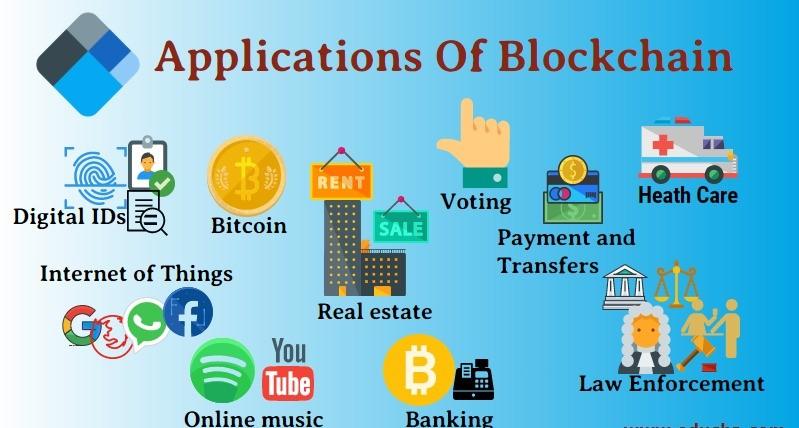
But blockchain technology has many more potential use cases beyond other than just serving as the fuel behind Bitcoin. Below, we’ve outlined some of its emerging applications across finance, business, government, and other industries.
These are some of the Blockchain technology use cases categorized under specific industries/applications:
1. Smart Contracts
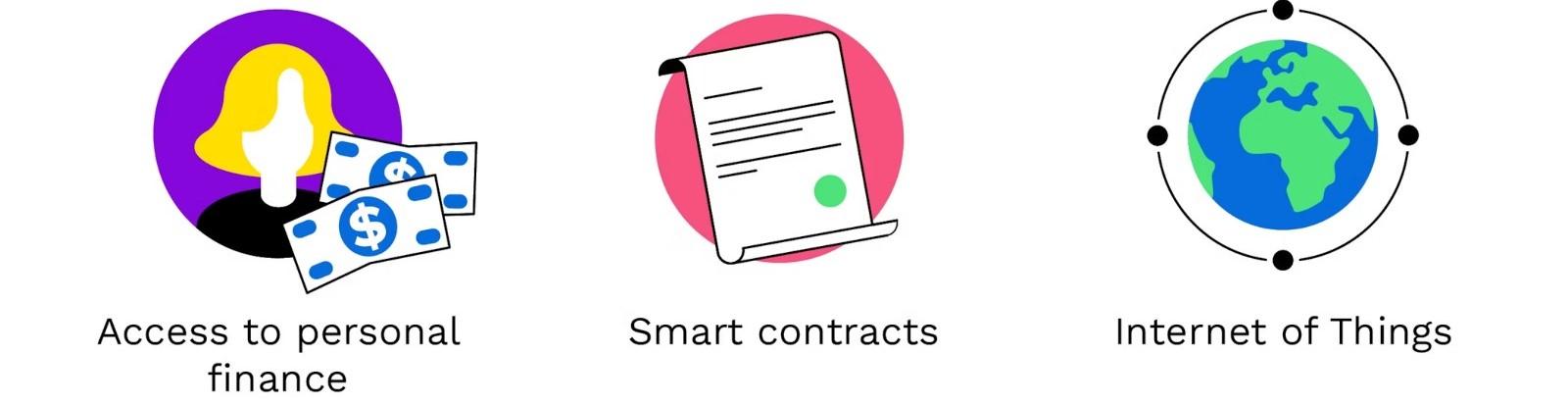
Smart contracts Blockchain-based contracts enforced in real-time. They are created as an agreement between two or more parties without the involvement of any intermediary. The contract exists across a distributed and decentralized Blockchain network. Smart contracts are now a staple in healthcare, real estate, and even for government agencies.
Use cases:
BurstIQ (healthcare)
BurstIQ used Big Data-based smart contracts to facilitate the transfer of sensitive medical data between patients and doctors. These contracts specify clear outlines and parameters for data sharing. They contain personalized health plans and other relevant details for individual patients.
2. Internet of Things(IOT)
The Internet of Things (IoT) industry is growing rapidly with billions of connected devices. The latest forecast suggest that by 2030, there’ll be 50 billion devices in use globally. As this number continues to grow, it will increase vulnerabilities as hackers can easily breach your data through a single connected device. By integrating Blockchain technology in IoT devices, the possibility of data breaches can be reduced to a great extent.
Use cases:
HYPR (IoT/Cybersecurity)
HYPR takes cybersecurity to the next level by combining smartphone technology with the highly secure FIDO token. This is the secret behind its True Passwordless Authentication feature. Through its decentralized credential solutions and biometric authentication, HYPR makes IoT devices tamper-proof.
Blockchain has wide range of applications in which some of these are the examples:
1. Real Estate
The average homeowner sells his or her home every five to seven years, and the average person will move nearly 12 times during their lifetime. With such frequent movement, blockchain could certainly be of use in the real estate market.
2. Energy
Blockchain technology could be used to execute energy supply transactions, but also to further provide the basis for metering, billing, and clearing processes, according to PWC. Other potential applications include documenting ownership, asset management, origin guarantees, emission allowances, and renewable energy certificates
3. Media
Media companies have already started to adopt blockchain technology to eliminate fraud, reduce costs, and even protect Intellectual Property (IP) rights of content—like music records. According to MarketWatch, the global market for blockchain in media and entertainment is estimated to reach $1.54 billion by 2024.