It’s wonderful when you manage to have some nutritious food occasionally. But if you want to establish proper nutrition in its true sense, you will need much more effort on your side. Eating a nutritious meal but being unable to eat anything else for the whole week because of fasting, snacking, and unhealthy eating will not bring you any benefit regarding your nutrition.
Establishing your healthy nutrition system does not presuppose having a strict diet and eating something daily. It only means that your meals should become healthier and balanced.
Healthy eating habits are about maintaining a pattern in your eating practices. These consist of regularly eating balanced meals, eating various foods, vegetables, and proteins, drinking sufficient water and controlling food intake in proper amounts.
As per the ICMR-National Institute of Nutrition, a balanced diet consists of the consumption of various kinds of foods, as one food does not contain all nutrients necessary for the body. Also, according to its dietary practices, one should consume vegetables, whole grains, pulses or beans, nuts or seeds, fruit and plain curd or yoghurt.
This concept is not perfect; a practical dieting practice that one can follow most of the time is better than one that is too restricted to follow.
It is quite common to follow a healthy diet for a few days after you have followed an unhealthy diet for a week. You might follow a fruit bowl diet in the morning, salads at lunchtime and a light meal in the evening, but then go back to skipping meals and opting for ready-to-eat meals in the coming days.
It is important to understand that nutrition is something which cannot just be corrected with one single meal. The body needs regular supplies of energy, proteins, fibre and vitamins. It becomes easier for you to fulfil your nutritional needs by following a balanced diet.
Once healthy eating becomes a habit for you, there is no need to make any big decisions when you feel hungry because you will be aware of all the meals that suit you and the ingredients that you keep in your house.
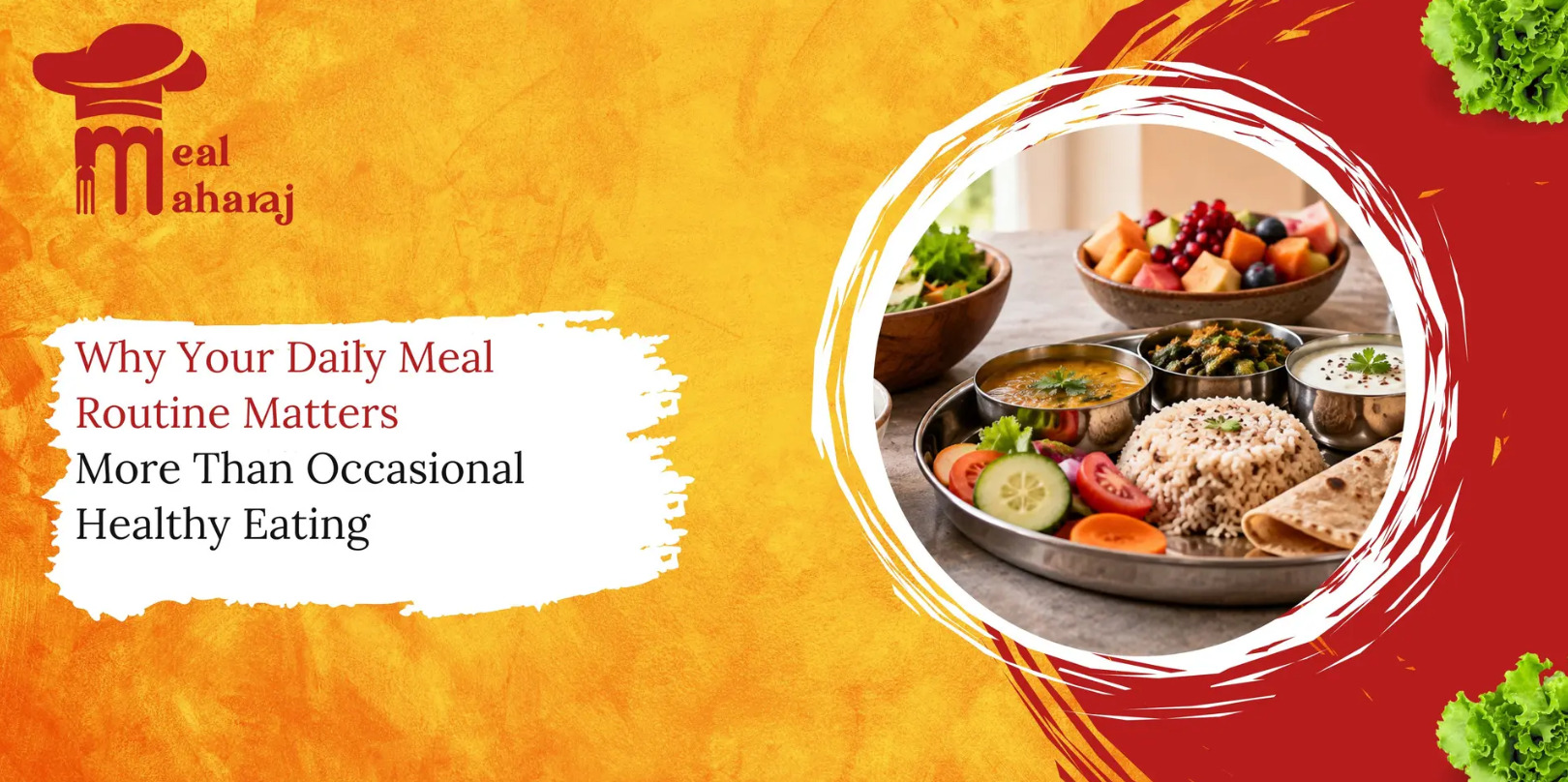
For instance, if you are accustomed to eating meals that contain dal, vegetables, roti, rice and curd, then making a healthy lunch will not be difficult. In the same way, having fruit, roasted chana, peanuts, or any other healthy thing will make it easier for you to select a snack.
Food gives you the energy required to perform your day-to-day functions and also to work and study. Failure to have a consistent meal plan, in addition to not having the right food in terms of nutrient content, can make it difficult for you to maintain your diet plan.
By having a consistent meal schedule, you will be able to prevent yourself from getting to the stage of starving so that you consume any available food.
This is very helpful for students and working individuals. This is because planning helps them depend less on food available around them at the last minute.
Breakfast is often the first meal to take a hit due to a hectic schedule.
However, rather than considering it as something that needs to be done but not every day, it would be good to keep a few options in mind.
Poha, upma, idli and sambar, veg paratha and curd, moong dal chilla, eggs with roti and oats with fruit could all be considered. It does not mean having breakfast every day, which needs a lot of effort. It just means keeping a few options in mind.
For most busy individuals, including professionals and students, this is the meal that starts to cause trouble. Work-related appointments, lectures, assignments and travel often make one feel like skipping lunch altogether, or just grabbing anything that comes one’s way.
However, planning the meal can make a lot of difference. A meal that consists of a grain or a millet, protein, vegetables, along with something else can prove to be more balanced than eating only snacks.
Another meal that should not break consistency in an attempt to “eat perfectly” is dinner.
A traditional Indian meal such as roti and dal with vegetables, rice and dal with sabzi, khichdi with vegetables and curd, or some other combination that is nutritionally balanced can do the trick.
There is no reason to make your dinner overly complex just because you wish to have a healthy meal. Sometimes, simplicity helps to achieve more.
One of the easiest ways to ensure that you stick to a healthy diet regimen is planning.
You do not have to create a highly elaborate weekly menu chart. It will even be fine to make plans for your meals a day prior. Look at the ingredients you have at home, determine which ones need preparation, and stock up on the handy ones.
For instance, you may prepare some of the ingredients beforehand, have fruits at hand, and create some simple recipes for lunches and dinners.
Every other month or so, a new diet trend gains popularity. The first may suggest that carbs be eliminated, the second may focus on specific food items, and the third may recommend specific meal timings.
Rather than continually shifting your eating pattern, it would be better for you to concentrate on those that you could easily stick to.
An eating pattern that includes multiple food items with appropriate amounts of food at regular intervals would be more realistic than keeping on trying diets that you can’t stick to. ICMR-NIN dietary guidelines also support dietary diversity rather than focusing on any particular food.
Constructing a healthy meal pattern every day becomes easy when the availability of nutritious homemade food is convenient and reliable. Having a balanced diet containing sufficient protein in meals may be useful for maintaining your energy throughout the day. For further knowledge and information, you can refer to the article Protein and Energy: Why Your Workday Diet Needs More of It. Also visit Meal Maharaj for healthy meals prepared using traditional recipes.