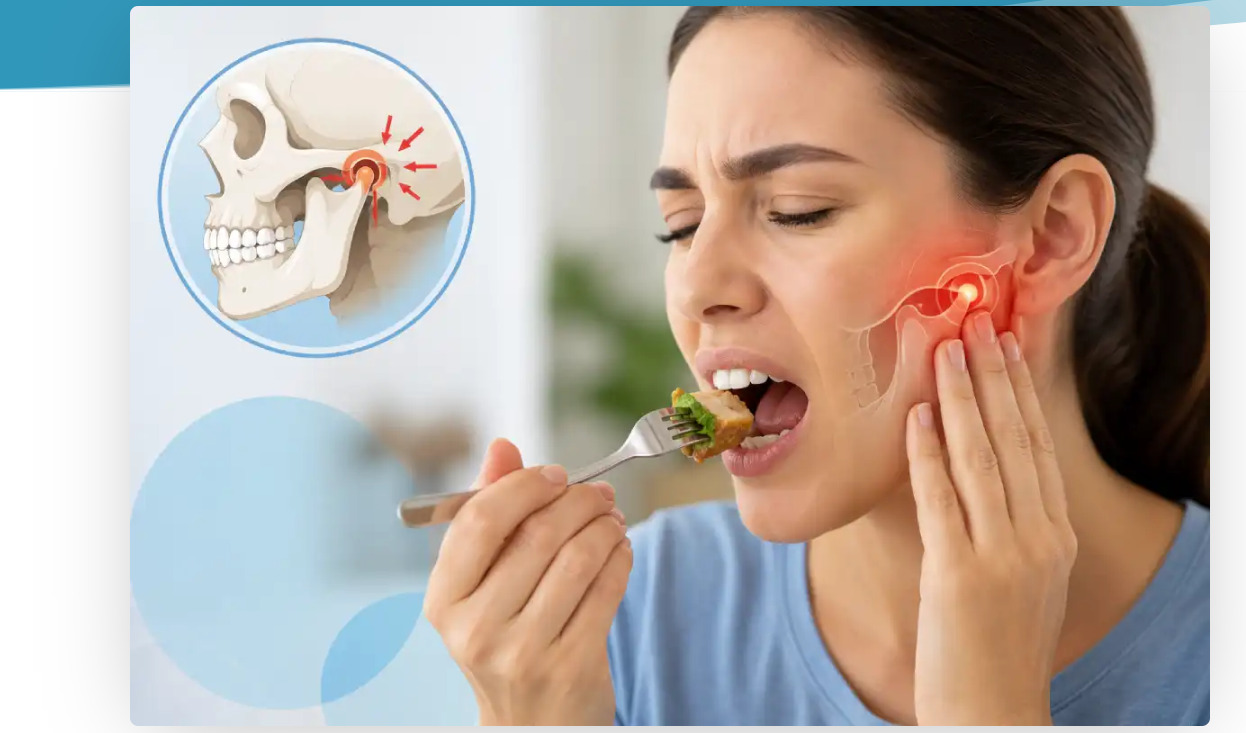
There is nothing quite like sitting down to enjoy a great meal, whether it’s a perfectly cooked steak or a classic Sunday brunch at a local café. But if every bite you take is accompanied by an annoying, loud “click” or “pop” in your jaw, it can quickly take the joy out of eating.
Jaw clicking is a remarkably common issue, yet many people push it aside, assuming it’s just a harmless quirk. In reality, that clicking sound is a warning sign from a highly complex system in your face. Understanding why your jaw is clicking is the first step toward getting back to pain-free meals.
To understand jaw clicking, you have to look at the Temporomandibular Joint (TMJ). You have two of these joints, located right in front of your ears, connecting your lower jawbone to your skull. The temporomandibular joints are both sliding & hinge joints, allowing the mouth to move up and down, side to side, and backward and forward.
Inside this joint sits a small, smooth cartilage disc that acts as a shock absorber, keeping the bones from rubbing together. When your jaw clicks, it usually means this tiny disc has slipped out of its proper position. As you open your mouth to chew, the disc suddenly snaps back into place, creating that distinct popping sound.
While a mild click without pain might not seem like a big deal, TMJ issues are often progressive. You should keep a close eye out for these accompanying symptoms:
The good news is that treating a clicking jaw rarely requires major surgery. Most cases respond beautifully to simple, non-invasive therapies:
Ignoring a clicking jaw can eventually lead to chronic headaches, neck pain, and permanent wear on your teeth. If your jaw is making its presence known at every mealtime, it’s time to get a professional assessment.
You don’t have to break the bank to get premium, gentle care. If you are looking for an affordable dentist in Australia who puts your comfort and long-term wellness first, our team is here to help.
Get in touch with Gentle and Caring Dentistry in Maroubra today. We will thoroughly evaluate your bite, pinpoint the root cause of your discomfort, and map out a transparent, stress-free treatment plan to get you back to eating comfortably!