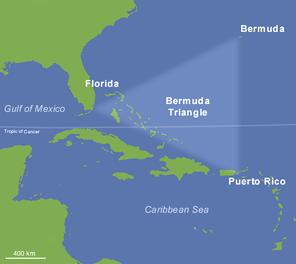
The Bermuda Triangle, also known as the Devil's Triangle, is an area of the Atlantic Ocean roughly bounded by Miami, Bermuda, and Puerto Rico. The term "Bermuda Triangle" was first used in a 1964 article written by Vincent Gaddis, in which he claimed that a number of ships and airplanes had disappeared under mysterious circumstances in the region.
GIS (geographic information systems) can be used to map and analyze the geography of the Bermuda Triangle. For example, GIS can be used to create maps that show the location of shipwrecks and plane crashes in the area, as well as to analyze the ocean currents and weather patterns that may have contributed to these events.
One key aspect of the Bermuda Triangle is the Gulf Stream, a powerful ocean current that flows northward along the east coast of the United States, past Florida, and then eastward across the Atlantic. This current can cause rough seas and unpredictable weather, which may have been a factor in some of the incidents that have occurred in the Bermuda Triangle.
Another aspect of the Bermuda Triangle is the presence of a number of underwater volcanic and seismic activity, which can create unpredictable and dangerous conditions. Additionally, the area is known for its shallow waters and coral reefs, which can be treacherous for ships and airplanes.
Many experts believe that the Bermuda Triangle is no more dangerous than any other area of the ocean and that the incidents that have occurred there can be explained by natural phenomena such as storms, currents, and human error. However, the myth of the Bermuda Triangle persists and it continues to be a popular subject of speculation and debate.
In conclusion, GIS can provide valuable information about the geography of the Bermuda Triangle, including the location of shipwrecks and plane crashes, ocean currents and weather patterns, and underwater geological features. While the true causes of the incidents that have occurred in the Bermuda Triangle remain a mystery, it is likely that a combination of natural phenomena and human error are to blame.