Application Layer This layer deals with applications which are built on the Blockchain technology as well as applications which enhance the blockchain technology and are part of the various flavors of blockchain. There are various flavors of blockchain in the market and each has its own implementation of blockchain. Some of the flavors have developed applications which are integrated into the technology and become a part of it. Some applications in blockchain follow the traditional development model and include programming constructs, scripting, APIs, development frameworks, etc. Other types of applications use blockchain as a backend. These applications might be hosted on some web servers and that might require web application development, server-side programming, and APIs, etc.
Execution Layer The executions of instructions as ordered by the Application Layer take place in the Execution Layer. The instructions could be a simple instruction or a set of multiple instructions in the form of a smart contract.In either case, a program or a script is executed for the correct execution of the transaction. All the nodes in a block chain network execute the programs/scripts independently. The output on the same set of inputs and conditions always produces the same output on all the nodes. Bitcoins scripts are simple and have only a few sets of instructions. Ethereum and Hyperledger, use smart contracts that are made up of multiple instructions and can be complex executions.
Semantic Layer The instructions executed in the previous layer are validated in the Semantic layer. It is a logical layer because there is an orderliness in the transactions and blocks. Semantic layer is responsible for checking if a transaction is legitimate or not. It checks for the authorization of a transaction. In case of bitcoin, an amount is paid by the amount received in a previous transaction. This layer checks if the previous transaction is legitimate and has received the amount they are spending. Ethereum has the system of Accounts like banks. It means that the account of the one making the transaction and that of the one receiving it both get updated. The rules of the system, the data models and structures are defined in this layer. A block usually contains a bunch of transactions and some smart contracts. The data structures such as the Merkle tree are defined in this layer with the Merkle root in the block header to maintain a relation between the block headers and the set of transactions in a block. Also, the data models, storage modes, in- memory/disk based processing, etc. can be defined in this logical layer.
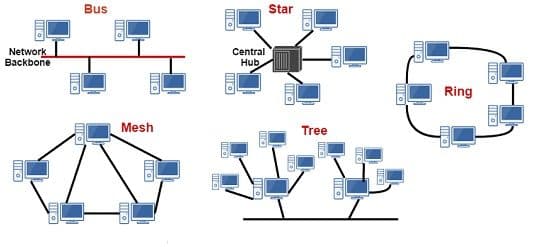
Propagation Layer This layer is responsible for information dissemination. It deals with the communication between nodes in the Blockchain. The previous layers are all about transaction processing at independent block level. The Propagation Layer is the peer-to-peer communication layer that allows the nodes to discover each other, and talk and sync with each other with respect to the current state of the network. When a transaction is made it gets broadcast to the entire network. Similarly, when a node wants to propose a valid block, it gets immediately propagated to the entire network so that other nodes could build on it, considering it as the latest block. So, transaction/block propagation in the network is defined in this layer, which ensures stability of the whole network. By design, most of the blockchains are designed such that they forward a transaction/block immediately to all the nodes they are directly connected to, when they get to know of a new transaction/block.
Consensus Layer The Consensus Layer is usually the base layer for most of the blockchain systems. The primary purpose of this layer is to get all the nodes to agree on one consistent state of the ledger. There are different ways of achieving consensus among the nodes. This layer is responsible for the Safety and security of the blockchain. For a public blockchain to be self-sustainable, an incentives mechanism helps in keeping the network alive as well enforces consensus.In Bitcoin or Ethereum, the incentive technique is called “mining”. Bitcoin and Ethereum use the Proof of Work (PoW) consensus mechanism.