Each child has their own unique characteristics, which determine how they learn, and the manner in which a child learns varies by each child. For instance, a child may learn at a quicker pace if provided with visual cues (i.e., movies, pictures) than he would if he were presented with an audiotape (i.e., sounds). Also, the majority of children’s learning styles involve a variety of activities involving their surroundings and themselves.
Preschoolers have developed four major methods of learning: visual learning, auditory learning, tactile learning, and kinesthetic learning. Many preschoolers will use a combination of these methods, although the method that best suits them usually consists of one or two methods.
1. Visual Learners (See to Learn)
Visual learners are children who learn best when they can see the information being taught. Pictures, charts, colours, shapes and visual demonstrations help visual learners to easily understand concepts. Visual learners can often observe more details than other children, often enjoy reading illustrated storybooks, and remember what they have seen rather than what they have heard.
The preschool environment fosters visual learning by providing children with illustrated storybooks, flashcards, puzzles, drawing activities, charts, and visual schedules. By repeatedly showing children letters, numbers, and patterns in a colourful and fun way, children can more easily and successfully learn to read and write.
2. Auditory Learners (Hear to Learn)
Preschoolers are auditory learners – they listen in order to retain information, and they prefer auditory methods of instruction (oral communication) – including spoken word, song, rhyme, story, etc. Auditory learners respond well to verbal explanations because they are more likely to hear a verbal explanation than to read it.
Preschools provide auditory learners with many opportunities to tell stories in a group setting (such as classroom storytelling), provide auditory instruction through phonics, have conversations in groups, use additional methods to develop auditory skills and improve listening skills by using rhymes, songs and repetition, to help strengthen language skills, memory and provide a platform for auditory learners to communicate effectively.
3. Tactile Learners (Touch to Learn)
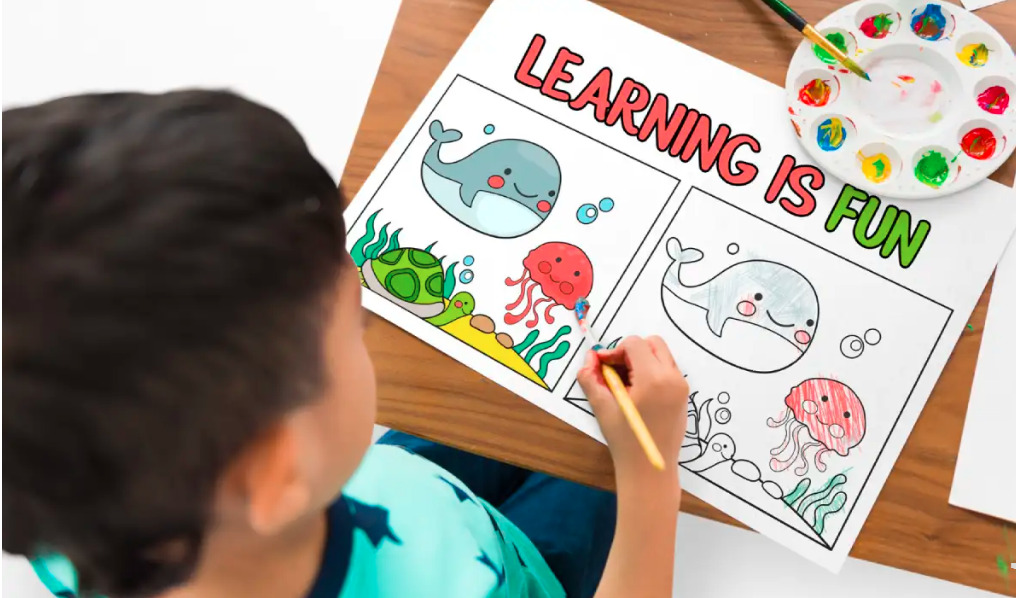
Tactile learners are those who learn by touching and handling objects with their hands. They are very hands-on and love to build, touch and feel things to understand how they work. This group of learners enjoy activities that involve materials of different types and textures, as well as activities that allow them to explore and manipulate objects with their hands, such as clay modelling and sand play, building with blocks, creative arts/crafts, sorting items and doing sensory activities. By doing so, tactile learners develop their visual, auditory and tactile motor skills.
4. Kinaesthetic Learners (Move to Learn)
Kinaesthetic learners are individuals who learn through movement and other forms of physical activity (in addition to doing). While they may have difficulty sitting still for long periods of time, they tend to do much better when there is an element of movement in the process of learning or doing. Preschool settings support kinaesthetic learners with dance, outdoor play, role-playing, action songs, obstacle courses, and learning games that incorporate movement. Using these forms of activity allows kinaesthetic learners to expend their energy in a productive manner while also developing their ability to coordinate their bodies and stay focused on what they are doing.
It is important for teachers within preschools to understand early childhood development. Preschools should base their learning methods around a child’s natural learning style so that they can become happy, confident, engaged, and motivated.
Preschools should provide a variety of options in order to create an optimal learning environment for all children. Preschools should use not only visual, auditory, and tactile methods of teaching, but also support kinaesthetic learning through the ability to engage in an active learning experience through play.
Building confidence within children through the recognition of their individual learning styles at Elzee Preschool and Daycare.
At Elzee Preschool and Daycare, learning takes place through a three-pronged approach. A play-based, activity-driven, and hands-on learning approach is incorporated into every day of learning through integration of music and song, storytelling, visual displays, hands-on experiences through exploration, and an opportunity for children to move freely throughout the day.