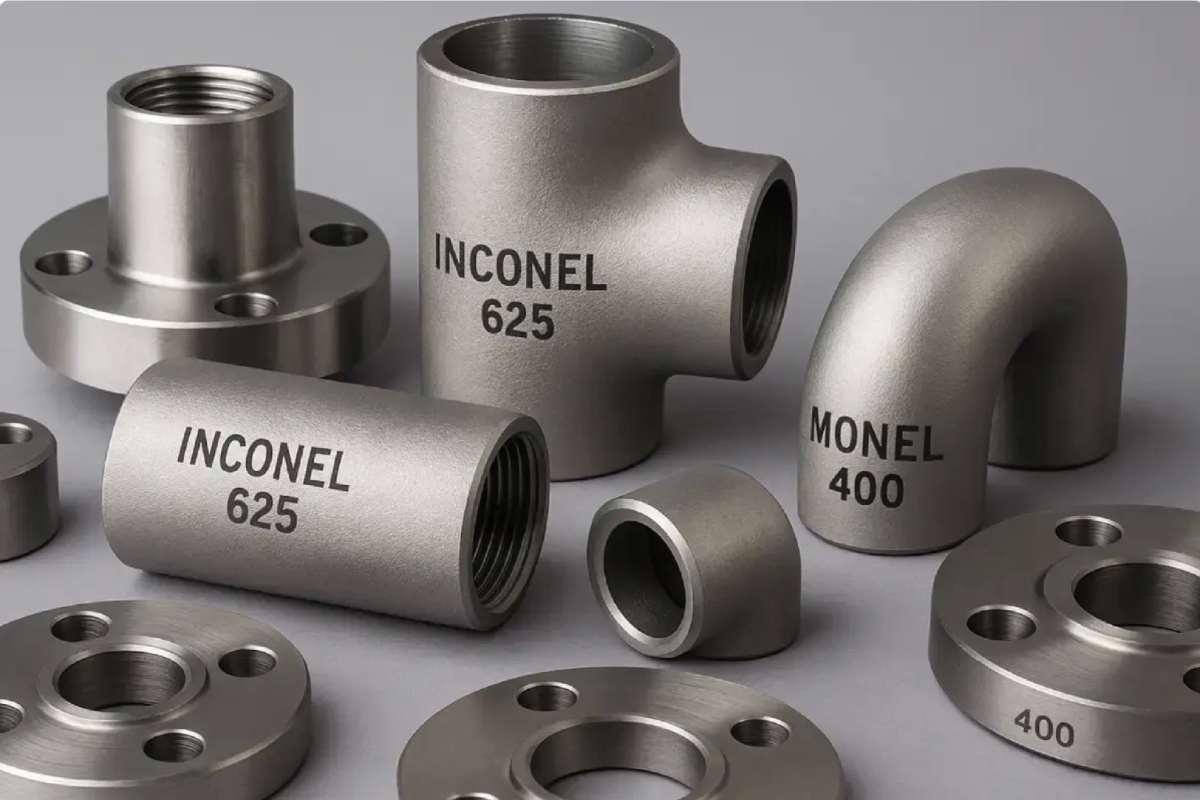
In the extremely challenging realm of refineries, the choice of materials for piping, fittings, and equipment is paramount. Corrosion resistance, strength, and durability are indispensable since these devices have to be resistant to harsh temperatures, high pressures, and harmful chemicals. Among the metals that perform exceptionally well in such conditions, Inconel 625 and Monel 400 have been the first choice of engineers and plant managers worldwide.
Inconel 625 is a nickel-chromium-molybdenum superalloy that is well known for its good resistance to corrosion and oxidation. Its strong resistance in a wide range of temperatures makes it suitable for severe refinery uses. Inconel 625 is especially useful in the prevention of stress corrosion cracking, which is a typical problem in chemical and petrochemical processing facilities.
This alloy is resistant to sulphur-containing environments, hydrochloric acid, and other aggressive media and is thus crucial in the case of heat exchangers, piping systems, and reactor parts. The presence of nickel, chromium, and molybdenum makes fittings and pipes of Inconel 625 strong under changing temperatures and mechanical loads, cutting down on maintenance time and expenses.
Monel 400 nickel-copper alloy is equally famous for its corrosion and acid resistance in seawater and hydrofluoric acid surroundings. Its strength and superior weldability qualify it for use in refinery piping, pumps, valves, and flanges.
Monel 400's capability to continue performance in reducing and oxidising conditions makes it possible to utilise it in complicated refinery areas, such as hydroprocessing units and desulfurization systems. Monel 400 fittings are resistant to crevice corrosion, pitting, and stress corrosion cracking and are superior to most competing alloys in these respects.
Refinery processes typically include high-temperature, high-pressure fluids and exposure to chlorides, sulphides, and corrosive chemicals. Standard materials such as carbon steel or typical stainless steel would quickly corrode or fail and must be replaced frequently, with consequential shutdowns.
Inconel 625 and Monel 400, on the other hand, possess a unique blend of mechanical strength, corrosion resistance, and temperature resistance that no other metal can equal. The exceptional performance of these alloys guarantees extended life, low maintenance, and greater safety, which is essential in a situation where even a small failure can result in drastic consequences.
Heat exchangers: Alloys are resistant to scaling, fouling, and corrosion, so heat transfer is efficient.
Piping and valves: Inconel 625 and Monel 400 retain their structure when exposed to high-pressure fluid flow.
Reactors and vessels: They are best suited for use with aggressive chemicals and thus for reactor internals and storage tanks.
Flanges and fittings: Weldability and resistance to cracking of the alloys make them a good choice for connections in intricate piping systems.
For engineers in refineries, the selection of materials that possess high temperature performance, corrosion resistance, and ruggedness is crucial. Inconel 625 and Monel 400 have consistently proven themselves superior, performing better than other metals even in the most demanding refinery environments. From valves and pipes to flanges and fittings, these alloys set the gold standard for delivering safety, reliability, and efficiency in refinery operations.
Through investment in Inconel 625 and Monel 400 parts, refineries are able to dramatically lower maintenance expenses, reduce downtime, and lengthen the lifespan of vital systems, hence becoming truly unparalleled in the industry.
Explore our full range of premium fittings and accessories at Online Fittings for all your industrial needs.