As we have already briefed you about What function SEO serve in Digital Marketing, it’s now time to throw some light on one of the 2 major types of SEO i.e. On-page SEO.
What is on-page SEO?
On-page SEO, as the title indicates, is the act of altering a particular page of your website to improve page position on the search engine results page (SERP). While some of those improvements are visible on the page itself, others work in the background. Your SEO position improves as more relevant traffic is directed to your website and as your site has more optimized pages.
Why should you focus on on-page SEO?
On-page optimization is a vital component of SEO, which can not only help you raise your placements but also help you broaden your audiences. In simple terms, it is keeping Google updated about your website and the benefits (in terms of products or services you deliver) you provide to visitors and customers.
When is it suitable to do on-page SEO?
SEO has now jumped up the ladder and hence is recommended to do as soon as your website is built. Some on-page SEO tasks like page structure and website speed optimization, need to be set up whilst your website is getting built. Other elements, however, only need to be done periodically, such as on-page optimization for each new blog post that is posted.
Due to the continuing nature of SEO, on-page optimization should be carried out even if you come up on page one of the search results.
How does On-page SEO work?
As on-page SEO involves numerous components, grasping it calls for a comprehensive knowledge base. We’ll take you through the most crucial on-page success criteria and strategies in detail.
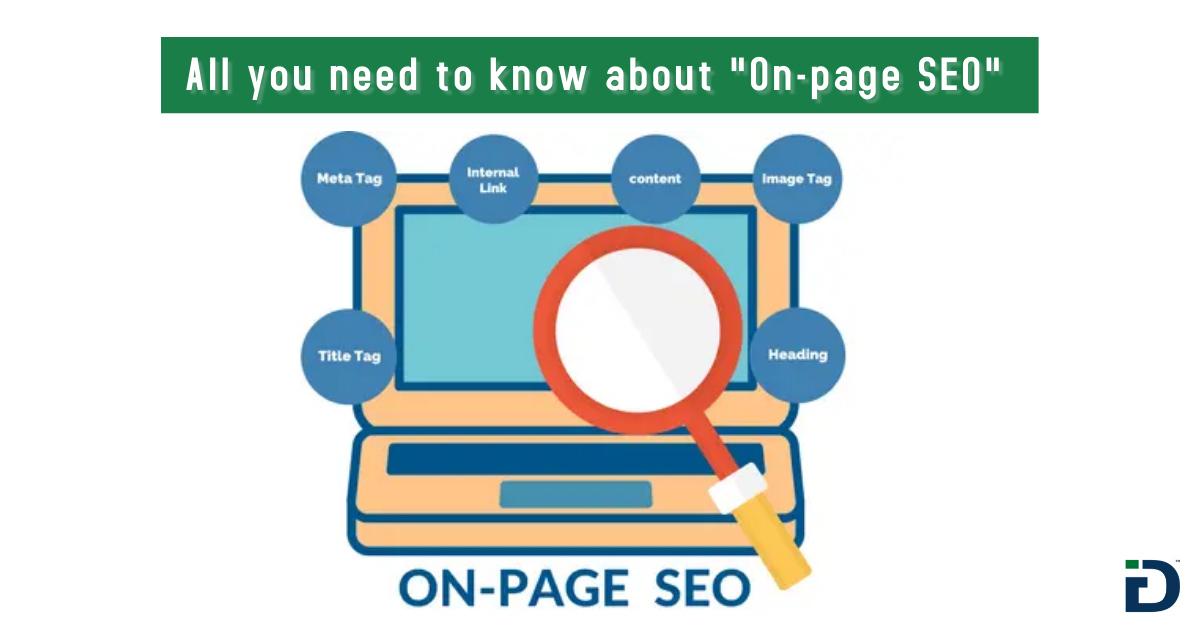
The most crucial aspects of on-page SEO that you must master.
1. High-Quality Content
Content is the King.
This implies that to optimize your website for on-page search engine results, you must persuade Google that the data on your site is reliable and quality.
A Quick tip: Google desires to display relevant, qualitative, and trustworthy websites/content to its visitors. Make sure you follow this rule.
2. Meta tag
One of those areas where it’s necessary to concentrate on the specifics is this one.
They serve as the page’s initial indication to both users and search engines, thus it’s important to make sure they are properly optimized.
A Quick tip: Use your keywords from your keyword bank here, but make sure it draws attention and addresses the searcher’s query.
3. Meta Description
Without a compelling meta description, you potentially lose out on traffic. The search engine will write one for you if you neglect it. The first piece of information that the search engine can discover will be used as your meta description.
A Quick tip: Avoid misusing or overusing your keyword to ensure that your meta description is of high quality. You want real content, not made-up data, therefore don’t be too brief or too long. Your artistically crafted meta description will make your pages found in opposition to finding you, resulting in more visitors and conversions.
4. Keyword Optimization
Keywords are critical, as everyone who is acquainted with SEO is aware.
A page is more likely to be relevant to the search if it includes the keywords from the query, whether they appear in the body, headings, or both.
A Quick tip: Use important keywords or their variations as naturally as you can; on the other hand, maintaining a healthy keyword ratio on each page is pivotal. Keyword spamming or cluttering your content with keywords could severely impact both your brand value and your google search ranking.
5. Image Optimization
As image searches have increased google also looks for relevant image descriptions to give the visitor close to exact image search results. Especially keeping in mind blog posts, search engine results with relevant photographs are significantly better compared to those without. There are quite a few elements to take into account when incorporating images into your text.
A Quick tip: On priority, put in SEO-friendly alt tags, for quick loading pick the proper file format and size, personalize file names, and make sure your photos are appropriate for mobile users.
6. Site speed
Google currently uses page speed as a key ranking element. They integrate this with the user experience. Numerous studies have demonstrated that delayed page loads and prolonged loading speed cause visitors to leave the page before it has even loaded.
A Quick tip: Multiple factors can affect how quickly a website loads. However, it is worth spending the time and resources to ensure that your page loads efficiently and to improve page speed.
7. Mobile responsiveness
Google started to give websites with responsive designs priority in mobile search ranks as a consequence of the rise in users utilizing mobile devices. Yet another important ranking consideration for a site is how user-friendly it is on mobile devices. “Mobile-friendliness” or “Responsive page” are frequently used terms for this.
A Quick tip: Easy reading and adequate functionality are hygiene requirements for “mobile-friendly” pages.
8. Header tag
Ensure every page includes only one H1 tag. Your top keyword should be included in your heading to ensure that it is noticed by the search engine.
A Quick tip: Your post will be shared on other websites more often if it has the appropriate header tag with the most relevant keyword incorporated within.
9. Page URL
This is a very minor feature but gaining importance in recent SEO strategies. This is nothing but a way to inform visitors and search engines about a page’s content in the format of the URL. Your URL should always contain your target keywords, distinguished by hyphens.
A Quick Tip: you should keep your URLs brief and to the point. Avoid using lengthy, ambiguous, and numerically-filled URLs. Be sure to use clear, descriptive, and keyword-focused URLs. You must be able to convey to visitors what the purpose of your page is.
10. Internal Links
Internal links within your content are essential components of an SEO strategy since they let Google know that your website is a reliable source of knowledge worthy of acknowledgment. They also help the real individuals who visit your site to navigate from one relevant page to another keeping the visitor on your website for a longer period of time.A Quick tip: People are more inclined to click on links to related content to learn more when it offers context or information on a subject. Force-fitting a link on a page will do more harm than good. So make sure you’re linking relevant and informative pages only.
On-page SEO should be performed by whom?
Anyone who operates a website, writes blogs, Digital marketing service providers who have an SEO team, or SEO Specialists. Anybody who attempts to sell you SEO services with a rank 1 guarantee in 30 days, is not the ideal person to handle your brand’s SEO. Knowing it’s a continuous timely effort process, it takes at least 6 months of SEO to see positive results.