Data Structures kya hain?
Data Structures wo organized formats hain jismein data ko store aur manage kiya jaata hai, taki us data ko efficiently access aur modify kiya ja sake. Jaise ek almari mein books ko systematically arrange karna, taaki jab zarurat ho, toh easily mil jaaye.
Data Structures ki zarurat kyun padti hai
Data science mein, data ko efficiently store aur retrieve karne ke liye data structures ka use hota hai. Agar data ko bina kisi structure ke store karenge, toh usse access karna aur use karna mushkil ho jaata hai.
Basic Types of Data Structures:
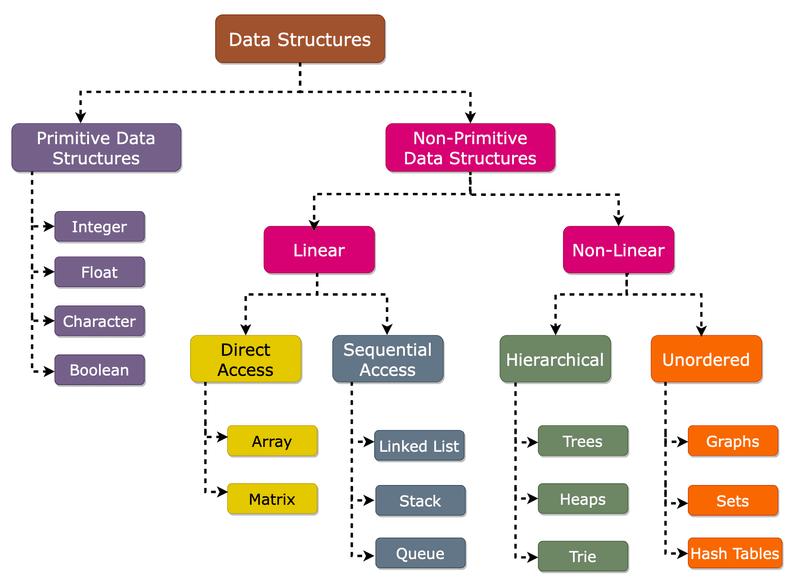
Arrays: Ek linear data structure jismein similar type ke elements fixed size mein store hote hain. Jaise, ek list mein saare students ke marks store karna.
Linked Lists:Ek dynamic data structure jismein elements ek sequence mein connected hote hain, jismein har element (node) ke paas agle element ka reference hota hai.
Stacks: Ek Last-In-First-Out (LIFO) data structure jismein jo element sabse pehle insert hota hai, woh sabse baad mein access hota hai. Jaise ek plate stack, jismein upar wali plate sabse pehle nikalte hain.
Queues:Ek First-In-First-Out (FIFO) data structure jismein jo element pehle aata hai, wahi pehle process hota hai. Jaise bank line mein sabse pehle khada insaan sabse pehle service leta hai.
Trees:Ek hierarchical data structure jismein data ko tree ke form mein organize karte hain, jismein ek root node hoti hai aur uske branches hoti hain.
Graphs: Ek data structure jismein nodes aur edges ka use hota hai. Nodes data represent karte hain aur edges relationships represent karte hain.
Hash Tables: Ek data structure jismein key-value pairs ko store karte hain. Hash function ke through values ko keys se map karte hain.
Data Structures ka selection kaise karte hain?
Different data structures ka selection problem ke requirement aur data ki nature par depend karta hai. Jaise agar humein data ko sequentially access karna ho, toh arrays ya linked lists use karte hain. Agar humein hierarchical data ko represent karna ho, toh trees ka use karte hain.
Data Structures ka use karke data ko efficiently manage karna:
Time Complexity: Data structures ka selection is baat par depend karta hai ki operations ko perform karne mein kitna time lagta hai. Jaise, arrays mein kisi bhi element ko access karna O(1) time mein hota hai, lekin linked list mein O(n) time lag sakta hai.
Space Complexity: Data structures space efficiency ke liye bhi choose kiye jaate hain. Agar kisi problem mein memory space limited ho, toh uske liye appropriate data structure use karte hain.
Data Structures ke advantages:
Efficient Data Management:Data structures data ko organize karke efficient access aur modification allow karte hain.
Better Performance: Correct data structure use karne se program ki performance aur speed enhance hoti hai.
Reusability: Ek baar data structure implement karne ke baad, uska use different applications mein kiya ja sakta hai.
Maintainability: Data structures ko use karke code ko modular aur maintainable banaya ja sakta hai.
Data Structures ke disadvantages:
Complexity: Kuch data structures ko samajhna aur implement karna thoda complex hota hai.
Memory Overhead: Kuch data structures, jaise trees aur graphs, additional memory space consume karte hain.
Selection Challenges: Har situation ke liye best data structure select karna mushkil ho sakta hai.
Data Structures aur Algorithm ka sambandh:
Data structures and algorithms ka close relationship hota hai. Efficient algorithms tabhi banaye ja sakte hain jab unke peeche ka data structure sahi select kiya jaaye. Jaise, binary search algorithm BST pe efficiently kaam karta hai.
Data Structures ka practical application:
Sorting Algorithms: Arrays ya linked lists pe sorting algorithms implement kiye jaate hain, jaise quicksort, merge sort, etc.
Searching Algorithms: Searching ke liye arrays, trees, ya hash tables ka use hota hai, jaise binary search.
Graph Traversal: Graphs pe algorithms jaise DFS (Depth-First Search) aur BFS (Breadth-First Search) use hote hain to traverse ya search elements.
Data Structures ka Future:
As data science aur AI fields grow kar rahe hain, new data structures ka invention bhi ho raha hai jo complex data ko efficiently handle kar sakein. Data structures jaise Tensor (multi-dimensional arrays) AI mein widely use ho rahe hain.
Conclusion:
Data structures data science mein fundamental role play karte hain. Yeh data ko aise organize karte hain jisse usse efficiently access aur modify kiya ja sake. Sahi data structure ka selection karne se complex problems ko solve karna easy ho jaata hai, aur data-driven applications ka performance improve hota hai. Data structures ka knowledge kisi bhi data scientist ke toolkit ka ek important hissa hota hai.