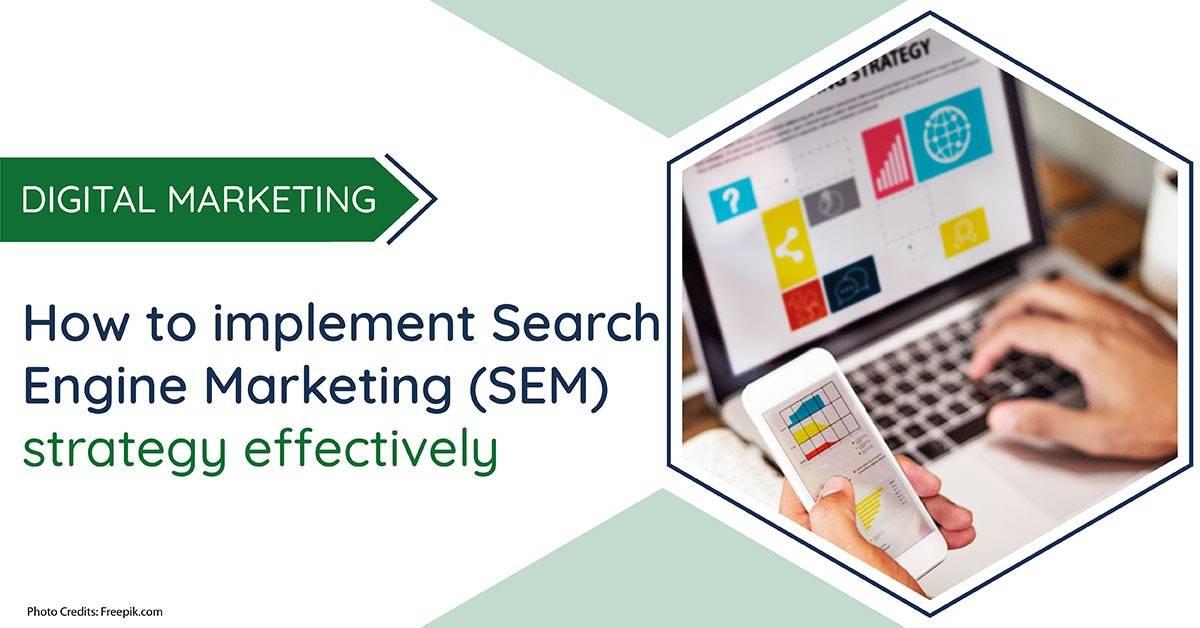
SEM is a potent and successful marketing tactic that can assist businesses in approaching their target market and producing more revenue or leads.
In this blog, we’ll look at effective SEM implementation. The crucial steps in the procedure will be discussed. We’ll also offer a few suggestions on ensuring that your campaign is optimized for the best outcomes. After reading this blog, you should have a solid comprehension of how to commence employing SEM for your business.
Search Engine Marketing: What Is It?
Search engine marketing is a profitable digital marketing strategy for companies. It’s essential to keep in mind that SEM emphasizes persuading consumers to click on advertisements instead of just placing them in search results, enabling businesses to target their ideal demographic.
Businesses could drive visitors towards their websites along with boosting brand recognition and exposure. Ad campaigns may monitor data like views, clicks, impressions, and conversions, which helps firms evaluate their ads’ performance and further improve their marketing approaches. Overall, SEM could benefit companies in engaging clients who are searching diligently for goods and services that complement the offerings they provide.
The Advantages of SEM
Below are a few substantial benefits of SEM that justify the outlay:
- Boost visibility: Search engine advertisements position your website at the forefront of search engine results pages, granting you an opportunity to reach a wider demographic.
- Target a specific audience: Using SEM, you can target potential customers according to the keywords they utilize when surfing online. As a result, your advertisements will only be viewed by individuals who are already intrigued by what your company provides.
- Analyse performance critically: SEM provides you with the insight critical to optimize your ads for optimum accomplishment by permitting you to track performance indicators like cost-per-click (CPC), click-through rate (CTR), and return on investment (ROI).
Defining Your Objectives and Target Audience:
The initial step in putting together an efficient search engine marketing (SEM) plan is figuring out who your intended audience is as well as what your targets are. However, it’s simple to get overwhelmed by the technicalities of SEM, without a specific audience and end result.
When developing your SEM strategy, keep these factors in consideration:
- Audience demographics —What age group are you aiming for? Do they reside in a certain region or market? Are they male or female?
- Audience interests — Do certain subjects concerning your sector that inherently resonate with your target audience instead of other individuals?
- Ad placement — Which locations are best for advertising your company? Do the majority of individuals in the audience you are targeting frequently access any particular platforms or websites?
- Budget – How many funds do you have a month accessible for SEM activities? This will affect the volume of traffic you can generate and the most efficient types of ads.
How to Identify the Ideal Keywords for Your SEM Strategy?
SEM campaigns can achieve the best results if you select the appropriate keywords in order to ensure the content reaches the right demographic.
Finding the words your target audience will probably search for is the objective. This entails taking into account keyword competition, search volume, and relevancy. Be careful to concentrate on long-tail keywords— those with three words or more because they are more precise than brief words, often face less competition, and yet have a high search volume.
For Maximum Performance & Enhance SEM
Evaluating and modifying are vital aspects if you intend to accomplish maximum efficiency with your SEM approach. You ought to monitor the results of your SEM campaigns using a number of measures, such as:
Cost Per Click (CPC)
You can forecast the cost of each ad click through CPC. You can make sure that you’re obtaining the optimum ROI from your SEM efforts by focusing on CPC.
Click-Through Rate (CTR)
The proportion of people who click on your adverts as compared to the overall number of times your ad appears is referred to as your CTR. It gives you data about how well your ad has an impact on customers, making it an effective tool for analyzing the efficacy of your keyword, ad copy, and landing page.
Conversion Rate (CVR)
Your CVR estimates the percentage of website visitors who buy products or enrol in a subscription after clicking on an ad. You can learn more about the performance of your SEM efforts by measuring results and conversions by studying this metric.
Outline:
Comprehending the broader digital world and how SEM could function in tandem with other components of your digital marketing strategy may assist you enhance the possibility of accomplishment of your SEM initiatives.
To reap the greatest possible return on investment, we believe in continually maintaining an attentive gaze on the results of your campaign and periodically evaluating them.
We at iDigitize Infotech LLP offer top-notch solutions for all your digital marketing requirements. Get in touch with our SEM experts to experience our exceptional search engine marketing strategy that is sure to make your business grow multifold.